Nigeria’s culture of impunity has found another disturbing expression in the brazen involvement of senior public officials in partisan politics. In September, heads of federal agencies and parastatals reportedly formed a coalition to promote President Bola Tinubu’s re-election bid in 2027. This is not merely inappropriate; it is a dangerous assault on the neutrality of the civil service.
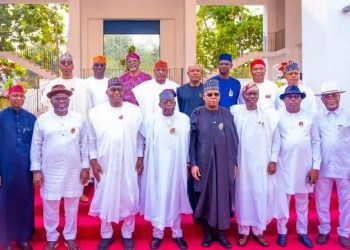
The Forum of Chief Executive Officers of Federal Parastatals and Agencies in Nigeria declared its “unequivocal support” for Tinubu’s second-term bid and pledged to mobilise 10 million votes for him. It also promised to provide strategic support to the All Progressives Congress Presidential Campaign Council.
Biodun Ajiboye, chairman of the forum’s Media and Publicity Committee and Executive Secretary of the National Institute for Cultural Orientation, reportedly confirmed its readiness to provide technical assistance to the campaign.
The forum’s chairman, Kazeem Raji, who heads the National Board for Technology Incubation, reportedly said the group was conceived as more than an association of government agency heads.
Right-thinking Nigerians must wonder what business serving public officials has organising votes and offering campaign assistance to a political party. If their forum is genuinely professional, why is it openly pledging support for a presidential candidate?
Civil servants are employed to serve the Nigerian state, not the electoral ambitions of the politicians who happen to govern it. By blurring this distinction, these officials risk turning public institutions into extensions of the ruling party.
Raji’s reported assertion that “where government has delivered, we should communicate it” is equally troubling. Who determines whether the government has delivered?
Certainly not a group of officials whose appointments may depend on the President. That judgement belongs to the Nigerian people, whose daily experiences of economic hardship, insecurity and declining purchasing power offer a more credible measure of government performance.
An IMF assessment warned that 17.9 million Nigerians fell into poverty in the three years to 2024.
Against this backdrop, the enthusiasm of senior public officials to mobilise millions of votes for the incumbent is profoundly tone-deaf. Their primary responsibility is to address the challenges confronting Nigerians, not to package the government’s record for electoral consumption.
The episode raises questions about priorities. Federal agencies have statutory responsibilities to fulfil, and their chief executives are expected to deliver results. If these officials have time and institutional capacity to devote to campaign activities, Nigerians are entitled to ask whether their agencies are performing their core functions effectively.
Their conduct evokes the infamous declaration, “L’État, c’est moi” — “I am the state” — commonly attributed to King Louis XIV of France.
In a constitutional democracy, however, the state belongs to the people. The President is a temporary occupant of public office, not the embodiment of the country.
His political interests cannot be equated with the public interest.
The heads of federal agencies are appointed officials, not political surrogates. Their appointment by the President does not give them the right to turn their offices into appendages of the APC. They remain bound by the Constitution, their enabling laws and applicable public service regulations.
Nentawe Yilwatda, the APC chairman, ought to know that civil servants have no business complementing the PCC. The APC is free to mobilise supporters and promote its record through legitimate party structures. It must not enlist serving public officials to deploy the authority or resources of their offices for partisan advantage.
This is not the first time the involvement of senior officials in the President’s re-election machinery has attracted criticism. The reported inclusion of Zacch Adedeji, chairman of the National Revenue Service, and Bisoye Coker-Odusote, Director-General of the National Identity Management Commission, in the PCC previously raised concerns. The emergence of this forum suggests that those concerns remain unresolved.
Nigeria already has rules governing political activity in the public service. On May 5, 2022, the then Head of the Civil Service of the Federation, Folasade Yemi-Esan, directed civil servants to comply with the provisions of the 2008 edition of the Public Service Rules on partisan politics.
The directive cited a 2018 legal opinion by the then Attorney-General of the Federation and Minister of Justice, Abubakar Malami, who maintained that neither the courts nor the 1999 Constitution had removed the restrictions on partisan political activity.
Malami argued that the Supreme Court judgement in INEC v. Musa did not invalidate Rules 030422 and 030423 of the Public Service Rules.
The Nigeria Labour Congress has argued that restrictions on civil servants’ political participation infringe their rights.
But individual political rights must be distinguished from the obligations attached to public office. The question is not whether public officials have political opinions; it is whether they can use their official positions to advance partisan interests while remaining faithful to the rules governing their service.
As the legal explainer learningnigerianlaw.com observes, the civil service is founded on permanence, anonymity, neutrality, impartiality, technical expertise and institutional capacity.
Unlike elected governments, which change periodically, the civil service provides continuity and professional administration across political dispensations.
These principles are essential to public trust. A partisan civil service risks turning public programmes into instruments of political patronage and undermining confidence in the fair delivery of government services.
Taxpayers should not have to worry that public institutions are being mobilised to secure the electoral fortunes of the governing party.
The Federal Government should investigate the conduct of the officials involved, determine whether applicable rules have been breached and impose appropriate sanctions where violations are established.
Due process must prevail, but political connections should offer no protection from accountability.
The APC, too, must recognise that an electoral advantage gained at the expense of institutional integrity comes at a high cost to democracy. It cannot credibly defend democratic governance while tolerating the partisan appropriation of public institutions.
Presidents come and go; governments change; political parties rise and fall. The civil service must endure above these political cycles, serving the country regardless of who occupies the Presidency.
Civil servants are paid by taxpayers to serve Nigeria, not to secure the political future of its leaders.
Those who cannot respect this distinction should not be allowed to turn public offices into campaign platforms.
The neutrality of the civil service is not negotiable, and the government must act before this dangerous precedent becomes normal practice.