- A monetary regime that grants pilgrims forex concessions, but denies the productive sector a similar privilege, reeks of wrong priorities
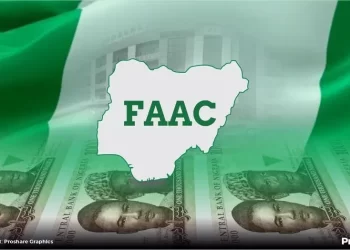
A production concern, in urgent need to import raw materials, approached the Central Bank of Nigeria (CBN) for foreign exchange (forex) at the official exchange rate of N198.95/US $1. The apex bank balked. It said the company should source its forex from the parallel market. As at July 14, that rate was N241/US $1.
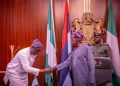
But a week or two later, John Kennedy-Opara and his Christian Pilgrims Commission (CPC) breezed into the Aso Villa. Without much ado, Mr. Kennedy-Opara breezed out to announce the good news to the faithful: the government had graciously pegged forex, for the next round of Christian pilgrimage to Jerusalem, at N160 to US $1!
Moral: the Nigerian government would rather subsidise the forex needs of leisurely pilgrims than aid distressed players in the productive sector.
It is a classic case of placing faith over work, in the priority of the state. For a country still grappling with economic basics, and in these times of acute economic angst, it certainly leaves a bitter taste in the mouth.
Indeed, from the numbers, the conclusion is very depressing. For offering pilgrims a special rate of N160 per dollar, the government is subsidising each pilgrim to the tune of N38.95 on every dollar. If the pilgrims were to buy from the parallel market, at N241 per dollar, the subsidy would have been a whopping N81 per dollar!
But shorn of the religious veneer, these Nigerian pilgrims are only splashing scarce forex, sorely needed at home, in a foreign economy. That boosts their host economy, but further worsens the distress at home.
In contrast, that productive concern, which CBN left to its fate, eventually sourced forex for N230 a dollar, N32.05 above the official rate. If it had tarried for lack of cash, it would have paid higher; for, as at yesterday, the naira parity had sunk further to N241. So, the company would have been N44.05 in the hole for every dollar it bought.
In the face of the present harsh economic realities, how does such a company stay competitive and be in a position to keep its staff and pay their salaries? Failure at both fuels further poverty and joblessness — and the culprit would have been a government that doesn’t seem to get its priorities right.
Now, before we are misconstrued: Nigeria is officially a secular state; with no court religion. But Nigerians are religious and expressively so. Therefore, there is nothing wrong for the Nigerian state to be sensitive to the religious wellness of its citizens: Christian, Muslim, traditional religions. As a general principle, we welcome whatever the state can do to make religious practice more comfortable; and whatever consular services Nigeria can put in place to aid religious pilgrims.
But to, in this season of economic anomie, waste scarce forex on the luxury needs of a comparative few, when the cash is sorely needed for the basic economic survival of the teeming majority, is absolutely unacceptable.
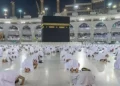
Pilgrimage for Christians is doctrinally not mandatory. Even in Islam where it is, it is subject to affordability. So, every pilgrim, Christian or Muslim, strays into the self-actualisation zone; which suggests each can pay his or her way. So, the government should let them pay; and stop sucking scarce forex into a comparatively non-essential venture.
That is why the Buhari Presidency should depart from the old wasteful ways, rescind this N160 a dollar concession just granted Christian pilgrims and make every pilgrim, Christian or Muslim, to buy his or her forex in the open market.
‘The Buhari Presidency should depart from the old wasteful ways, rescind this N160 a dollar concession just granted Christian pilgrims and make every pilgrim, Christian or Muslim, to buy his or her forex in the open market’