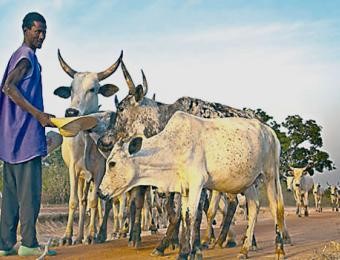
Over the past few months, bloody clashes between herdsmen and farming communities across the country have prompted calls for a rapid modernisation of cattle rearing in the country. When, in seeming response to the problem, Honourables Sunday Karimi (Kogi State) and Sadiq Ibrahim (Adamawa State) respectively proposed bills advocating the establishment of a National Grazing Reserve Commission (NGRC), the idea was roundly condemned both in the media and across the political spectrum. Critics pointed to several problems with the bills, among them the real danger of usurpation of state rights and the rights of ordinary Nigerian citizens. Above all, it was pointed out that the proposers of the grazing reserves bills adduced no overriding justification for getting government directly involved in the economic activities of private citizens.
Yet, from the look of things, it would seem that hopes that the idea has been laid to rest are indeed premature. Penultimate week, during a budget breakdown presided over by Budget and Planning Minister Udo Udoma, it came to light that the Federal Government has in fact set aside a princely N940 million in the 2016 budget for the development of so-called strategic grazing reserves across the country. According to the minister, the establishment of the reserves will provide a lasting solution to the problem of intermittent clashes between herdsmen and farming communities across the country.
We are extremely disappointed by the Federal Government’s move. For one, it would seem to suggest that the Federal Government is indifferent to opposition to the idea right across the country, particularly in those communities in the Middle Belt and southern parts of the country where the herdsmen have been active, sometimes fatally so. Although it may not be its intention, the Federal Government is nonetheless sending a message that it does not really care about the welfare of people in these communities. They may have their say, but the Federal Government appears determined to have its way. The Federal Government may struggle to defend itself against accusations of rampant sectionalism.
Furthermore, we are disconcerted that the Federal Government seems to be carrying on in total disregard of the many cogent and superior arguments advanced against the move. For instance, in a previous editorial on the matter, we pointed to the sheer incongruity of mandating a government commission to systematically pursue and seize public and private property in any part of the country and hand over such to private herdsmen. Just to be clear: we have nothing against herdsmen or their cattle. The principle we are defending is that the resources of the state are wasted on transactions among private entities. If herdsmen want to purchase land on which to graze their cattle, surely, they should be free to, once an appropriate arrangement is made with the owner of such property. The intervention of the Federal Government in the acquisition of grazing reserves is not only unwarranted, it undermines its raison d’etre as the guarantor of social goods for all Nigerians.
In the meantime, and perhaps in response to the Federal Government’s cack-handedness on the matter, Governor Ayodele Fayose of Ekiti State has already moved to ban cattle grazing and rearing in the state. There are suggestions in the media that Oyo State may follow suit.
Those who question whether such bans are the solution miss the point. The truth is that, absent such radical steps, it is difficult to imagine how else to force the Federal Government to see reason on this matter.


Modernising cattle rearing – Tribune



Leave a Reply
















GLOBAL NEWS






Plugin Install : Widget Tab Post needs JNews - View Counter to be installed
- Trending
- Comments
- Latest