The skyrocketing prices of some staple food in markets across the country suggest the imminence of food crisis which needs to be addressed seriously and urgently. For instance, the price of tomato, one of the most prominent vegetables on the menu of many Nigerian households, has hit the roof tops. With tomato selling for more than six times its price a few months ago, it has largely become unaffordable to the average household in Nigeria. The other parts of Nigeria that rely on the North for the production of tomato had initially thought that the scarcity and dramatic surge in the price of tomato was a response to the then unofficial hike in petrol price which happened contemporaneously. However, it emerged that the issue was a supply side problem occasioned by the assault of a pest on tomato farms in the North.
The offending pest is tuta absoluta, which scourge has worsened the tomato production and supply situation in the country. Unfortunately, production was already being assailed by the effect of climate change in the far North and insurgency in the North East; and both circumstances have reduced yield and acreage under cultivation.This pernicious insect, also called tomato Ebola because of its swift devastating effects on tomato farms, reportedly produces larvae that mine the leaves, burrow into the stem and the crops, ripe or unripe, until the entire plant is destroyed.
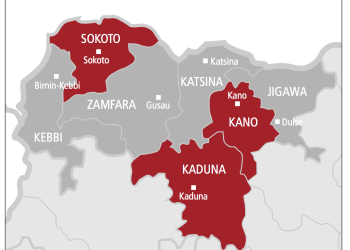
Farmers in the Kano and Jigawa tomato production belt having about 17,000 hectares of tomato field have reported a loss of over 80 per cent of their crops due to the assault of tuta absoluta. In Kaduna State where the government has declared a state of emergency on tomato production, losses in just two local government council areas out of 12 that produce tomato were estimated at one billion naira. Regrettably, this is probably the situation, if not worse, in the tomato growing states of Gombe, Katsina, Jigawa, Kano and Plateau. It is so bad that the Dangote processing plant in Kano has suspended production because of scarcity of fresh tomatoes; its main raw material. This is a sad development which the country’s tottering economy can ill-afford.
The real concern is that at the best of time, the 1.8million metric tons annual production falls short of local demand put at 2.3 million metric tons but this short fall has now been exacerbated by this disease condition. Even when it is reckoned that the processing plants have reined in the 50 per cent annual production loss due to the absence of storage facility, the situation is still grave. The implication is that at a time the country should be facilitating increase in production through provision of high yielding and disease resistant seedlings and or encourage farmers to put more acreage under cultivation, it is battling with pest control. Even then, government response to the menace is anything but proactive.
Currently, the country would appear to have no solution to the veritable danger that tuta absoluta poses to tomato production. Available information indicates that the Federal Government is awaiting advice on ‘appraisal of the situation and a figure on cost of treatment’ from a team of experts it promised to commission. Similarly, the Kaduna State government is awaiting its officials sent to Kenya to share experience with the country’s experts on the control of the destructive pest. It is to the credit of Kaduna State,though, that it has taken the threat posed by the tomato blight with the seriousness it deserves while the attitude of the other five states appears to be that of reprehensible indifference.
It should be noted that while agriculture is essentially a private business, all the tiers of government have a duty to facilitate production through extension services, availing farmers with recent and value-adding research findings and improved technology. Even in the core capitalist states like the United States, there is Agricultural Support Programme instituted to help private farmers in the ordinary course of their farming business and not only in times of disasters. The issue is that there seems to be no co-ordination of activities and productive interface among the critical stakeholders in the agriculture sector in the country. If there had been active official support and regular interface with farmers, the risk posed by the pest could have been mitigated by local experts before it festered. It is a shame that after 25 years of Universities of Agriculture in the country, the existence of numerous Agricultural Research Institutes and reputable faculties of Agriculture in the non-specialised universities, Nigeria is still seeking pest control solution outside its shores.
Nevertheless, whether from within or outside the country, we urge that an effective antidote be found to the menace of tuta absoluta and any other impediments to profitable commercial production of tomato in Nigeria. And in this context, it is imperative that stakeholders appreciate Nigerians’ expectations: immediate eradication of tuta absoluta from tomato farms in the country, ensuring that scarcity of tomato becomes history and that the price is affordable to the average citizen, and seeing to it that the shut processing plants are reopened to resume production at full capacity. These done, then the negligent public officials may be forgiven for the avoidable embarrassment and pain caused by the lingering tomato crisis in the country.