In the absence of an effective response from the government, criminality in the Niger Delta region has risen sharply. Gangsters posing as self-determination champions have sabotaged oil and gas production facilities and brought the economy close to ruin. With the country on the brink, the government can no longer afford to prevaricate, but should take very strong action to stamp out terrorism in the oil-rich region.
The momentum is pushing the country, which is already reeling from recession, to the edge of disaster. Criminal gangs are mushrooming, each bombing oil and gas production and supply facilities; piracy is booming; illegal refineries are everywhere; illegal oil bunkering is thriving, as is a resurgence of kidnapping for ransom. The high level of lawlessness has been devastating to the national economy.
A cacophony of voices has been calling for dialogue and negotiation, while the old agitation for fiscal federalism and political restructuring has resurfaced from an admixture of opportunists, beneficiaries of the record-breaking kleptocracy of the previous 16 years, stranded politicians, ethnic chauvinists, ordinary citizens and a minority of genuine reformers who have remained consistent in their clamour for true federalism as the sole guarantor of the Nigerian enterprise.
Nigeria must urgently return to fiscal federalism to survive and prosper. However, we are adamantly opposed to open-ended negotiation and amnesty for criminals and violent agitators without an exit plan.
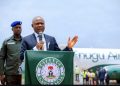
Vice-President Yemi Osinbajo confirmed last week that 60 per cent − about one million barrels of crude per day − of the country’s oil production had been lost to the months-long orgy of bombing of infrastructure. In addition, 40 per cent of domestic gas supply has been cut off as the criminals blow up, cut or set fire to pipelines and power equipment. Analysts say Nigeria is selling far below 2.2 to one million barrels of crude per day budget target. Power from gas-fired plants has fallen by over 1,000 megawatts.
Recently, Niger Delta Avengers and an assortment of other lesser known shadowy groups have blown up production facilities and continue to threaten oil workers, all “hiding under the regional agitation to commit all manner of crimes and atrocities”, according to Defence Headquarters.
Nigeria should resolve this recurrent problem before it destroys what is left of our national cohesion. The renewed vandalism couldn’t have come at a worse time. In downgrading Nigeria’s credit rating from B+ to B last week, Standard & Poor’s, the global rating agency, cited the drastic cut in oil production, translating into tougher terms for the country on new borrowings. With oil prices on Tuesday at $45.9 per barrel, down from an average $100pb in 2010 to mid-2014, the economy is taking a severe bashing. The National Bureau of Statistics revealed an inflation rate of 17.6 per cent in August with prices of some essential food items rising above 20 per cent while 26 million are either unemployed or underemployed. NBS reported a continued contraction of the economy -2.06 per cent by the second quarter of 2016.
A sovereign state should have control over its own territory and a monopoly of the means of coercion. The Muhammadu Buhari government has to assert this sovereignty. We should end this seemingly endless cycle of a group of outlaws holding the country to ransom anytime their monetary demands are not met. The first post-civil war cycle of violent militancy in the Niger Delta began with environmental rights and resource control agitation in the 1990s when Ogoni, Ijaw and other groups confronted International Oil Companies over the degradation of their land and water and demanded better share of oil revenue from the Nigerian state. That agitation led to the implementation of the 13 per cent oil derivation principle. But agitation had also fostered a criminal element; as oil workers and security personnel abandoned restive areas, criminals took over and appropriated the Niger Delta agitation banner as cover for their vandalism, murder, kidnapping-for-ransom and warlordism.
The 10-point demand of the NDA is revealing: it wants all corruption cases against South-South indigenes dropped; the violent campaign of sabotage began only after courts and the anti-corruption agencies declared a prominent war lord wanted in connection with multi-billion naira fraud and trials of some others for embezzlement. Succumbing to these will spell the end of the anti-corruption war.
We see no end in sight with negotiation with these gangs. Smelling money, hitherto militant-free states like Akwa Ibom and Cross River have suddenly seen the emergence of groups sabotaging facilities. It is an endless cycle that feeds some armed youths with an outsized sense of entitlement.
Our security agencies have failed. Ever before the presidential election of 2015, in public glare and with the full backing of some top political appointees and Niger Delta elders, Governor Seriake Dickson hosted a meeting of ex-militants in Yenagoa, Bayelsa State, at which they declared that they would cripple oil and gas production if Jonathan was not re-elected. That was enough for Lawal Daura, on appointment as director-general of the Directorate of State Services, together with the police and military, to take proactive, preventive measures. The military should have urgently trained special units for offensive operations in the unique creeks and swamps of the region. They should recruit from the region those familiar with the terrain, instead of sending troops who cannot even swim!
The government should correct its past mistakes. One was the failure by the Goodluck Jonathan government to wind down on schedule the amnesty programme initiated by the preceding Umaru Yar’Adua presidency. Instead, his ascendancy after Yar’Adua’s death in 2010 became an opportunity for some of the elite from the region to participate more fully in the national pastime of treasury looting. Buhari should re-examine the amnesty project and announce a definitive date for its winding down.
Confronting an insurgency of this nature should be intelligence-led and supported by commandos specially trained for the terrain. Informants, infiltration, use of drones and assistance from foreign countries are crucial to success. Security should trace the sources of arms and money of the gangs.
The military cannot succeed unless they take seriously and thoroughly investigate the persistent allegations of collaboration by officers of the task forces and naval interdiction teams in the region.
Ultimately, however, only three measures will bring a permanent solution; a ferocious, sustained and intelligence-led military action, a permanent resolution of the resource control question where states control the bulk of revenues from natural resources, and an end to the reliance on oil revenues by non-oil producing states.