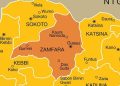
Nigeria’s laudable efforts to eradicate the polio virus were dashed recently with news that two new cases were reported in Jere and Gwoza local government areas of Borno State.
This setback was recorded after the country had clocked two straight years without a new case of an outbreak of the debilitating wild polio virus. Nigeria was also removed from the list of polio-endemic countries in July 2015, leaving Afghanistan and Pakistan in the odd group that had 125 members as at 1988.
Last month, on the occasion of Nigeria’s second year without any outbreak, President Muhammadu Buhari had in a joint statement with Nigeria’s development partners expressed much joy that Africa and the world were getting closer to eradicating the “devastating disease.”
The statement did not go without a caveat: “But our job is not yet done. We must protect the gains we have made and stay on course to tackle the challenges that remain on eliminating polio for good.”
It was just as well that Nigeria took the advice of its development partners seriously otherwise the fresh outbreak may have gone unnoticed. Interestingly, the fresh outbreak was recorded within the North-East, where the development partners had called for surveillance.
Acting World Health Organisation Representative for Nigeria, Dr. Rex Mapazanje, had on the occasion of the two-year feat warned that Nigeria must remain vigilant, especially in the areas of the North-East mostly affected by the Boko Haram insurgency as well as neighbouring countries of Cameroon, Chad and Niger.
It is salutary to note that with the new discovery, all hands have been on deck to set the train back on the desired route to total polio eradication in Nigeria. Already, an emergency polio vaccination programme has kicked off in Borno State and is intended to reach one million children immediately.
In the next few months, the vaccination campaign will increase the number to five million children across three more states. A report by Reuters says the emergency campaign will extend to children across the Lake Chad region, comprising parts of Nigeria, Niger, Cameroon and Chad.
Thousands of volunteer community mobilisers will educate families on the importance of immunisation and inform them on when and where to have their children vacci-nated, the report added.
“These people are coming from communities that have not been reached in three years due to the conflict in the North-East,” said Mohammed Ibrahim, UNICEF Programme Officer for immunisation in Borno State.
“The crowded conditions in the camps make diseases spread faster, and this puts children at higher risk of polio infection,” he said. The report notes that teams of vaccinators are already working in Internally Displaced Persons’ camps, which are home to tens of thousands of people.
It must be noted that the polio eradication efforts would not have yielded much dividend in the North-East without the degrading of the Boko Haram sect by the Nigerian government and its North-Eastern neighbours.
The significant military successes recorded by these governments have made it possible for health officials to reach thousands of people trapped in areas hitherto under the sect’s control.
The Nigerian military needs to be commended for liberating many communities and giving new hope to their beleaguered inhabitants. Also, the commendation must extend to local and international NGOs and aid agencies, whose personnel risk their lives to reach dangerous areas where insurgent activity has been reported. Some of these aid workers have even lost their lives. However, the warning by Nigeria’s Minister of Health, Prof. Isaac Adewole, that the virus could reach other states must not be tricked with.
While giving an assessment report to journalists and stakeholders on August 17 in Abuja, the minister had said that the risk of spreading was as a result of population movement within and around Borno State and neighbouring countries. Adewole particularly pointed out that the new cases came from areas where security was lax and the people had limited access to health services.
Thankfully, the minister said he had already approved a review of the polio virus outbreak response plan put together by the National Primary Healthcare Development Agency and its partners.
Outlining his Marshal Plan, the minister said: “The response plan includes five rounds of polio campaigns, three of which are focused on 16 Northern states and two to be conducted nationwide.
These campaigns will be synchronised with the affected regions of Chad, Niger and Cameroon.” Giving specifics, the minister said no fewer than 57 million children would be vaccinated between October and November 2016 while the military was providing security for immunisation volunteers in volatile areas.
With the renewed determination by Nigeria and its regional and development partners to eradicate the virus, all hands must be on deck to remove the nation from the odious list finally.
Also, efforts must be made to improve the conditions in IDP camps to guard against the emergence of the virus. Words must be matched with action in the drive to kick polio out of Nigeria. Government should also enlist the support of religious organisations, clerics and traditional rulers to ensure maximum cooperation by all Nigerians.
The regular awareness campaigns should go beyond mere jingles to serious sensitisation on social media and the regular media. Politicians, civil rights activists, women organisations and advocacy groups should be enlisted in the campaign.
The National Orientation Agency should deploy its resources in this forum, using as many languages as possible. The task must not be left to only the Federal Government and a few enthusiastic states but must be embraced by all state governments. Every Nigerian must see himself or herself as a stakeholder in this campaign to eradicate polio from our shores.