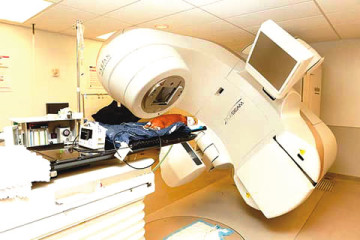
Cancer patients in Nigeria are not in the best of moods at the moment. They are angry and tense. Who would blame them? They have been travelling from north to south in the last three months in search of treatment for the life-threatening disease.
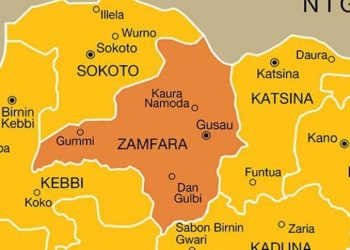
Some of them who spoke to our correspondent at the Lagos University Teaching Hospital, Idi- Araba, complained that they have had to travel as far as Sokoto and Edo states to access treatment since the radiotherapy machine at the centre broke down in July.
Even though the LUTH Chief Medical Director, Prof. Chris Bode, told our correspondent that approval had been given for the release of N16m needed to repair the damaged machine since June, the situation had not changed when our reporter visited the radiotherapy and oncology unit on Tuesday.
A source at the hospital told our correspondent that even though LUTH had the money to repair the cancer machine, it could, however, not do so without an official approval from the minister of health and the board of the teaching hospital.
He said, “It is not in the CMD’s power to release N16m under the rule of engagement and administration of teaching hospitals. It is only the minister that can approve such an amount.
“Even the permanent secretary cannot give approval for any purchase or need that is more than N10m. At present, the President has dissolved the boards of teaching hospitals and they are the ones that give the first approval. This development has slowed down crucial purchases in the hospital.”
The delay has, indeed, compounded the agony of patients at the hospital. Mrs. Bosede Ajayi who had breast cancer surgery at LUTH in May, lamented that instead of repairing the faulty machine, the hospital authorities are referring patients to alternative centres in Abuja and Sokoto for radiotherapy treatment.
Ajayi said, “They initially referred us to the teaching hospital in Ibadan, but when I got there, they were also having issues with their machine. I had to come back. Now, they are telling us to go to the National Hospital in Abuja or try the one in Sokoto.
“ Some patients in critical conditions have even travelled to India and China for radiotherapy, but I don’t have that kind of money. I need at least three sessions of radiotherapy. Will I be travelling abroad every time I need radiotherapy?”
Husband to a patient, Mr. Abdul Oseni, said doctors at the centre had advised him to take his wife to the cancer centre at the Usman Dan Fodio Teaching Hospital in Sokoto State for the crucial treatment.
Oseni said, “They told us to try the centre in Sokoto, but that is a lot of stress because I would still have to bring her back to Lagos after the treatment since her consultant is here.
“Why should a major cancer centre like LUTH have just one linear accelerator?”
The Head, LUTH Radiotherapy and Oncology Department, Prof. Remi Ajekigbe, confirmed that the delay in the repair of the machine had frustrated treatment at the centre.
He said, “Just this morning, we had to call the National Hospital in Abuja on behalf of a young lady who needed radiotherapy urgently; otherwise, she would become paraplegic (paralysed). She won’t be able to use her legs again.
“She does not know anybody in Abuja, and she would have to travel with a relation, and pay for air tickets for two people because she cannot travel by road in her condition. There are also many patients in Abuja, so she may have to wait for some days.”
Ajekigbe lamented that while the population of Nigerians living with cancer is increasing, the facilities needed to manage the disease is dwindling.
It is not only LUTH that grapples with a failed system. Inquiries by our correspondent showed that just three out of the 12 radiotherapy machines in the country are functioning at present.
They are the ones at the University of Benin Teaching Hospital, Edo State; the Usman Dan Fodio University Teaching Hospital in Sokoto; and the National Hospital in Abuja.
Oncologists in the country noted that cancer patients were dying, not due to the pain often associated with the disease, but because of the lack of infrastructure for their treatment.
A professor of radiation medicine at the University of Nigeria Teaching Hospital, Nsukka, Enugu State, Ifeoma Okoye, noted that Nigerian cancer patients were dying not due to the pain often associated with the disease but the lack of infrastructure for their treatment.
According to Okoye, cancer facilities in the country are short of the World Health Organisation’s recommendation.
Okoye notes, “The facilities we have for cancer care in this country is like a drop in the ocean. The WHO recommends that there should be a radiotherapy machine to a million persons, but we have one radiotherapy machine to about 16 million Nigerians.” Punch