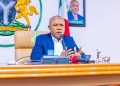
President Muhammadu Buhari says the economic measures his administration must take may lead to hardships.
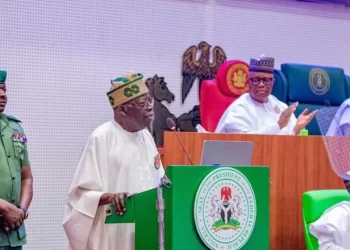
The president stated this Sunday morning in his Democracy Day nationwide broadcast.
He said his government had resolved to keep the Naira steady as devaluation had done dreadful harm to the Nigerian economy in the past.
He said he supported the monetary authority’s decision to ensure alignment between monetary policy and fiscal policy, saying that government would keep a close look on how the recent measures affect the Naira and the economy.
“But we cannot get away from the fact that a strong currency is predicated on a strong economy. And a strong economy pre-supposes an industrial productive base and a steady export market. The measures we must take may lead to hardships,” he said.
Buhari, who acknowledged that the problems Nigerians had faced in the last one year had been many and varied, stressed that the real challenge for his government had been reconstructing the spine of the Nigerian state.
He said the last twelve months had been spent collaborating with all arms of government to revive institutions so that to make them more efficient and fit for purpose.
“That means a bureaucracy better able to develop and deliver policy. That means an independent judiciary, above suspicion and able to defend citizen’s rights and dispense justice equitably. That means a legislature that actually legislates effectively and above all; that means political parties and politicians committed to serving the Nigerian people rather than themselves. These are the pillars of the state on which democracy can take root and thrive. But only if they are strong and incorruptible. Accordingly, we are working very hard to introduce some vital structural reforms in the way we conduct government business and lay a solid foundation on which we can build enduring change,” he said.
He said an important first step had been to get the government’s housekeeping right.
So we have reduced the extravagant spending of the past. We started boldly with the treasury single account, stopping the leakages in public expenditure,” the president stated.
He said his administration had identified 43,000 ghost workers through the Integrated Payroll and Personnel Information system, saying “That represents pay packets totalling N4.2 billion stolen every month.”
The president said the government would save N23 billion per annum from official travelling and sitting allowances alone.
“Furthermore, the efficiency unit will cut costs and eliminate duplications in ministries and departments. Every little saving helps. The reduction in the number of ministries and work on restructuring and rationalization of the MDAs is well underway. When this work is complete we will have a leaner, more efficient public service that is fit for the purpose of changing nigeria for the good and for good.
“As well as making savings, we have changed the way public money is spent. In all my years as a public servant, I have never come across the practice of padding budgets. I am glad to tell you now we not only have a budget, but more importantly, we have a budget process that is more transparent, more inclusive and more closely tied to our development priorities than in the recent past. 30% of the expenditure in this budget is devoted to capital items. Furthermore, we are projecting non-oil revenues to surpass proceeds from oil. Some critics have described the budget exercise as clumsy. Perhaps. But it was an example of consensus building, which is integral to democratic government. In the end we resolved our differences,” he said.
Buhari admitted that his government had made the very painful but inevitable decisions in the last few weeks “specifically on the pump price of fuel and the more flexible exchange rate policy announced by the Central Bank.
He said it was even more painful for him that a major producer of crude oil with four refineries that once exported refined products today had to import all of its domestic needs.
He emphasised: “This is what corruption and mismanagement has done to us and that is why we must fight these ills.”
He said as part of the foundation of the new economy, his administration had to reform how fuel prices had traditionally been fixed.
Explaining how the government arrived at the decision to hike fuel price from N86.50 to N145, Buhari said: “This step was taken only after protracted consideration of its pros and cons. After comprehensive investigation, my advisers and I concluded that the mechanism was unsustainable”. – Daily Trust.