By Kemi Asemota
President Muhammadu Buhari (PMB) is indeed playing to nature. Two words that have been used consistently to describe him are ‘incorruptible’ and ‘taciturn’. That no corruption allegation has sticked on him in two decades of holding public office is abundant to support the first image.
There are also ample evidences to support the second portrayal given PMB’s now famous ‘long silence’ on national issues. At best when he chose to talk about germane nationwide discuss, he would offer few inconsequential syllables from abroad. That has earned him another description, though, quite ignoble for a Nigeria president; ‘Baba Go Slow’ a local parlance used to describe leaders who are slow in reaction to serious issues.
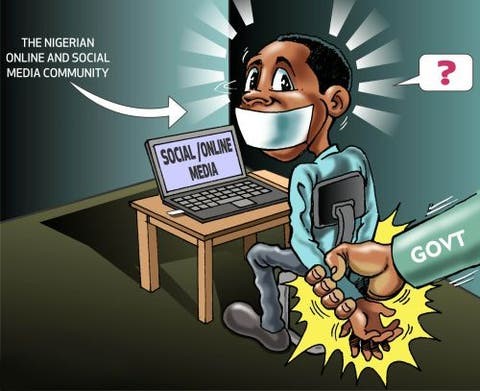
The first thing that came to my mind on reading about the Social Media Bill which was introduced to the Nigeria National Assembly some months ago, is that PMB wants to the whole country to take on his own nature of taciturnity.
While he is using the Department of State Service (DSS) to muffle voices of human and civil right advocates, he wants to employ ‘The Protection from Internet Falsehood and Manipulation Bill 2019’ to silence the rest of us.
The bill seeks to prohibit statements on social media deemed “likely to be prejudicial to national security” and “those which may diminish public confidence” in Nigeria’s government. It proposes these offenses be punishable by a fine, a prison sentence of three years, or both.
The bill also seeks to allow law enforcement agencies to order internet service providers to disable internet access. Likewise, lawmakers championing the bill claim it is necessary in the interests of security, peace, and unity.
In a clime where government is already using ‘national interest’ as a reason to deny people of their rights (Sambo Dasuki, Ibrahim Zakzaky and Omoyele Sowore comes to mind), it is easy to see beyond the facade called security, peace and unity.
For one, with about 29.3 million internet users across Nigeria, the passage of this bill would criminalise any form of online interactions and could even lead to closure of bloggers and online news media. It would also lead to arrests and detentions of journalists and activists, raids, and shutdowns of media outlets.
Secondly, I do not expect some lawmakers to kick against the bill because the social media has helped to bring to general public their excesses and corruption.
A fresh case in mind is that of the young Senator Ishaku Elisha Abbo, who was caught on camera brutally slapping a woman during a disagreement inside a sex toy shop in Abuja.
That the Police are prosecuting Senator Abbo who appeared in court in July was made possible by the social media where the tape was posted and received national outcry and condemnation. But for the social media the case would have been swept under the carpet. It is one of the last remaining places where Nigerians can express their opinions freely.
I believe that the existing Cyber Crimes Act and the Anti-Terrorism Act, has covered many of the offences the new bills seek to address, and it is coming only to gag freedom of expression by ordinary Nigerians.
For example, section 4 of the bill prohibits ‘abusive, threatening and insulting behaviour.’ This is vague and can easily lead to wrong interpretation depending on who is holding the longer part of the axe. It could lead many writers and social media commentator into jail; public commentators who, otherwise, are voicing out critical opinion on public dialogue and political commentary.
Section 3 also relates to the transmission of false statements of facts, contains provisions against sharing statements “likely to be prejudicial to the security of Nigeria, public safety, tranquillity, public finances and friendly relations of Nigeria with other countries”. Government of the day could use this to unduly punish critics of government policies and actions.
Most importantly, it is an invitation to anarchy. A bad and dictatorial leader wielding a law like this can wreck havoc in the system. I do not see any good coming out of this bill. It is only a means to make docile a vibrant people that have employed the social media as means to get their opinions through because the mainstream media are either owned by politicians or government.
This is the time to rise up and say No to this bill. It is a bill against freedom and humanity.