- Private hospitals and practitioners deserve federal intervention for everyone’s sake
In a meeting with the Office of the Secretary to the Government of the Federation, one of Nigeria’s capital health associations made a point and we agree substantially. The Association of General and Private Medical Practitioners of Nigeria (AGPMPN) asked for financial bailout and a dedicated bank.
Especially against the backdrop of the raging COVID-19 pandemic, the association’s president, Dr. Iyke Odo, made the following assertion: “We are not recognised, our role is not appreciated, the government has no deliberate policy to support the private sector doctors as it is done in other climes. We enjoy no incentives, such as tax waivers, subsidies, grants, not even friendly bank loans, special utility tariffs, import duty concessions for hospital tariffs…”
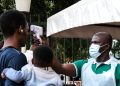
He noted that the federal and state governments have excluded them from treating COVID-19 pandemic patients “at a time when the rest of the world was mobilising their entire medical force to war.” He is right. Private hospitals have become fragile frontlines in the war against the disease, and have suffered not only the deaths of their personnel but also loss in finances. They have therefore had to pay huge sums of money on personal protective equipment (PPE), drugs, consumables and other essentials.
We have a lot of private clinics and hospitals in the country that have had to meet the shortfall in medical treatment. In spite of efforts by state and federal governments, most Nigerians believe, and with good reasons, that they will get better treatment in private hospitals.
This is not always the case as some government institutions, especially in Lagos, have competed with private ones. This does not take away from the reality that the Nigerian medical care is one of the lowest in the world. In a 2018 survey, the World Health Organisation ranked Nigeria 187 out of 191 countries with estimated 23, 640 healthcare three-tiered facilities across the country. In other surveys, Nigeria did not perform much better. The United States has issued a health advisory to its citizens to be wary of Nigerian healthcare facilities, describing them as mostly poor and substandard.
During the pandemic, we have not benefitted much from the budgetary allocations over the years, thus subjecting us to wrong diagnosis, fatal surgeries, sometimes dangerous drug treatments.
Hence those who can afford it go to the United Kingdom, The United States, Israel, Germany, et al.
Part of the problem is also training and brain drain. Our universities now lack high quality teachers and facilities, and the products only reflect the quality of their exposure.
Dr. Odo’s association recommended the setting up of a healthcare bank. This no one can impeach. If we can have infrastructure bank, or we can give bailouts to the power industry, the time has come to declare a state of emergency on health.
A people are a great resource to a nation because of two qualities: health and education. Successive governments have had to play down the powers of healthcare, and seen it as routine government policy. Yet our people die in big numbers everyday from preventable conditions, like malaria, typhoid fever and childbirth.
It requires an effort of will by state and federal governments to make Nigerian hospitals not only affordable but also of high quality. But elite indifference because of the oasis of foreign hospitals has been the major hindrance. The president, governors, ministers and other rich and powerful persons and their families already have selfish answers to healthcare. So the mass of Nigerians have to live with them. It is that misfortune that Dr. Odo, with his AGPMPN, has lamented.