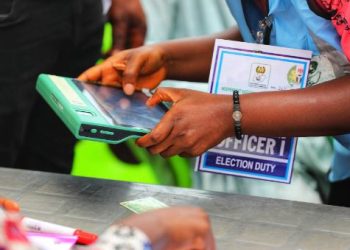
The Independent National Electoral Commission (INEC) has warned political parties that any primary election conducted outside the commission’s May 30 deadline remains invalid, unless a higher court overturns an earlier Federal High Court judgment on the matter.
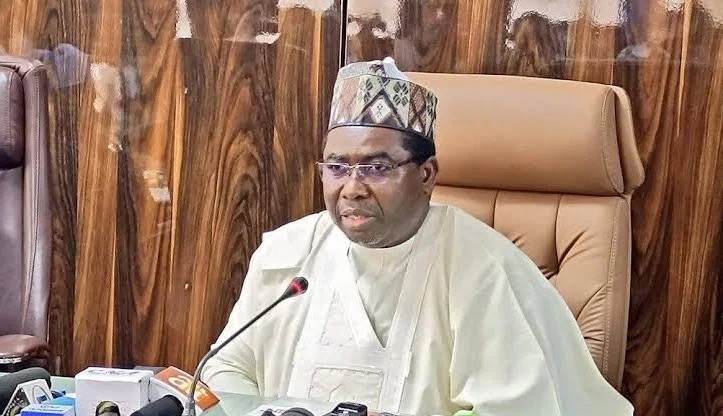
INEC National Commissioner and Chairman of the Information and Voter Education Committee, Mohammed Kudu Haruna, made the disclosure in a chat with The Punch.
He advised that political parties would have to continue to comply with the provisions of the Electoral Act 2026 pending the determination of the commission’s appeal before the Court of Appeal.
Haruna stated: “Obviously, for now, any primary held outside INEC’s May 30 deadline will be invalid unless the Court of Appeal overturns the Federal High Court judgment in INEC’s appeal against the ruling that the timetable breached the Electoral Act 2026 in some of its provisions.
“In other words, for now, the political parties are better advised to be guided by the existing Act.”
The INEC commissioner’s position follows the ongoing legal dispute over the commission’s timetable for party primaries and candidate nominations ahead of the 2027 general election.
A Federal High Court in Abuja presided over by Justice Mohammed Umar, in a judgment, had nullified aspects of INEC’s electoral guidelines and schedule put in place for the conduct of the 2027 general elections.
Justice Umar, delivering judgment in a suit filed by the Youth Party against INEC, marked FHC/ABJ/CS/517/2026, held that the commission could not lawfully shorten the timelines provided under Section 29(1) of the Electoral Act 2026 for the submission of party membership records and candidates’ particulars.
The court also held that INEC could not abridge timelines already provided under the Electoral Act 2026, noting that the electoral body acted outside its statutory powers under the Electoral Act 2026.
INEC subsequently filed an appeal and sought a stay of execution of the judgment, insisting that its timetable was issued in line with its constitutional and statutory responsibilities in the electoral process.
Before the court ruling, INEC had approved April 23 to May 30, 2026, as the window for political parties to conduct their primaries ahead of the 2027 general election.
The commission also directed parties to comply with other timelines contained in its revised election schedule.
Meanwhile, less than 24 hours after INEC appealed Justice Umar’s judgment, Justice James Omotosho of the Federal High Court in Abuja affirmed the powers of the INEC to issue and alter election timetables for the conduct of elections.
Justice Omotosho, while delivering judgment in a suit filed by the Social Democratic Party in Suit No: FHC/ABJ/CS/720/2026, held that INEC was constitutionally empowered to issue election timetables and schedules of activities for elections.
The judge, however, held that while the commission possesses such powers, it must exercise them strictly within the timelines prescribed by the Electoral Act, 2026.
The development comes as the African Democratic Congress primary election appeals committee in Kaduna State ordered rerun elections in several federal and state constituencies following petitions arising from the party’s recently concluded primaries.
Chairman of the committee, Dr Muhammed Fagge, said the panel thoroughly reviewed petitions, documentary evidence and submissions by aggrieved aspirants before reaching its decisions.
According to him, the committee uncovered irregularities and fraudulent practices in some of the primary elections.
Consequently, the panel declared several primaries inconclusive and ordered reruns in constituencies where it found substantial irregularities, procedural breaches, the omission of aspirants from ballot papers and insufficient evidence that voting took place.
In the Ikara/Kubau Federal Constituency, the committee directed a fresh primary after establishing that Ibrahim Kubau, a duly screened aspirant, was omitted from the ballot papers.
Similarly, it ordered a rerun in the Kaduna South Federal Constituency after investigations allegedly revealed a lack of credible evidence that elections were conducted across all wards in the constituency.
Fagge said rerun elections would be held in affected wards and constituencies across Kaura, Soba, Ikara, Kajuru, Badarawa/Malali, Magajin Gari II, Birnin Gwari, Tudun Wada West, Igabi, Kagarko, Kawo, Zaria, Chikun/Kajuru and Kudan/Makarfi, among others.
He said the decision was aimed at safeguarding the credibility and integrity of the party’s nomination process.
The committee also ruled on the Kaduna North Senatorial District primary, declaring that any attempt to adopt a consensus or affirmation process would be invalid unless it had the consent of all parties involved.
Fagge stressed that no aspirant should be denied a fair opportunity due to procedural lapses or electoral irregularities.
Haruna’s latest clarification on the INEC deadline, however, suggested that, pending the outcome of the appeal, political parties risk having any primary election conducted outside the May 30 deadline.