President Bola Tinubu ignored the concerns raised by many Nigerians over some provisions of the Electoral Act (Amendment) 2026. He signed the bill into law barely 24 hours after the National Assembly passed it on February 17, 2026. Yet, if Nigeria is to conduct a transparent and credible election in 2027, these grey areas require urgent review.
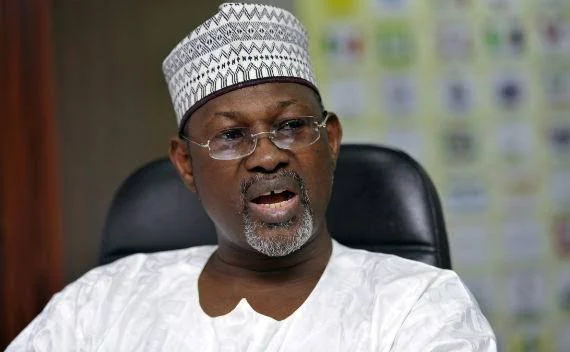
A former Chairman of the Independent National Electoral Commission, Attahiru Jega, recently reinforced this concern. In a paper titled “Some Reflections on the 2026 Electoral Act and Nigeria’s Electoral Democracy”, Jega identified Sections 60(3), 83(5), and 138(1) as among the troubling provisions that deserve immediate amendment.
He rightly warned that Section 60(3), which makes the results sheet, Form EC8A, the primary collation document whenever electronic transmission fails, could become a ready tool for electoral fraud.
“Given what we know about the Nigerian environment and the desperation of the ‘do-or-die’ politicians, there shouldn’t be such a vague provision, which would be used to truncate electronic transmission, in favour of manual transmission of results, which is easier to fraudulently manipulate and exploit,” he said.
His fears are well-founded. The Nigerian Communications Commission has consistently maintained that the country enjoys over 93 per cent network coverage.
Before the 2023 general elections, INEC also assured Nigerians that it had the capacity to transmit results electronically in real time from across the country.
It is, therefore, baffling that the framers of the amended Act created an escape route that could undermine electronic transmission despite these assurances.
Equally troubling is Section 83(5), which bars courts from entertaining suits relating to the internal affairs of political parties.
Jega questioned the wisdom of denying the judiciary such powers when some internal party actions may clearly violate constitutional provisions. He rightly argued that the section should be moderated.
Perhaps the most indefensible provision is Section 138(1), which removes qualification as a ground for challenging an election after the polls.
Referring to Section 131 of the 1999 Constitution, which prescribes a minimum of a School Certificate or its equivalent for anyone seeking elective office, Jega noted that “there does not seem to be any rational justification for removing it; unless, of course, if some certificate fraudsters and qualification racketeers would like to have an unrestricted field day.”
Drawing from recommendations made by previous reform panels, including the Electoral Reform Committee headed by the late Muhammad Uwais and inaugurated by the late President Umaru Yar’Adua in August 2007, Jega also urged that other far-reaching electoral reforms be undertaken at the earliest opportunity after the 2027 elections.
These include strengthening INEC’s independence by removing from the President the power to appoint its chairman and national commissioners.
He also advocated unbundling the commission so it can concentrate on organising elections, while separate agencies handle the prosecution of electoral offenders, constituency delimitation, and the registration and regulation of political parties.
Jega further recommended introducing a stringent legal threshold that political parties must meet before they can field candidates, particularly for governorship and presidential elections.
He called for a reduction in the excessively high campaign finance limits to curb the growing monetisation of Nigeria’s electoral process.
These proposals are consistent with Jega’s long-standing advocacy. At a public forum marking the June 12 Democracy Day celebration in Lagos in 2025, the former INEC chairman lamented the slow, compromised judicial process surrounding election petitions and the increasing tendency of courts to determine election winners.
He proposed that all election-related disputes should be mandatorily resolved before elected officials are sworn into office.
Jega’s observations deserve serious attention. The Federal Government should critically examine his recommendations and move swiftly to amend the defective provisions in the Electoral Act before the next general election.
Nigeria’s democracy cannot continue on its current trajectory. In the Fourth Republic, only the 2015 presidential election stands out as an exception. Virtually every other presidential contest has ended at the Supreme Court. That is an anomaly. In a democracy, it is the electorate, not the judiciary, that should determine election winners.
Judges, too, must exercise restraint and ensure that their orders and judgements strengthen, rather than diminish, electoral and judicial integrity. Ultimately, only a transparent, credible and legally sound electoral process can restore Nigerians’ fading confidence in the ballot and reinforce the legitimacy of democratic governance.