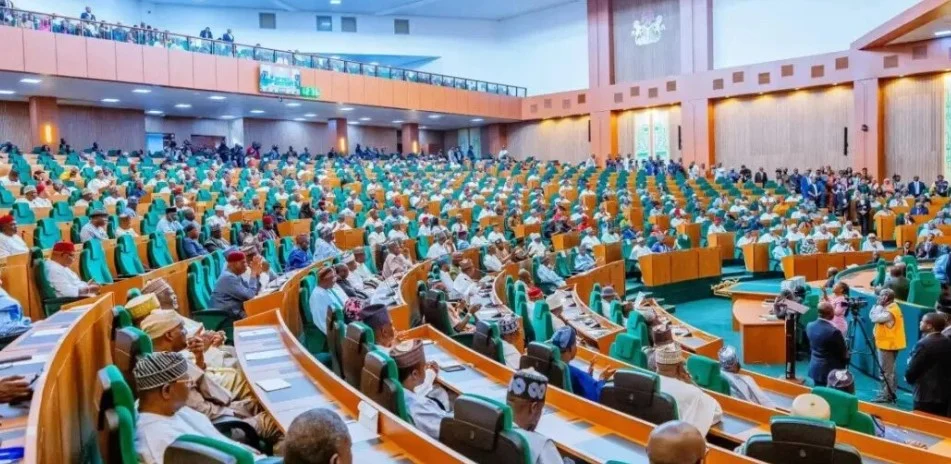
When the House of Representatives recently resolved to investigate all seized, forfeited, recovered and repatriated assets managed by government institutions since Nigeria’s return to democratic rule in 1999, it brought to the fore concerns about transparency, accountability and poor record-keeping.
The resolution followed the adoption of a motion sponsored by Ibe Osonwa, who called for a comprehensive audit and verification of recovered assets held by anti-corruption agencies, security agencies, ministries, departments and agencies, regulatory bodies and the courts.
The lawmaker said that since May 29, 1999, various anti-corruption and security agencies, MDAs, regulatory bodies, and the courts had seized, forfeited, recovered, managed, disposed of and repatriated assets derived from corruption, money laundering, financial crimes, illicit financial flows, terrorism financing and other unlawful activities.
According to him, the recovered assets comprise cash, landed properties, shares, petroleum assets, luxury vehicles, vessels, aircraft, investments, digital assets and other movable and immovable properties worth trillions of naira.
Recoveries of looted government assets and funds have been recurring in the country since independence. It is estimated that $600 billion has been stolen or wasted under successive administrations since independence.
The late Head of State, Sani Abacha, was reported by the global anti-graft watchdog, Transparency International, to have looted between $3 billion and $5 billion during his despotic reign from 1993 to 1998.
When President Bola Tinubu inaugurated the National Central Database of Forfeited Assets in May 2025, there were high hopes that this approach would help fight corruption.
Of course, such a database had long been expected, given the various allegations and discoveries about looted funds dating back to the Abacha years.
Additionally, there have been claims about the diversion of recovered funds and assets by government officials, especially under former President Muhammadu Buhari and Tinubu.
The central database was designed to serve as a single repository for forfeited assets in a transparent format.
This was expected to encourage the public to track the recovery of assets from corrupt government officials and was to be operated under the Proceeds of Crime Act and the 2024 regulations on standardised automated asset management.
It was conceptualised to phase out the archaic system of record-keeping in silo and replace it with multiple security and legal institutions.
Poor record-keeping, as well as a lack of accountability and transparency, has dogged efforts by governments around the world to repatriate stolen funds domiciled in their jurisdictions.
TI said in a 2018 report that the weakness among affected countries in accounting for repatriated funds had raised posers about “how to make sure that the money is not embezzled again, and actually benefits the real victims of corruption – the ordinary people whose state finances were plundered.”
The EFCC recorded its largest-ever single-year asset recovery in 2024, seizing over N364.6 billion and $214.5 million. Some of these funds were transferred to the Nigerian Education Loan Fund and the Nigeria Consumer Credit Corporation.
High-profile forfeitures include those of a former Attorney-General and Minister of Justice, Abubakar Malami (48 properties valued at approximately N180.4 billion); former Delta State Governor James Ibori (£4.2 million directly, with supplemental London court confiscation rulings targeting over £101 million in high-end properties, luxury vehicles, and hidden bank funds); erstwhile Bayelsa State Governor, Diepreye Alamieyeseigha ($17.7 million in cash and assets across multiple jurisdictions).
Erstwhile Inspector-General of Police, Tafa Balogun (properties, stocks and cash running into N13bn); ex-Petroleum Minister, Diezani Alison-Madueke (permanent forfeiture of over 56 high-value luxury buildings in Banana Island, Lagos, and Abuja alongside international asset recoveries exceeding $52 million coordinated with global anti-corruption agencies).
Others include the immediate Governor of the Central Bank of Nigeria, Godwin Emefiele (an estate comprising 753 duplexes and apartments in Abuja, seven luxury properties, over $2 million in cash and share certificates); and N13 billion recovered from a flat in Ikoyi, Lagos in 2017.
The EFCC has also recovered funds and assets from ex-accountants-general of the federation, Ahmed Idris (N30 billion in cash and assets, as well as an additional $900,000 amid an ongoing trial); Chukwunyere Nwabuoku (N200 million) and Jonah Otunla (N6.39 billion).
The EFCC insists that it pays recovered funds into designated CBN asset recovery accounts.
According to it, forfeited assets are managed under the Proceeds of Crime (Recovery and Management) Act, 2022, which provides a legal framework for preserving, auctioning and disposing of recovered assets.
It says it has also introduced electronic auctions, licensed asset managers, and structured procedures for disposing of forfeited properties to secure them during ongoing cases.
One such case is the N80.2 billion fraud preferred against former Kogi State Governor Yahaya Bello.
Therefore, the probe must be far-reaching and produce results. It must not go the way of some parliamentary probes that amounted to little or nothing.
Ultimately, Nigeria must design strategies that make it impossible for public officials to loot the treasury.