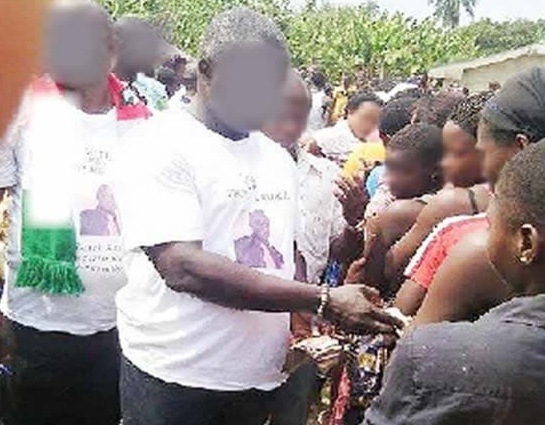
Election integrity in Nigeria is at a low ebb. Vote trading is a major contributor. Despite the laws meant to stop it, the scourge has continued to worsen.
Unsurprisingly, the European Union Support to Democratic Governance in Nigeria Election Observation Hub reported recently that voters were rewarded heavily for selling their votes during the Ekiti and Osun governorship elections.
The Hub, comprising the Kukah Centre, The Albino Foundation Africa, Nigerian Women Trust Fund, Yiaga Africa, International Press Centre, and Centre for Media and Society, said voters got up to N50,000 for selling their votes.
In some cases, some parties shelled out N75,000 per voter in the Osun polls last August. This is disturbing.
At the presentation and dissemination of the report on the last Ekiti and Osun off-cycle elections, Bolade Eyinla, who read the findings of the Hub, said vote trading was becoming a pandemic. That is true.
The sanctity of the vote and freedom of choice, he added, was beginning to come under severe threat and pressure.
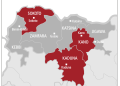
In Ekiti State, for instance, party agents were reportedly the main actors in at least 90 per cent of the 84 verified vote-trading incidents recorded in the June governorship election.
In Osun, vote trading was reportedly observed in 69 per cent of the polling units monitored in the governorship election.
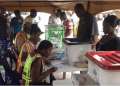
Usually, the voter marks the ballot paper to show his preference. Then, he displays it to the party agents for verification and goes for payment at nearby houses, shops, and hotels outside polling-unit boundaries.
The phenomenon is not new. It was prevalent in previous republics, only that the scale and the amount of money involved then were lower than what is currently obtainable.
Vote trading is a major problem in many other countries. These include Hungary, Moldova, Indonesia, the Philippines, Argentina, Mexico, and Venezuela. In Africa, it is more prevalent in Nigeria and Kenya.
The malaise is difficult to stop because it is largely fuelled by poverty. Vote buyers target people with lower incomes, who need money to solve basic problems. Former Ekiti State governor, Ayodele Fayose, described the phenomenon as “stomach infrastructure.”
The high reward for political office in Nigeria also contributes to this problem. People want to win elections at all costs so they can enjoy fat salaries and other entitlements in office.
Vote trading is a recipe for bad governance. It engenders the emergence of corrupt politicians and, invariably, a reduction in the quality of services the government provides.
It is a threat to democracy, as it undermines the autonomy of voters who now vote according to the dictates of monetary inducement. This affects ballot secrecy and overall election integrity.
Incidentally, Section 22 of the Electoral Act 2026 prescribes a fine of at least N5 million, imprisonment of up to two years, or both, and a 10-year disqualification from contesting public office for those convicted of vote trading.
Regrettably, vote traders have remained unpunished because a lot of people are involved in it.
To stamp out this scourge, security agencies must arrest those involved in it and other electoral offences and ensure they are diligently prosecuted. Houses, shops, or hotels used as payment centres should be identified and sealed.
The owners should also face prosecution. Those found guilty should face the full weight of the law. The outcome of arrests and prosecutions should be made public.
The media should help in identifying the culprits, the amount paid and payment centres. They should expose them to the public.
It is essentially the responsibility of candidates and political parties to stop vote trading. If they do not exploit the poverty in the land for electoral gains, it will likely stop.
It may also stop if elected political office is made less attractive financially.
Religious organisations should educate their members on the dangers of selling their votes. If many voters shun the practice, the problem will stop.