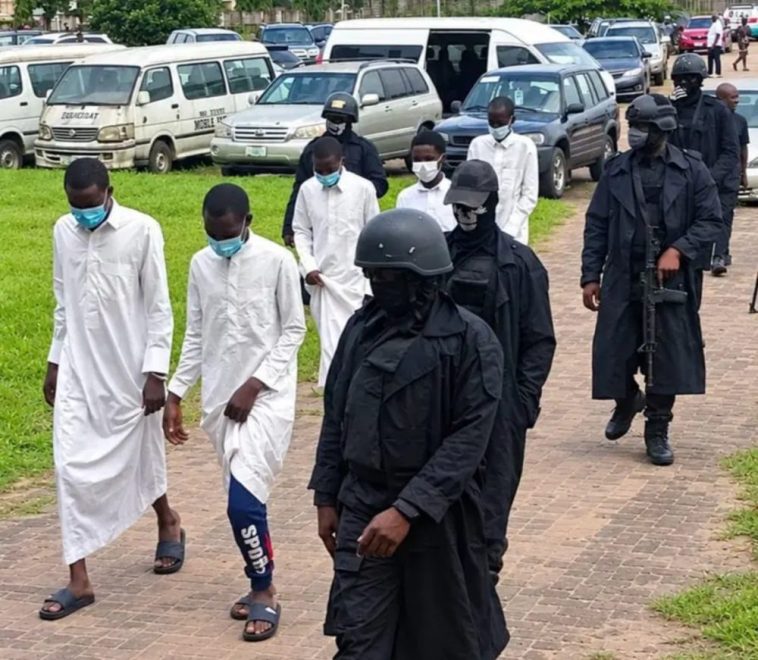
The Igbo Women Assembly (IWA), a retired military officer, the Coalition of South East Youth Leaders (COSEYL) and the Indigenous People of Biafra (IPOB) have reacted to the reported identities of five suspects arrested over the abduction of prospective National Youth Service Corps (NYSC) members in Imo State, insisting that insecurity in the South-East should not be blamed solely on Igbo youths or IPOB and its Eastern Security Network (ESN).
The groups called for a comprehensive investigation into the abduction and wider criminal networks in the region, while warning against ethnic profiling and the premature attribution of criminal activities to particular groups.
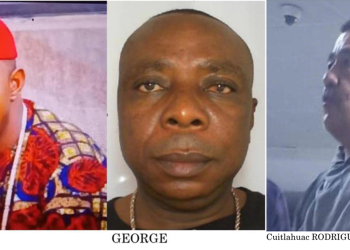
The five suspects were identified as Usman Aliyu, Babangida Aliyu, Mohammed Ali, Aminu Haliru and Ibrahim Jiji.
IWA National President, Lolo Nneka Chimezie, and retired General Ijioma Nwokoro Ijioma questioned aspects of the security situation surrounding the incident, with Ijioma alleging that the government knew more about insecurity in the region than it had publicly acknowledged.
COSEYL urged security agencies to uncover the alleged kidnapping networks and establish the suspects’ possible links to other crimes, while IPOB argued that the arrests supported its position that it was being unfairly blamed for criminal activities in the South-East.
Chimezie, who said she had faced criticism and security scrutiny over her position on insecurity in the region, maintained that criminal activities in the South-East involved multiple actors and required comprehensive investigations into all suspected perpetrators.
“I have always made it clear that the freedom fighters and Biafran liberation groups alone should not be suspected for insecurity in the South-East. There are other people involved,” she said.
She questioned how gunmen could reportedly intercept two buses and abduct more than 20 prospective corps members in broad daylight despite the presence of police and military checkpoints along the Owerri–Onitsha Expressway.
“How can we have all these checkpoints in the South-East and still have people being kidnapped in broad daylight?” she queried.
The IWA leader alleged that security operations in the region had disproportionately targeted young Igbo men, with arrests sometimes following attacks without publicly established evidence linking those detained to the crimes.
She called for investigations into alleged criminal activities involving some herders and other groups operating along South-East highways and in rural communities, insisting that all credible leads should be pursued without ethnic or political bias.
Chimezie also renewed her call for the withdrawal of military deployments from the region, arguing that the proliferation of checkpoints had not delivered the desired security outcomes.
She urged South-East governors and community leaders to strengthen local vigilante structures and improve cooperation with law enforcement agencies to tackle insecurity.
Similarly, retired General Ijioma Nwokoro Ijioma questioned the circumstances surrounding the April 2021 attack on the Owerri Custodial Centre, during which more than 1,800 inmates escaped.
The retired general, who spoke exclusively with Vanguard, argued that the scale of the operation raised questions about possible insider involvement and security failures.
“When that prison was attacked, I said IPOB did not have the capacity to carry out that level of operation. If IPOB had that capacity, it would be able to declare Biafra,” he said.
Ijioma alleged that the government knew more about the security situation in the region than it had publicly acknowledged.
“I am of the opinion that the government knows what is happening. How many times will I say it? The government is complicit,” he alleged.
He also questioned how gunmen could reportedly abduct more than 20 prospective corps members along the Owerri–Onitsha Expressway despite security checkpoints along the route.
“No criminal element can carry out such an operation without having intelligence and communication available to them, and the confidence that the authorities will not respond,” he said.
Ijioma further alleged that IPOB and ESN were sometimes blamed for attacks without sufficient investigation of other possible perpetrators.
He urged security agencies to improve intelligence gathering, investigate all credible leads and ensure that those responsible for violent crimes were held accountable.
Meanwhile, COSEYL described the arrest of the five suspects as vindication of Igbo youths, warning against ethnic profiling in the fight against insecurity.
In a statement signed by its President-General, Comrade Goodluck Ibem, the group commended the Department of State Services (DSS), the military, police and other security agencies involved in the operation that reportedly led to the rescue of victims and the arrest of the suspects.
COSEYL urged investigators to go beyond the arrests and arraignment of the suspects to expose the alleged kidnapping syndicate, trace its financial networks and apprehend any accomplices still at large.
It said the development reinforced its longstanding position that criminality in the South-East should not be attributed to Igbo youths without credible evidence.
“For too long, Igbo youths have been unfairly stigmatised, vilified and portrayed in certain quarters as the principal perpetrators of criminal activities in Igbo land,” the group said, insisting that criminal responsibility must be established through investigation rather than ethnic prejudice.
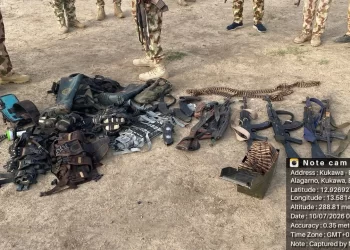
The group called on investigators to establish the suspects’ backgrounds and possible links to wider criminal networks, trace alleged ransom payments, investigate the sources of any recovered weapons and determine whether the suspects were connected to other kidnappings across the region.
It cautioned, however, against drawing conclusions about the suspects’ ethnic or regional origins based solely on their names, stressing that such matters must be established through verified evidence.
COSEYL also urged South-East governors, traditional rulers and community leaders to strengthen intelligence-sharing and community security structures to prevent criminal gangs from operating in the region.
It appealed to the media and political actors to exercise restraint in reporting security incidents and avoid blaming Igbo youths before investigations were concluded.
“The South-East must not become a haven for criminal gangs, regardless of where their members come from,” COSEYL said, insisting that anyone implicated in kidnapping and other violent crimes must be prosecuted in accordance with the law.
It described the arrests as an opportunity to expose the networks behind the alleged crimes and ensure justice for victims.
“Enough of kidnapping. Enough of ethnic profiling. Enough of impunity,” the group declared.
IPOB also described the reported identities of the five suspects as vindication of its position that those responsible for insecurity in the South-East were not necessarily members of the group or ESN.
In a statement issued on Tuesday by its Media and Publicity Secretary, Emma Powerful, the group questioned who would have been blamed for the abduction had the suspects not been apprehended.
“Had this atrocious kidnapping happened without these suspects being caught, who would the Nigerian security apparatus and hostile media have blamed?” IPOB asked.
The group argued that, without the arrests, Igbo youths and ESN members might have been blamed, potentially exposing innocent people to arrest and alleged mistreatment.
It maintained that its members were not responsible for kidnappings in the South-East, describing ESN as an outfit established to protect communities, farmers and residents against armed attacks.
IPOB commended the DSS director in Imo State and the prosecuting team, calling for a comprehensive investigation into the suspects’ identities, origins, networks and alleged accomplices, with the findings made public in accordance with the law.
The group also renewed its criticism of the continued detention of its leader, Mazi Nnamdi Kanu, arguing that his warnings about security threats in the region had not received adequate attention.
It urged South-East governors and political leaders to strengthen security in rural communities and forests and ensure that innocent residents were not unfairly associated with criminal activities.