Macroeconomic stability is meaningless to a hungry household, a struggling small business or a worker whose salary disappears before the middle of the month. Many Nigerians can relate to this harsh reality.
Indeed, after more than three years of sweeping reforms by the Bola Tinubu administration, Nigeria is recording gains in key economic indicators.
The IMF acknowledged this in its October World Economic Outlook, while other multilateral institutions have offered broadly similar assessments. But what is the value of a stabilising economy if millions of Nigerians cannot afford to live in it?
Tinubu’s reforms have created the prospect of a more stable economic future. Yet, for ordinary citizens, that promise remains painfully distant.
The challenge before the President is no longer simply to stabilise the macro economy, but to translate that stability into affordable food, cheaper transportation, decent jobs, reliable electricity and a measurable improvement in household welfare.
On May 29, 2023, Tinubu announced the removal of the petrol subsidy. Two weeks later, his administration floated the naira, allowing market forces a greater role in determining its value. Tax reforms followed, ostensibly to broaden the revenue base rather than simply increase tax rates. Their implementation began this year.
The economic logic behind these measures is to eliminate costly distortions, improve revenue generation, attract investment and create a more sustainable fiscal framework. There are encouraging signs that some of these objectives are being achieved.
Nigeria’s foreign reserves, which stood at $37.09 billion in December 2022, rose to $55.09 billion in October 2026. The current account balance improved to 7.0 per cent in 2026, from 4.8 per cent of GDP in 2025.
Federal, state and local governments are also receiving substantially higher monthly allocations. In September, the three tiers shared N2.42 trillion, compared with N760.22 billion in October 2022. Value-added tax receipts to subnational governments have likewise increased significantly.
These are not trivial developments. A country cannot build a durable economy on subsidised consumption, an artificially managed exchange rate and chronically inadequate public revenue. But neither can it claim economic success merely because its reserves have risen, government coffers are fuller, or its external balances have improved.
The ultimate test of economic reform is not how well the government’s books look, but how much better the people live. By that measure, the Tinubu administration still has a formidable task ahead.
The IMF has warned of the contradiction. Nigeria’s improved macroeconomic stability and favourable terms-of-trade effects, it noted, coexist with higher prices for essentials that are expected to aggravate poverty and food insecurity.
That warning captures the central paradox of the reforms.
The economy may be stabilising, but millions of Nigerians remain trapped in a daily struggle for survival.
Petrol, which sold for about N187 per litre before subsidy removal, now costs around N1,400 or more in many places. Diesel prices have also climbed to approximately N1,900 per litre.
These costs ripple through virtually every sector, from farming and manufacturing to transportation, retail and household consumption.
The consequences are inescapable. Transport fares rise. Farmers pay more to move produce. Manufacturers spend more on generators and distribution. Traders pass additional costs to consumers. Workers devote a larger share of their earnings simply to getting to work. Small and medium-sized enterprises, already constrained by expensive credit and weak purchasing power, struggle to remain afloat.
The conflict involving the United States, Israel and Iran has added another layer of uncertainty to international energy markets.
Nigeria cannot dictate the course of a Middle East war. Still, it can reduce its exposure to external shocks by improving domestic energy supply, expanding affordable alternatives and removing the bottlenecks that keep production and distribution costs high.
Inflation has eased considerably from its previous peaks, with the consumer price index reported at 14.63 per cent following the 2025 rebasing. But lower inflation does not mean lower prices.
It means prices are rising more slowly. The food, rent, transport, and school fees that households can barely afford today do not automatically become cheaper just because inflation has declined.
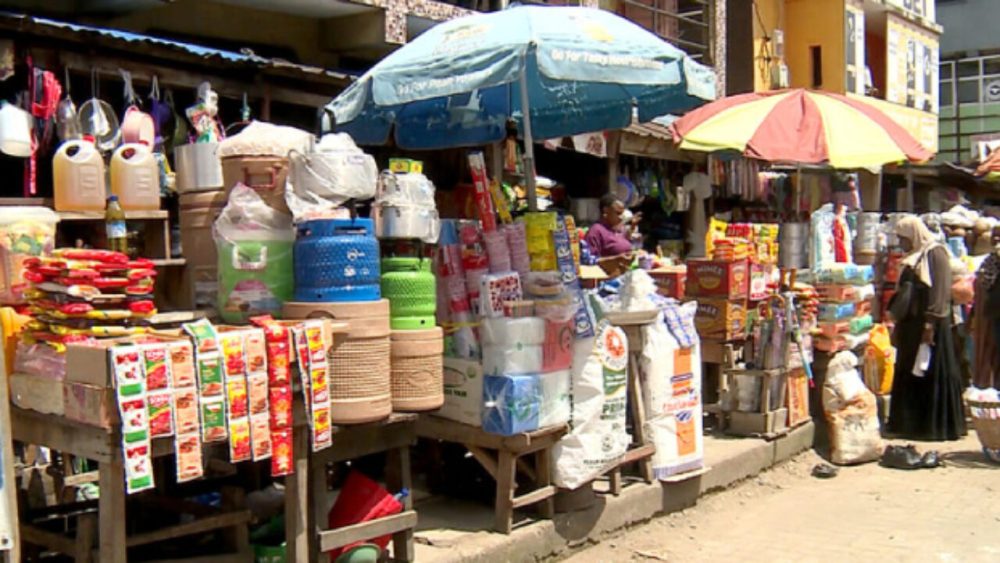
A 50kg bag of short-grain rice sells for between N50,000 and N60,000. School fees, rent, medicines, healthcare, cement, vehicles and electronics have become increasingly expensive. Electricity remains unreliable, even for customers paying the premium Band A tariff.
Unfortunately, higher government allocations have not translated into the quality of public services Nigerians deserve. Roads remain in disrepair, insecurity disrupts farming and commerce, and inadequate infrastructure continues to inflate the cost of doing business.
The public is being asked to endure the immediate pain of reform without receiving a commensurate improvement in the services that government is supposed to provide.
The poverty figures make this disconnect even more troubling. The Global Multidimensional Poverty Index recorded an increase of 17.9 million people falling into multidimensional poverty in Nigeria between 2021 and 2024, the largest increase among the countries assessed.
Separately, the National Poverty Estimate cited in this debate puts the proportion of Nigerians living in poverty at 63 per cent, or about 140 million people.
These figures demand more than expressions of concern. They raise fundamental questions about the sequencing of reforms, the adequacy of social protection and the capacity of government to cushion the people against economic shocks.
If the gains are concentrated in public finances and headline indicators while deprivation spreads, the reform programme risks losing the public confidence it needs to endure.
The Federal Government’s response has included raising the national minimum wage from N30,000 to N70,000 and introducing targeted cash transfers. But inflation has substantially eroded purchasing power, while many workers in the informal economy and unemployed Nigerians receive no minimum wage at all.
As of September, the government said it had reached 10.46 million households through cash transfers totalling N658.9 billion, using biometric identification.
The intervention offers some relief to beneficiaries, but its reach must be assessed against the scale of poverty. When approximately 140 million people are poor, millions of households remain beyond the programme’s immediate reach.
Cash transfers can be valuable when beneficiaries are correctly identified, payments are timely, and oversight is effective. Without a credible, regularly updated social register and transparent verification, however, the programme risks exclusion, duplication and waste.
The government must publish verifiable information on coverage, disbursements and outcomes rather than expect Nigerians to accept headline figures as proof that assistance is reaching those who need it most.
The reported 30-day petrol price discount is another intervention whose impact must be demonstrated at the pump.
If the measure is expected to cost 0.4 per cent of public revenue, the government must explain its financing, disclose the mechanism for passing the discount to consumers and show how the benefit is being measured.
Public money should not be committed to an intervention whose practical effect households cannot readily identify.
More fundamentally, the government must move beyond short-term palliatives towards measures that permanently reduce the cost of living. It should consider targeted tax relief where fiscally feasible, expand school feeding and other effective social programmes, and improve access to affordable healthcare and essential medicines.
It must tackle insecurity, rehabilitate critical roads and remove the infrastructure bottlenecks that raise the cost of transporting food and goods.
The tax reforms deserve particular attention. Broadening the tax base may be necessary to fund public services, but legitimate tax collection must not become an excuse for multiple taxation, harassment and unofficial levies.
The Federal Government should work with states and local councils to eliminate nuisance taxes and illegal charges imposed on farmers, traders, transporters and businesses. Every unnecessary levy adds to production costs and ultimately lands on the consumer’s table.
The compressed natural gas initiative must deliver on its promise. Expanding refuelling infrastructure, ensuring reliable supply, supporting affordable vehicle conversions and encouraging public transport operators to adopt CNG could help lower commuting and freight costs.
Announcing alternative-energy programmes is not enough; their success must be judged by the number of Nigerians whose transport bills actually fall.
Above all, the government must confront the cost of borrowing and the growing pressure of debt service on public finances.
Higher revenue is of limited value if an excessive share is absorbed by debt obligations while capital spending, infrastructure and essential services remain underfunded. Nigeria cannot borrow its way to sustainable prosperity while neglecting the investments that would expand production, create jobs and improve living standards.
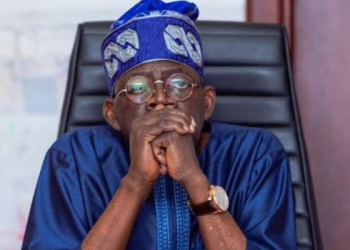
The Tinubu administration has taken politically difficult decisions in pursuit of macroeconomic stability. But the justification for those decisions cannot be that Nigerians must endure hardship indefinitely because the indicators are improving.
Reform is a means to prosperity, not an end in itself. Nor should the public be told that it is better off simply because the government has more money to spend.
Economic stability that stops at the treasury is not shared prosperity. It is an incomplete reform programme.
The President must now make the transition from stabilising the economy to improving the lives of the people who sustain it.
That means measurable reductions in food and transport costs, more reliable electricity, better roads, greater security, productive employment and social protection that reaches the genuinely vulnerable.