Nigeria and China are seeking to turn their growing cultural relationship into a stronger commercial partnership in film, with filmmakers from both countries exploring co-production, technology transfer and distribution opportunities that could open up two major audiences to each other’s creative industries.
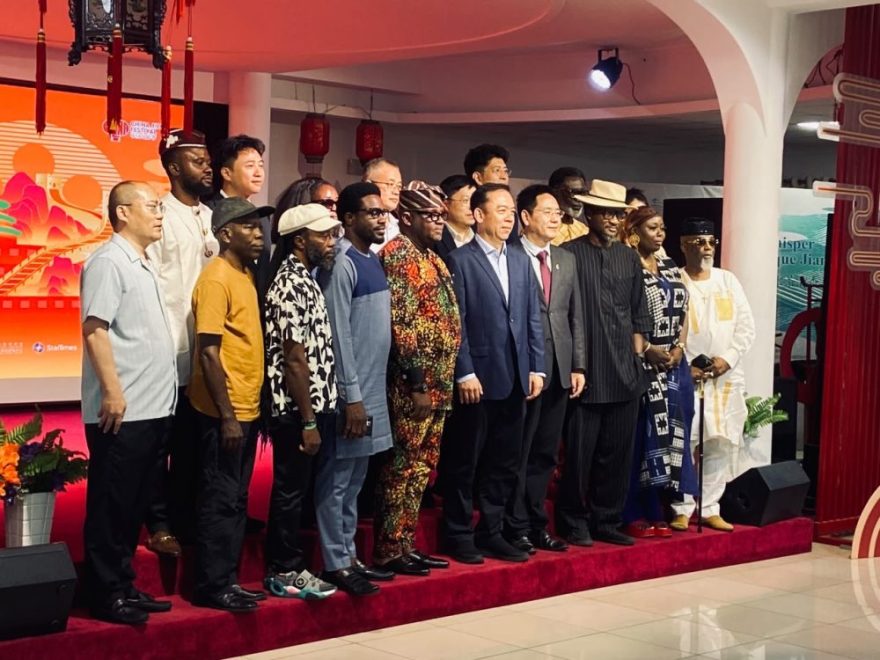
The push gained momentum at the Chinese Film Screening in Nigeria 2026 in Abuja, where industry stakeholders identified the combination of Nigeria’s storytelling strength and China’s cinema infrastructure, capital and distribution expertise as a potential pathway to expanding the global reach of their productions.
The discussions also highlighted a major challenge facing the proposed partnership: translating cultural exchanges and diplomatic goodwill into concrete business arrangements that enable filmmakers to secure investment, distribute their works across borders and earn sustainable returns.
The Director of the China Cultural Centre in Nigeria, Mr Yang Jianxing, said film remained an important bridge for strengthening understanding between the two countries, whose creative industries offered considerable scope for collaboration.
“China and Nigeria share a deep-rooted traditional friendship and close people-to-people exchanges, and film serves as an important bridge for fostering mutual understanding between our peoples,” he said.
Jianxing said cooperation had expanded through reciprocal film screenings, professional exchanges, festivals and the distribution of productions across national borders.
The partnership involving the Chinese Embassy, the China Cultural Centre and StarTimes Nigeria has helped bring Chinese film and television productions to Nigerian audiences through initiatives including a month-long showcase, the Chinese Women’s Film Festival and screenings of works dubbed or subtitled in local languages, including Hausa.
“StarTimes has successfully brought outstanding Chinese productions and knowledge series to a broader audience,” he said.
He added that Nigerian films had also reached mainstream Chinese digital media platforms, exposing audiences there to Nigerian stories, characters and experiences.
The commercial potential of the relationship was underscored by Fidelis Duker, founder of the Abuja International Film Festival, who said discussions with the Chinese delegation had focused on production, distribution and co-production opportunities, including engagements with Nigerian film institutions and plans to meet distributors and cinema operators in Lagos.
Duker argued that the population sizes of the two countries presented an opportunity to expand the reach of their film industries, provided that investment, technology and distribution networks were developed to support the exchange of content.
“What we found out today, or what we’ve known over the years, is that China has technology,” he said, adding that the Chinese delegation had told participants that China sold 1.3 billion cinema tickets in the previous year.
China’s film market provides an indication of the scale of the opportunity. According to figures released by the China Film Administration, the country generated 51.832 billion yuan in box-office revenue in 2025, while cinema attendance reached 1.238 billion. Domestic productions accounted for nearly 80 per cent of total box-office receipts, and the country ended the year with 93,187 cinema screens.
The figures illustrate the scale of China’s production and exhibition ecosystem, offering Nigerian filmmakers potential access to a market where locally produced content commands a substantial share of cinema revenue.
For Nigeria, the opportunity extends beyond exporting completed films. Collaboration could also create avenues for joint productions, technical training, improved post-production capacity and the development of distribution arrangements that give Nigerian stories a wider international audience.
Duker said the combination of Nigerian creativity and Chinese industrial capacity could be particularly valuable to both sides. – Arise.