The Federal Government has quarantined high-risk contacts of Nigeria’s confirmed Ebola Virus Disease case but said political campaigns, conferences and other major public gatherings can proceed, pending any change in the public health situation.
Minister of Health and Social Welfare, Prof Muhammad Ali Pate, disclosed this yesterday in Abuja, saying the government had yet to identify sufficient scientific grounds to recommend changes to planned events, despite intensifying efforts to prevent the infection from spreading into communities.
The position comes as Nigeria approaches the 2027 general election, when political activities and mass gatherings are expected to increase.
Pate said the government would continue to monitor the outbreak and adjust its recommendations if scientific evidence indicated that restrictions had become necessary.
He explained that the index patient, who was asymptomatic on arrival in Nigeria, developed symptoms a few days later. The patient has since shown signs of improvement, with the latest laboratory results indicating significant progress, although the outcome remains uncertain.
The minister said identified contacts included people linked to the hospital where the patient received care, domestic contacts and individuals associated with a private medical facility she had visited.
The contacts have been categorised according to their levels of exposure, with high-risk individuals quarantined in designated facilities and others isolated under public health supervision.
“The high-risk contacts have been quarantined fully in a facility. The others have been isolated and we’re ensuring that the isolation is enforced, consistent with public health expert guidelines. We’ve activated the incident management system,” he said.
Pate added that the Nigeria Centre for Disease Control and Prevention (NCDC) was coordinating the day-to-day operational response in line with international health regulations.
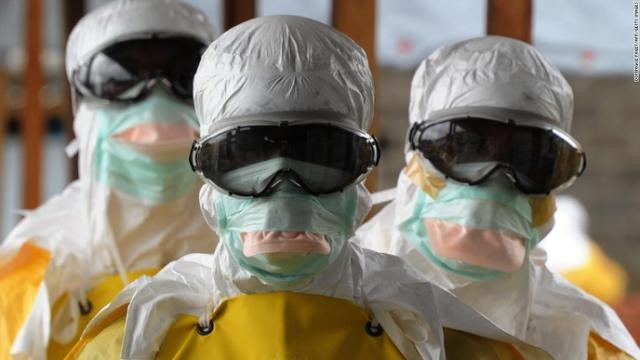
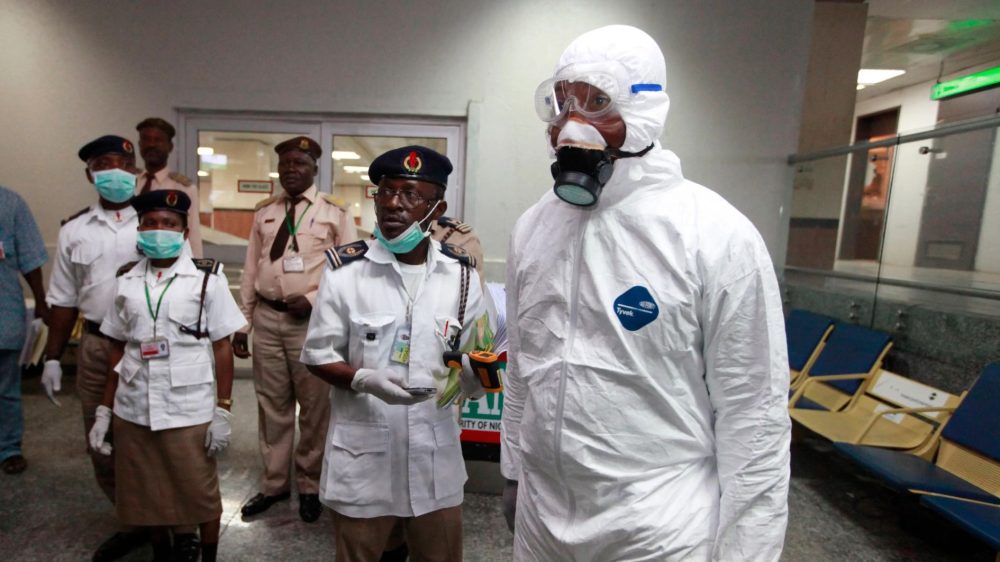
He said hospitals had been notified to prepare bed spaces and isolation facilities and ensure that healthcare workers were adequately equipped to implement infection prevention and control measures.
The minister also stressed the need to engage private healthcare providers, noting that the index patient had visited a private facility.
“The private sector is important, because as you saw, this case went to a private facility. In 2014, it was a private facility. So private practitioners of all kinds should also be sensitised and connect to the public health authorities,” he said.
On the government’s decision to allow planned public gatherings to proceed, Pate said the position was based on available evidence indicating that the case remained contained.
He, however, emphasised that the decision was subject to continuous review and did not rule out restrictions if the situation changed.
He urged political actors to avoid turning the outbreak into a partisan issue, stressing that public health emergencies required cooperation across political, ethnic and religious divides.
The minister also called on Nigerians to remain calm, comply with public health advisories and avoid spreading unverified information about the outbreak.
Pate expressed confidence in Nigeria’s capacity to contain the infection, citing the country’s experience in managing Ebola in 2014, as well as its existing surveillance systems, laboratory facilities and trained personnel.
“Nigeria has been able to deal with Ebola in the past. We feel that it is possible that we can be able to deal with it. We have a great team that is running the incident management system, and we have confidence in the NCDC, their personnel, and all the pillars of support comprising the NCDC, the Ministry of Health, Port Health Services, and other agencies that are working hand in hand together,” he said.
He disclosed that the government had strengthened coordination between federal and state authorities and mobilised domestic and international technical support.
According to him, the Presidential Task Force on the outbreak and the Nigeria Governors’ Forum had been briefed, while the National Economic Council had also been informed.
Pate said President Bola Tinubu had authorised additional resources for the response, with funding provided to the NCDC and other domestic resources being mobilised to support containment activities.
He added that a meeting involving state commissioners of health and information was scheduled for the following day to strengthen coordination and ensure consistent communication nationwide.
The minister said international experts with experience in managing Ebola outbreaks had been engaged to support local health authorities, while genomic sequencing was being pursued to provide further information about the virus.
He said the government was working to prevent the infection from spreading beyond the confirmed case.
“We have one important case. We are trying to contain it so that it does not go out to the communities or become generalised. Hopefully, it will not get to that,” he said.
Pate also urged journalists to report developments responsibly and rely on official and expert sources.
Explaining how the disease spreads, he said Ebola was not airborne but was transmitted through contact with the body fluids of infected people.
He advised Nigerians to observe basic hygiene measures, including frequent handwashing, and avoid direct contact with body fluids where an individual’s infection status was unknown.
He further stressed that healthcare workers must adhere strictly to infection prevention and control procedures when attending to patients.
Meanwhile, the All Progressives Congress (APC) Presidential Campaign Council has said the N10 billion approved by President Bola Tinubu for Nigeria’s Ebola emergency response in June remains untouched, claiming that relevant agencies have been using other available resources to manage the reported infection.
The council also accused former Vice President Atiku Abubakar of politicising the public health situation, arguing that his criticism of the Federal Government’s response could turn a serious health concern into a political controversy.
In a statement issued in Abuja, the council’s spokesperson, Dele Alake, said the Nigeria Centre for Disease Control and Prevention, the Federal Airports Authority of Nigeria and other agencies involved in disease surveillance had been deploying existing resources to manage the situation.
The council, however, did not provide documentary evidence of the fund’s status or an independent account of expenditure on the emergency response.
Alake commended the agencies for strengthening surveillance at the country’s entry points and responding to the reported case involving a Nigerian who had travelled from Uganda.
According to him, the surveillance network alerted the authorities to the infection and facilitated contact tracing involving 44 people who had contact with the patient.
The council’s response followed comments attributed to Atiku questioning how the N10 billion approved for the Ebola emergency had been spent.
Alake criticised the former vice president’s statement, particularly its headline linking President Tinubu’s first name to Ebola, describing the framing as an attempt to ridicule the President rather than address the public health challenge.
The council also rejected allegations attributed to Atiku’s camp that a ministerial briefing on the outbreak was intended to discourage Nigerians from attending campaign rallies or voting.
Describing the allegation as speculative, Alake challenged the opposition to provide verifiable evidence to support it.
He said the briefing had not proposed restrictions on political participation but had appealed to Nigerians to comply with protocols announced by the relevant authorities.
“A responsible opposition will applaud the Task Force for being responsive. But the Atiku camp always goes for cheap shots at the government,” he said.
The council urged Atiku and other opposition figures to refrain from politicising public health emergencies, insisting that containing the threat required cooperation among political parties, health professionals, government agencies and the public.