With the resumption of work by medical doctors the other day in spite of their inconclusive negotiations with the Federal Government, it is important to note that an unsettled labour environment still pervades the healthcare delivery system. So, uncertainty rules as another strike may soon ensue if government’s consistently shoddy and arrogant style of dealing with critical segments of the society continues. This is a problem Nigerians can do without.
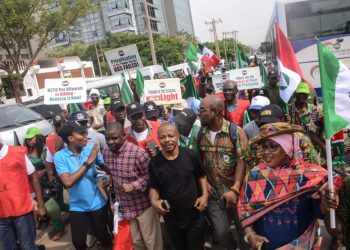
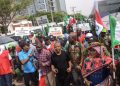
In the first instance, allowing the situation to degenerate to street campaigns by doctors was a complete debasement of values. Even as they are back at work neither the government nor the doctors should be proud of what happened then. By prolonging the strike, both parties to the dispute demonstrated a certain insensitivity and ignorance of the art of concession for the benefit of an already traumatized populace.
The last face-off had its roots in the serial, discussion between Nigeria Medical Association (NMA) and the government at the top level. NMA executives codified their grievances into 24 demands which they believed would impact on general healthcare delivery in the country and their own welfare. It is quite regrettable that between the association whose members were presumably under pressure of providing more capacity to tackle the onslaught of Ebola virus and the government’s ministerial representation at the negotiating table, too many lies were fed an eager public on developments at each meeting, which eventually culminated in the strike action of July 1.
Almost one and a half months into the strike, the government in desperation suspended the Residency Training Programme in all federal hospitals “for the purposes of appraising the challenges in the health sector.” This ill-advised and unfortunate move which affected between 14,000 and 16,000 resident doctors in over 60 centres nationwide was extreme, retrogressive and counter-productive. It ought not to have been contemplated in the first place, as it completely grounded operations in all hospitals.
Even if the government was justified in its disagreements with the striking doctors, wisdom should have ruled and in overhauling the system, the question should have been asked: Will empty wards at government facilities not turn health care delivery upside down and ruin what was left of an already bad system? How far could the locum doctors whom the government contemplated would fill gaps have gone to sustain the hospitals before the issues were sorted out?
However, the industrial court’s pronouncement on the matter delivered after the resumption (following other top level interventions like that of the Senate President) is also instructive; the government must be seen to obey the rule of law. NMA president, Lawrence Obembe, displayed a commendable leadership trait during the period. He was right that the action, rather than de-escalate the crisis had instead escalated it. According to the NMA leader, there were already about 22,000 and 4,000 Nigerian doctors in the U.S. and the UK which “surpassed the current 3,000 specialist doctors and 16,000 resident doctors” available to Nigeria. This exodus of trained medical personnel is nothing to be proud of really, and the last strike was capable of worsening the brain drain.
The impression being created by privileged government officials is that because they are able to seek medical care abroad, the rest of the people can continue to live with the government’s ineptitude in healthcare delivery. Contentious issues that have been thrown up by the government-doctors’ regular face-off are many, chief of which is a recurring poor crisis management by the government. The pertinent question then is: where does a leader stand in times of crises? The people, it must be said, must always be the priority of any leader who appreciates the transient nature of power.
The people’s outrage at the doctors’ adamant position (and to some extent government’s anger) were understandable, considering the emergency situation on ground. Experience has, however, shown that the government of the day really has a way of pushing the doctors to the wall: infrastructural decay continues, poor doctors’ welfare remains and little of consequence is being done to solve these.
Suspension of residency training was a joke carried too far; hence the collateral damage on all sides.
It makes no sense to continue to treat essential services personnel such as healthcare delivery workers, the armed forces personnel and others with levity. They deserve to be accorded the respect and remuneration befitting of their calling.
Again, the issue of federalism plays a significant part here. The processes can run more smoothly if states or small groups engage professionals in discussion over labour matters like these instead of the centralized command structure that is the order of the day. Even so, essential services workers should appreciate their unique position of playing gods because sacred lives are in their care and such must never be abandoned for some protest at inauspicious times. They should be able to balance saving lives with the pursuit of grievances at critical times. This does not remove, however, from the reality that government ought to do something special to rescue a healthcare system in a shambles.
The government has acquired notoriety for insensitivity to the citizens’ plight and its officials have not always displayed a sense of responsibility. Nigeria’s leadership at all levels and in all sectors can do with some positive, progressive attitudinal change.