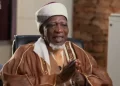
Catholic Bishop of Sokoto Diocese, Bishop Matthew Hassan Kukah, delved into a thrilling guess on what he considered the root cause of Boko Haram insurgency in the country recently at the opening of the National Conference of the Islamic Welfare Foundation in Osogbo, Osun State capital. He said: “We must locate the current crisis of Boko Haram within the context of the inability of the northern Muslim elite to live by their own ‘dubious creed’. They preached Sharia Law, but only for the poor. They preach a religion that encourages education, yet their own people are held in bondage of ignorance. They came to power on the basis of a democratic society, but they turned around and declared Sharia to generate a false consciousness among the poor. They did not wish to live by the same standards, so they decided to live their own Islam in the capitals of the world, away from the prying eyes of their own people. Boko Haram began as a revolt against this hypocrisy”.
About the same time, the northern elite had come under Kukah berated the political class for failing so far to use religion to manage the differences among Nigerian federating units. “Rather than focusing on our common citizenship, religious identities have become tools for war and death. They have become tools for access to political and economic power…” he lamented.
Those comments of the clergyman were a reminder of similar remarks made in 2012 by the former Senate President, David Mark, at retreat in Uyo, Akwa Ibom State. Mark was quoted as saying: “Won’t we be able to condemn current degree of insecurity in the North occasioned and heightened by Boko Haram? Are we afraid to openly condemn Boko Haram either for political reasons or out of fear of possible attack by the sect? How can we keep quiet when a group begins to propagate the ideology that Western education is haram? Western education today remains the pivot of development”.
About the same time, the northern elite had come under intense criticisms for their perceivable silence amid outrageous Boko Haram menace. One of such critics then was a former governor of Anambra State, Dr. Chukwuemeka Ezeife, who reasoned that those who condemned the silence were right. Ezeife says most Nigerians believe northerners listen and follow their leaders; and that if the leaders of the North are really against the violent sect, they should be able to stop them.
However, in response to Mark’s observation, which many viewed as candid, courageous and altruistic, elder statesman, Alhaji Tanko Yakassai, labelled the then Senate President a fool and a man that lacked actual grasp of the situation in the country. He also called for Mark’s resignation. “As far as I am concerned, I regard his statement as childish, ill-conceived and immature”, Yakassai had said.
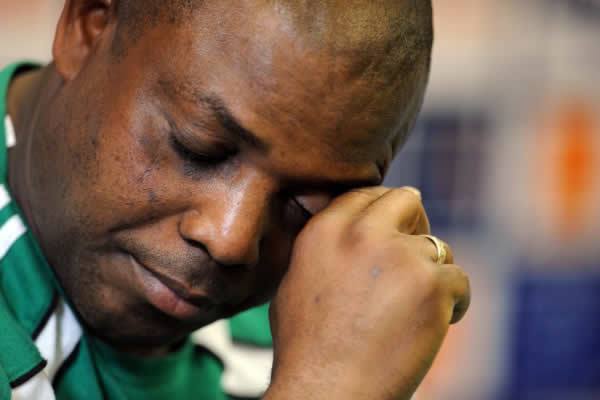
Not to our knowledge as yet is Yakassai’s take on Bishop Kuka’s latest position on the possible foundation of the Boko Haram scourge. But we do know that a former National Security Adviser (NSA), the late General Andrew Azazi (retd), the same year Mark spoke, remained in the eye of the storm until he was hounded out of office, following his statement at the South- South Economic Summit held in Asaba, Delta State that internal power tussle among the leaders of the then ruling Peoples Democratic Party (PDP) was a major causative factor in the upsurge in terrorist incidents in the country.
In truth, acrimonious controversies trailed former President Goodluck Jonathan’s endorsement by the PDP as its candidate for the presidential election the previous year (2011). Particularly aggrieved were some prominent northern PDP leaders that felt power was hijacked from the North at a time it was still the region’s turn to go for a second term, notwithstanding the unfortunate demise of the late President Umaru Yar ’Adua in 2010. The extreme bitterness shown by supporters of this view, and their threat of making Nigeria ungovernable for Jonathan, raised the strong suspicion that they could buy into the Boko Haram jihadist agenda to make good their threat. That suspicion remained active until Jonathan was kicked out during this year’s general elections.
It may be impossible, in the end, to rule out elite conspiracy, hypocrisy and manipulations in the Boko Haram narrative. These are compounded, in any case, by elite-driven religious discrimination and intolerance. Therefore, remarks such as Senator Mark’s, Azazi’s or Kuka’s demand sober reflection as the nation wallows in pain in its search for a permanent solution to Boko Haram insurgency.