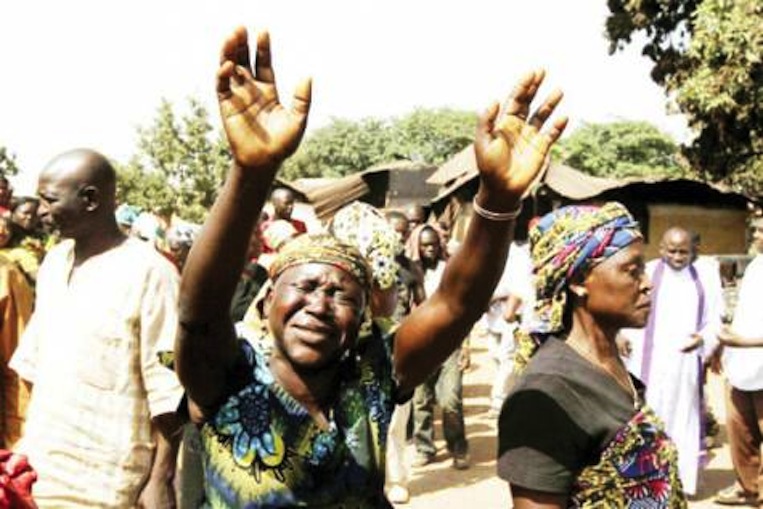
The recent killing of over 80 people in Egba village, Agatu Local Government Area of Benue State by suspected Fulani herdsmen is yet another instance of the mindless bloodletting over disputes related to grazing land in some parts of the country. Indeed, the problem of incessant bloody fighting between crop farmers and cattle rearers has become an albatross that the country needs all the wisdom it can muster to bring to an end, if it is not to turn into a conflagration that can threaten national peace and cohesion. Reports on the latest bloodbath say that the herdsmen attacked Egba village with arrows, locally-made guns and knives in the early hours of March 15, and killed mainly women, children and the aged.
The penchant of herdsmen for attacking farming communities over grazing rights calls for pragmatic action to stop the trend. Hardly a month passes without reports of such attacks in different parts of the country, as the herdsmen drive their cattle in search of pasture. For example, about 42 people were reportedly killed at Gidan Kaso town in Birnin Magaji Local Government Area of Zamfara State by cattle rustlers and property worth millions of naira destroyed in November last year. Similarly, about 15 people were reportedly killed in Ambe-Madaki village in Sanga Local Government Area of Kaduna State by suspected Fulani herdsmen in 2014. Also, some cattle rustlers were fingered in the attack on Shurun Marit village in Barkin Ladi Local Government Area of Plateau State, which led to the destruction of over 70 houses and the death of three persons, with several others wounded. The people of Ketu in Yewa North Local Government of Ogun State have also been victims of Fulani herdsmen attack. The Eastern part of the country has not been spared in the orgy of violence as armed herdsmen also attacked passengers along Enugu-Nsukka road in January this year. In the same vein, no fewer than 30 people were reportedly killed by suspected Fulani herdsmen on February 11, 2015 in Logo Local Government Area of Benue State. This attack led to the sack of over 24 communities and villages in the area.
There is no doubt that disputes over grazing land for their cattle played a role in a number of these attacks, even though political and religious considerations are also now emerging as possible contributory factors in some instances.
The escalation of Fulani herdsmen attacks in some parts of the country at this time of Boko Haram insurgency is a cause for concern. The time has come for the Federal Government to boldly address the matter. It is important for the government to consider all the angles of the problem and come up with a decisive position that will make the incessant attacks on farming communities a thing of the past. There should be no ambiguity on the government’s position on this problem that needs to be urgently addressed. Nigerians should be able to feel safe in their own country without fears of attacks by herdsmen. Cattle-rearing is no reason to trample on the farms of others, or even change the names of farming communities, as some herdsmen have done.
Herdsmen should be made to understand that land ownership is a cardinal culture in Nigerian social system. Any encroachment on people’s farms in the name of nomadism or searching for grazing land is not acceptable. It is an invitation to anarchy. Both planting of crops and cattle rearing are legitimate businesses and those who engage in them should procure whatever they need to sustain their businesses, and not trample on the rights of others.
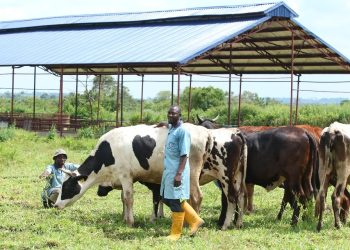
We advise those engaged in the business of animal husbandry to develop cattle ranches as is done in foreign countries so that their cattle do not destroy other people’s crops. The government should also muster the political will to protect all Nigerians and the age-old tradition of land ownership. The herdsmen should respect the land ownership rights of other Nigerians.
We also enjoin state governments to build properly equipped ranches for cattle rearers in their domain. States should take responsibility for providing an enabling environment for all types of farming in the country, be it crop farming, fisheries or animal husbandry. Farming should not lead to wars over grazing land. Let us put the era of primitive and itinerant rearing of cattle behind us. Our country should embrace change and flow with the tide of modernity. Let the federal and state governments rise to the challenge of constant fighting between pastoralists and animal farmers and design strategies to end it once and for all.