By Reuben Abati
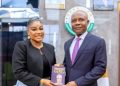
Professor Wole Soyinka was keynote speaker at the maiden annual lecture of the Ripples Centre for Data and Investigative Journalism held in Lagos on March 15. Topic: “Rebuilding Trust in a Divided Nigeria: Can Nigeria be fixed?” The Nobel Laureate did not disappoint.
His presentation titled “From Miyetti to Haiti: Notes from a Solidarity Visit” took us on a journey to Haiti, Trinidad and Tobago, the United States, Nigeria also, and other parts of the world, including the past and the present, raising questions along the line about the humanity of the average Nigerian – the leaders, the followers – his or her humanity or non-humanity, the possession of a sense of dignity, shame, decency, memory, common sense, or lack of it, in comparison with conditions elsewhere.
Whereas other countries, classified along with Nigeria by Donald Trump, the loud-mouthed, twitter-obsessed American President as “shithole countries” and who may well fall under the same category with us as developing countries, may claim the right to feel insulted, Professor Soyinka asked his audience whether with the established mentality of enslavement, patterns of alienation between power and society, the distorted relationships within our communities, the failure of governance and the gross idiocy/shamelessness of the political elite and the moral turpitude of the Nigerian, whether indeed the Nigerian has earned the right to feel insulted or not to be insulted.
Can any Nigerian really rise to full height and ask Trump to shut the hell up, coming from a country as we do, where the leaders would rather be elsewhere when the people suffer: “I am not even obliged to be here”, they would rather say. Ours is a country where in a conflict between murderous Fulani herdsmen and defenceless farmers, the government’s response is to take sides with the aggressor, rather than check impunity and ensure that justice is done.
The Miyetti Allah Kautal Hore, the umbrella organization for Fulani cattle rearers actually, publicly admitted the title Fulani herdsmen, and so there is no point quibbling over that label, publicly stated as the right tag of identification by its very owners. Human lives invariably mean nothing to Nigerians. Our sensibilities have been inured by too much familiarity with tragedy.
Can Nigerians claim the right not to be insulted living as they do in a country where mass murder in fact, no longer means anything to political leaders- right after the slaughter of hundreds of persons or the abduction of young school girls, the leaders would rather troop to a wedding party. And when the main man manages to visit later, he gets a red carpet reception, and talks about sympathy. “Who needs sympathy?”, Soyinka asked. “What we are talking about is justice, evenhandedness, fairness”, the Nobel Laureate declared.
These are obviously strange words to the constituted authorities of Nigeria. After all, one Minister had the audacity to declare that whoever has been killed by Fulani herdsmen has himself or herself to blame, for planting a farm or a house or even daring to stand, wait or engage in anything at all, including the intake of oxygen, along the cattle route that Fulani ancestors had carved out of Nigeria. Soyinka wondered what such a cruel person is still doing in the corridors of power.
But of course, to further strengthen the climate of fear in the land, any form of opposition or criticism has been branded “hate speech”. There is even a Bill to this effect in contemplation before the National Assembly. The prescribed punishment is “death by hanging” – this at a time when the rest of the world is trying to move away from the death penalty.
The Bill may never become law but it is a whip to be held above the head of the populace, to enslave, intimidate and frighten the people. And so on and so on, Soyinka delivered one blow after another, painting at the same time, pictures, with anecdotes, humour, and references to particular personalities in Nigerian history, notably his life-long sparring partner, President Olusegun Obasanjo whom he once confronted over his famous “I am not obliged to be here” remark only to be told: “Kampala ti e niyen.” Soyinka had warned at the beginning of his presentation that the moment for introspection and frankness had come and he wanted the audience to “look in the mirror”. He practically held up that mirror; what the audience saw or remembered about their country was ugly and disconcerting.
Professor Soyinka soon took his leave. I joined the Director of the Centre to see off our esteemed guest. As he stepped out of the venue, he was surrounded by a group of reporters and admirers who wanted selfies. One of them asked him to provide a quick summary of his keynote address. I thought that was an odd question. Was the reporter not at the event upstairs, did he not just exit the hall with us? One lady pulled at the Nobel Laureate’s shirt, determined to gain his attention.
“Yes, Prof. you have described everything happening in the country but what is the way forward?”
“Way forward?”, Soyinka asked
“Yes. Way forward? What is your solution?”, she persisted
“Way forward”, the Nobel Laureate repeated as if he wasn’t too sure. Then he answered: “Way forward? Just keep walking, you’ll find the way.”
I was pleased with that sarcastic response. It was obvious the reporter did not understand the presentation. Or may be she was fishing for a headline, or a tailor-made sound-bite. This is also a national predilection. Nigerians are very good at over-simplifying everything. They like slogans, sound-bites, the same way they crave short-cuts even in matters that require the minimal use of the brain. Reporters these days are in a class of their own. When they invite you for an interview, don’t be surprised if they ask you for example: “Can we meet you?” How? If you didn’t know who I am, why invite me for an interview?
The debate that followed at the event was of a different tenor, drawing heavily on the energy and excitement Professor Soyinka had infused the audience with. A panel of three led the discussions. Dr. Abiola Akiyode-Afolabi reviewed the crisis of governance in Nigeria and spoke about national unity and the urgent need for restructuring. Professor Pat Utomi, represented by Mr. Rasheed Adegbenro spoke about values in leadership, and offered a five-point plan including civic engagement, value re-orientation, civic participation, education, and a more positive role to be played by the Nigerian media.
Mr. Peter Obi, former Governor of Anambra state focused on the failure of governance as the cumulative effect of years of neglect and omissions, the greed and indiscipline of the political elite and the bad politics Nigerians play, relying largely on his own experience as Governor.
Professor Soyinka had spoken for less than one hour, but the discussions went on for about three hours. Everyone had something to say. The event had mostly young people in attendance. As Nigeria enters yet another election season, most young Nigerians –many of whom have just attained the age of franchise since the last election, and frustrated by the travails of their country insist that they are determined to fix Nigeria.
It is not for nothing that more than 25 young Nigerians within the age bracket 35 -45, even when the age of qualification for the Nigerian Presidency is 40 want to be President in 2019. They include the publisher of Sahara Reporters, Omoyele Sowore, motivational speaker Fela Durotoye Adamu Garba, Ahmed Buhari, and so many others.
The urgency of this task was obvious in the tone of the discussions. When Peter Obi urged that Nigerians should simply “take back their country”, more so as the line between governance and comedy had become blurred, and that it is not really a matter of age, but capacity, because many young people are in government already and have been part of the rot since the First Republic, the audience was ecstatic.
It was time to close the programme with Peter Obi responding to the last set of questions. But one young man wouldn’t have that. He suddenly jumped atop his seat, and raised his hand, towering above everyone and screaming that he must have a say or the programme would not end. Earlier, there had been actual struggle for the microphone, but this particular young man insisted he had found the solution to all of Nigeria’s problems. We had to allow him provide his earth-shaking, cure-all, solution. He ended up merely repeating what had already been said.
But can we really fix Nigeria? The consensus was that this is indeed possible. How? Look in the mirror and reflect. Education. Value reorientation. Leadership recruitment. Restructuring. Civic engagement. Media activism. Take back our country! What of the people factor? Are we going to import a new set of Nigerians and value system after restructuring? Professor Soyinka had prefaced his keynote address with the presentation- what he called the informal launch- of his latest book titled “The Road Map of a Nation: A Narrative of the First African Road Safety Corps (Ibadan: Bookcraft, 2018, 203 pp).”
Like a teacher recommending further reading for his students, he had asked us to read the book, copies of which were on display at the venue. Being an obedient student, I complied. The preface to the book: “Table Manners for Dining with the Devil” is an excerpt from Soyinka’s You Must Set Forth At Dawn, there is an appendix titled “The Pyrates” – a commentary on the confraternity which Soyinka founded in 1953, but essentially the book tells the story of Nigeria’s Federal Road Safety Corps (FRSC), how it began, the challenges faced by the founder and his team of volunteers, the attempt by many forces including internal saboteurs, homicidal figures masquerading as drivers, suicidal passengers, koboko and sword-wielding soldiers, military leaders, Nigerian big men and corrupt elements who tried everything possible to frustrate the vision of the Road Safety Corps, from Oyo state to the national stage. This is a book to be read by all officers of the FRSC and the general reader as well. The FRSC is part of Soyinka’s legacy to Nigeria, his own way of giving back, and here he documents that legacy, and the pains of bringing it to fruition.
There are echoes in this narrative, of previous writings: The Road, From Zia with Love, A Play of Giants, Opera Wonyosi, and the recent A Personal Odyssey in The Republic of Liars (2005), making the book much more than a narrative on the FRSC but a further interrogation of the environment called Nigeria and particularly of the Nigerian character. Is there something that can be called a Nigerian character?
The setting for this interrogation is the road: the same road that lies famished, claiming lives due to reckless driving, robbing people of their lives prematurely, turning teachers at the time Soyinka was teaching at the then University of Ife, into perpetual mourners and the entire community an arena for endless mourning and condolences. In the mid-70s, Soyinka had drawn up a blueprint for a Road Safety intervention, a volunteer, self-policing initiative which stepped in, to fill the vacuum created by a military and a police force that didn’t care about death on the roads or the odoriferous pile of cadavers that littered them.
But here is where the character issue begins: trying to make any difference in Nigeria is like having a dinner with the devil and to make any difference at all would require special table manners. The Nigerian environment is a sorry theatre of struggle and violence – physical, social and psychological between the forces of good and evil. Governments, the military, the police, and similar institutions, designed for public good have over the years signed up in the corner of the devil, with the oil boom and petro-dollar imposing a level of greed that makes a grab, steal and destroy mentality the new morality. The people themselves, glad to have access to part of the oil largesse simply assume government would take care of morality.
The road map of Nigeria covered in this book is about the failure of government, institutions and even more so of individuals. A Third Force seeking to make a difference, starting with the roads, soon found itself attacked by the same persons whose lives it sought to save. Wole Soyinka tells the story in a way only he can. His table manner is to deal with the Nigerian pathology by preaching about it, teaching about it, offering advice, intervening where necessary and withdrawing when necessary, guided in all cases by the public good. He sees nothing wrong in direct intervention and in wielding the cudgel to crack the heads of agents of impunity no matter how highly placed.
This dinner with the devil in Nigeria is now in a worse shape: no longer a regular dinner, but a banquet! The forces of evil have seized the nation’s throat. But Soyinka can draw consolation from this: there are still a few good men in our community who are prepared to stand up to evil, even if their table manners may be notably different.