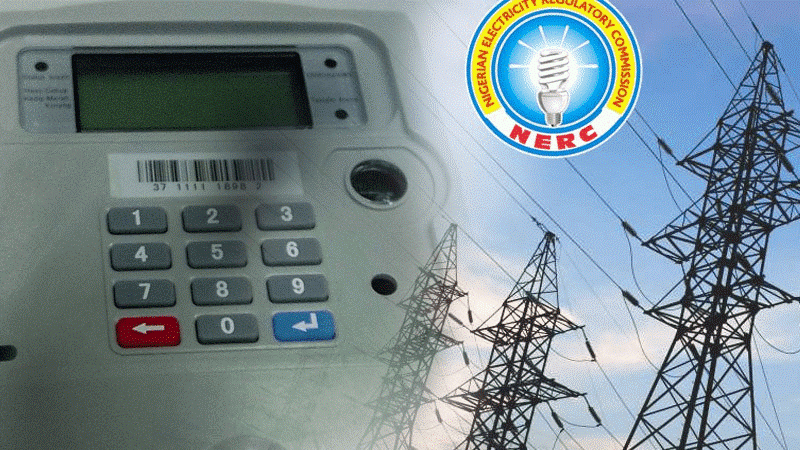
The House of Representatives has asked the Nigerian Electricity Regulatory Commission (NERC) to suspend the planned increment in electricity tariff until all customers have acquired prepaid metres.
The lower chamber also rejected the presidential directive to the Ministry of Power transferring the supervision of the Nigerian Bulk Electricity Transmission (NBET) to the Ministry of Finance and claims by NERC that 50 per cent of Nigerians had prepaid metres.
Chairman, House Committee on Power, Hon. Da’u Magaji Aliyu (APC, Jigawa), gave the order on behalf of the House at a public hearing with stakeholders in the power sector at the National Assembly yesterday.
Addressing stakeholders at the interactive hearing, Aliyu queried NERC and the distribution companies (DisCos) over the plan to increase electricity tariff.
He lamented that adequate consultation were not made before the decision was arrived at.
The lawmaker warned that the power sector operators and regulatory agencies would not be allowed to charge Nigerians different tariffs for electricity usage based on locations, saying the new electricity tariff regime was alien to the nation.
He maintained that electricity tariffs in the country should be uniform, adding that the use of power is the same in all parts of the country.
According to him, “it has to be uniform because the poor Nigerian in my village is the same poor Nigerian that is paying power in Nnewi or Ado Ekiti. People will not understand; you have to do a lot of media work for people to understand what you mean.
“Let me assure you and the minister that we are here to support this government to achieve its objective. We are not against a cost reflective tariff; we are only calling on government to do the necessary things before this kind of thing is brought out and we have mentioned them.
“If you can see, there are so many unresolved questions; I pity the DisCos, there are locations that they cannot even go to collect the tariff. They have a lot of debts, but we have to do it logically to ensure that. I’m sure that we’ll get feedback from Nigerians,” he added.
While speaking on the role of NERC on the planned hike in electricity tariff, NERC chairman, represented by Mr. Samsudeen Mahmoud, who had earlier disclosed that the Power Sector Reform Act empowered the Commission to conduct minor review of MYTO twice a year, however withdrew his statement, saying that the Commission derives such power from its guideline.
According to him, the review is aimed at reflecting the changes in exchange rate, inflation rate as well as the losses and cost of energy based on each DisCo.
He said the Commission was responsible for tariff hikes twice every year and intended to soon start sensitizing the public on the policy.
He said: “This time, it’s going to be a minor review based on exchange rate and inflation rate. We also review to reflect fuel price changes.”
While responding to question on the NBET crisis, the Minister of Power, Mr. Saleh Mamman, who was represented by the acting permanent secretary, Ahmed Abdul, stated that the Transmission Company of Nigeria (TCN), among others, were created by the Power Sector Reform Act, 2015.
He noted that government has expressed its determination to withdraw the current subsidy regime provided through the MYTO by April 2020, adding that the new review ranges between N55 per Kilowatt to about N70 per Kilowatt based on the cost of energy accessed by each of the DisCos.
He also affirmed that the DisCos lack the capacity to off-take energy generated by TCN, adding that there was a mismatch of players in the industry, which led to the crisis being experienced.
While responding to question on the status of prepaid meter procurement plans and the number of customers already metered by the DisCos, the minister who earlier disclosed that 50 per cent of electricity consumers have been metered when other stakeholders who attended the public hearing protested, however noted that 50 per cent of electricity consumers have keyed into the programme.
NERC had recently published new tariffs for the different DisCos and categories of customers on its website.
If the planned hike takes effect, some electricity consumers who have been paying N27.11 per kilowatt hour (kWh) bill are now expected to be charged N48.12 per kWh by the DisCos.
The various tariff reviews for all categories of consumers – except those consumers classified as residential (R1) – ranged from 59.7 per cent for consumers in Ikeja to 77.6 per cent in Enugu.
Under the new order, electricity consumers in Ikeja who used to pay about N13.34 per kWh will from April 1, pay N21.80 per kWh.
Their counterparts in Enugu who used to pay about N17.42 per kWh will, under the new order, pay about N30.93 kWh.
Their R2 and R3 counterparts, who paid about N19.31 and N27.11 per kWh since 2015, will now be paying N34.28 and N48.12 per kWh.