By Reuben Abati
Things went out of hand very quickly with the emerging Nigerian “revolution” when on Tuesday, October 20, 2020, soldiers stormed the Lekki Toll Gate Plaza in Lagos, and started shooting. We were told they shot in the air. But the reports have been conflicting and troubling. The protesters insist that persons died, and that the attack was pre-meditated. The state authorities insist that persons were injured and that there were no corpses; may be just one. They made it sound as if one person dying was nothing to worry about. Nigeria is a country of over 200 million people. When one person dies, it is hard for the people to notice. The state does not even care. But the truth is that even if only one person died as claimed by the state government, that is enough indictment. There was no justification for anyone dying or sustaining gunshot wounds just because they took the patriotic step of protesting about injustice, police brutality, impunity and bad governance in their country. The #EndSARS protest was about justice, and good governance. The protesters were peaceful.
In the Northern states of the country, the protest was tagged #EndInsecurityNow, and the protesters were also peaceful. At the Lekki Toll Gate in Lagos, the protesters reportedly knelt down as soldiers stormed the scene. They waved the Nigerian Flag. They sang the National Anthem. Someone had told the angry young Nigerians- those I once referred to as the “collective children of anger” – that once soldiers see the Nigerian flag, they would not dare shoot at the target. The assumption is that soldiers only shoot the enemy, not their own country’s flag. The Lekki incident in Lagos turned that principle, if that is what it is, on its head. The most impactful image from Lekki is that of a blood-stained Nigerian flag, either as fact or symbol, but nonetheless a symbol of the Nigerian government’s clamp down on young Nigerians exercising their rights under Sections 35, 39 and 40 of the 1999 Constitution (as amended).
Away from the Lekki Toll Gate epicentre, other persons died in the course of the mayhem that ensued: from stray bullets, physical attacks, and wanton destruction. Amnesty International and other civil society groups have reported over 56 deaths. It has been so bad, so embarrassing, so disgraceful, that not even the military authorities are willing to admit that they sent soldiers to the streets. All of a sudden, Nigeria is back to the past, the military era, the bad days of dark-goggled Generals, the Abacha era, when human lives meant nothing; Nigerians disappeared in broad daylight,; and the state claimed that it would not tolerate any form of dissent. This throwback to the military era was further reinforced by the reluctance of the Nigerian leader, President Muhammadu Buhari to address the nation. Both the protesting Nigerian youths and the international community had to plead with him to take the situation in the country far more seriously and speak to the issues, empathize, say something to douse the tension in the land.
The official response was that the President had already acceded to the five demands of the angry young protesters. So what else did they want? The President later spoke at an event tagged Presidential Youth Empowerment Scheme (P-YES) but nobody took that seriously. His promise of an investigation that will ensure justice was dismissed as an afterthought, and an aside. The minimum demand of the angry youths of Nigeria soon changed from the 5-for-5 demands to a declaration that the President must speak up, and speak directly to the youths. On Tuesday, October 20, 2020, a day that is now a defining moment in the life of the Buhari administration, Lekki Toll Gate happened. It is now known as Black Tuesday. Or the Red October. A toll gate plaza, at which angry youths of Nigeria gathered has now become a symbol, indeed a watering hole, of the conflict, the alienation, the distance between the people and those who govern them.
After Black Tuesday, President Muhammadu Buhari finally summoned a meeting of the National Security Council. When the meeting ended, Nigerians were told to expect something important. The President had directed the Security Chiefs to use every lawful means to restore law and order, not just in Lagos, but across the country. By then, the #AntiSARS, #AntiSWAT, #AntiInsecurityNow protests had begun to spread like wildfire. The country was in turmoil, on the boil. We were told the President would finally address the angry youths. This was by the way, 48 hours after the blow-out in Lekki, Lagos, and 14 days after everyone had been pleading with the President to have a national broadcast. Expectations were high. On Thursday, October 22, 2020, the President showed up on national television. But it was an anti-climax. The 27-paragraph, 12-minutes delivery-time broadcast by the President was shallow, hollow, condescending, full of gas lighting and completely lacking in empathy, and emotional intelligence. It began on a note of warning, followed by threats, a thank you but shut up riposte to the international community, a bit of wrongly-timed self-congratulation about the government’s poverty alleviation programmes – now tell me, who goes to a condolence party to boast about their personal achievements! – and it ended on a note of threat. Nigerian were flabbergasted. They complained about the failure of the President to acknowledge the lives that have been lost.
There was a line in the broadcast about the policemen that died in the course of duty, and yes indeed, police lives matter, and there was another line about the attack on the palace of the Oba of Lagos whose shoes, staff of office and other valuables are now missing, but the President said nothing about the many Nigerians who died, those whose investments and assets were attacked and destroyed, not even a word about the anguish in the land, the emotional trauma of citizens at home and in diaspora who had taken to the streets in every continent to condemn the reign of anarchy and chaos in their fatherland. I have argued on Arise TV that whoever wrote the draft of the President’s speech did him a bad turn. Whoever had a hand in the construction of that broadcast is unkind. The psychology of power, especially in Nigeria’s Presidential Villa conditions the people around the President to tell him to be strong and refuse to be intimidated by anybody. They would tell him: “Sir, you are the Commander-in-Chief, you cannot appear to be weak.” They will confront him with conspiracy theories: “Sir, it is your enemies that are behind the protests in Lagos. We know them. You must teach them a lesson. Your Excellency, you have nothing to worry about sir, we will deal with those hoodlums. We have everything under control.”
While such behavior can be explained away as human and archetypal, it is unacceptable that anyone will write a speech or offer such advice that will turn the President of Nigeria into his own fall guy. I am often reminded of the US President Harry S. Truman’s saying that the buck stops at the President’s desk, yes, but no two Presidents are the same. Buhari is not Truman. Some Presidents require more support than others. President Buhari’s advisers, who are now shockingly trying to edit, a posteriori, a speech they should have cleaned up properly, threw him under the bus. This singular error will redefine his Presidency and legacy. The best way to understand the ineffectuality of that broadcast is to assess what happened after in Nigeria, and in terms of international response to the Nigerian situation.
Things simply got worse. It would in fact have been better if that broadcast had not been made. Before Black Tuesday, there had been indications that hoodlums, fifth columnists and trouble-makers had hijacked the protests, infiltrated the ranks and were beginning to change the tone of the protest. With the alleged shooting and killings at Lekki Toll Gate, the peaceful protesters withdrew, and what was left was a spectacle of riotous and destructive behavior. Everything degenerated very quickly.
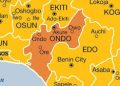
Earlier, in Benin, Edo State, there were reports of the escape of prisoners from two prisons: the Benin Maximum prison and the Oko prison. This would eventually become a pattern as there were reports of attempted jailbreaks in Ikoyi and Kirikiri Prisons, Lagos and successful jailbreak in Okitipupa, Ondo State. Last week, in defiance of the President’s threat that those who had hijacked the protests will be dealt with, about 27 police stations in Lagos, were attacked and razed to the ground. The same was the fate of other police stations across parts of the country. Arms and ammunition and police uniforms were stolen. By weekend, Nigeria was in a state of anomie. In Lagos, Calabar, Jos, Osogbo, Ilorin Kebbi, Jalingo, warehouses storing COVID-19 palliatives were attacked by hungry and angry Nigerian youths. They said they were taking what belongs to them. They protested that it was wrong to hoard the COVID-19 palliatives meant for the people.
It was a bizarre situation. Not all the looters were hungry young men and women. Some middle class persons also went in cars, and tricycles and carted away their own part of the loot. Some of the palliatives – bags of rice, sacks of garri, boxes of Indomie and other food items …were found in private homes. In Lagos, the majority leader of the State House of Assembly said the palliatives found in his house in Ikorodu were being kept for distribution during the celebration of his forthcoming birthday. In Ibadan, another prominent politician from whose home over 300 motorcycles and 200 refrigerators were carted away said the materials were meant for the people’s empowerment.
In Ilorin, Kwara State, soldiers were seen telling looters to loot peacefully and return peacefully! In Calabar, the home of Senator Gershom Bassey was raided. Furniture and other household items were carted away. Other persons and institutions were not so lucky. In Lagos, iconic buildings were set ablaze. BRT terminals across the city were torched, along with newly bought buses. In Calabar, 52 different sites were attacked. The home of Senator Victor Ndoma-Egba was set ablaze. Malls, supermarkets, private assets were not spared in Lagos, Ebonyi, Benin, Abia, Kano, Jos, Calabar, Kebbi and Taraba. Banks and their ATMs were a special target. The President’s words about maintaining law and order rang hollow. As the violence raged, the police were nowhere to be seen. The military also beat a tactical retreat and opted in Lagos for a strategy of pacification. Military officers became preachers appealing to the people to “calm down”.
What happened in Lekki on October 20, and the tone-deaf Presidential broadcast also seemed to have energized Nigerians in diaspora. After the President’s speech, more Nigerians trooped to the streets of UK, Germany and Canada to register their displeasure. The international community, asked by President Buhari to get the facts right before jumping to conclusions simply ignored him. It was after that ill-fated speech that the following spoke up: the Pope, the Archbishop of Canterbury, the US Department of State, the Congressional Black Caucus, the Special Prosecutor of the International Criminal Court (ICC) and many more. All of a sudden, Nigeria was on its way to becoming a pariah state all over again, as Nigerians signed petitions, directed at world parliaments and the International Criminal Court (ICC) to ask that Nigerian leaders should be blacklisted and arraigned for crimes against humanity.
Before Black Tuesday, there were insinuations of an ethnic, religious and geographical tint to the protests. The first sign in that regard was the emergence of a Pro-SARS group that emerged in Abuja and the Northern part of the country, a certain Northern Youth Alliance (NYA) which argued that there was nothing wrong with the Nigeria Police and that indeed, the people of the North needed the Special Anti-Robbery Squad that is considered lawless by protesters in the South. Before long, anti-SARS protesters were being chased off the streets in a violent manner by the pro-SARS groups, particularly in the Federal Capital Territory, Abuja. Northern Governors would also soon visit the Presidential Villa to tell the President that the people of the North need SARS.
What was meant to be a peaceful protest against police brutality which exists all over Nigeria, was thus reduced to the politics of ethnicity and geography. Eventually, a group known as the Northern Coalition of Youth Groups joined the fray. It called for protests across the 19 Northern states, but the coalition focused majorly on insecurity and banditry and the failure of the Northern leadership elite. The most fertile arena for a revolution is the mind of the people. But Nigeria was in the grips of collective psychogenesis. In Calabar, a psychiatric hospital was attacked. The patients were freed. The beds were carted away. Across the streets of Nigeria, armed robbers, thieves, mental health patients, drug addicts took over what started out as a peaceful protest. In Lagos, there were reported clashes between the Yoruba and the Hausa Fulani. One Yoruba boy in London asked Igbos to leave Lagos. Another Igbo activist in Europe reportedly asked Igbos in Lagos to attack Yoruba interests and investments.
This is what happens when leadership and the state are compromised. The #EndSARS protest in Nigeria has gone through all the initial stages of a full scale revolution as seen in the French, American, Orange, Red and Velvet Revolutions. The crisis must not be allowed to tip over. Losing the trust and confidence of the same young Nigerians, and the international community, that brought them to power in 2015 and 2019 is the biggest damage that the APC and President Muhammadu Buhari have both suffered. But what are the lessons of the current rude awakening? The gains. The loopholes. – Next week.