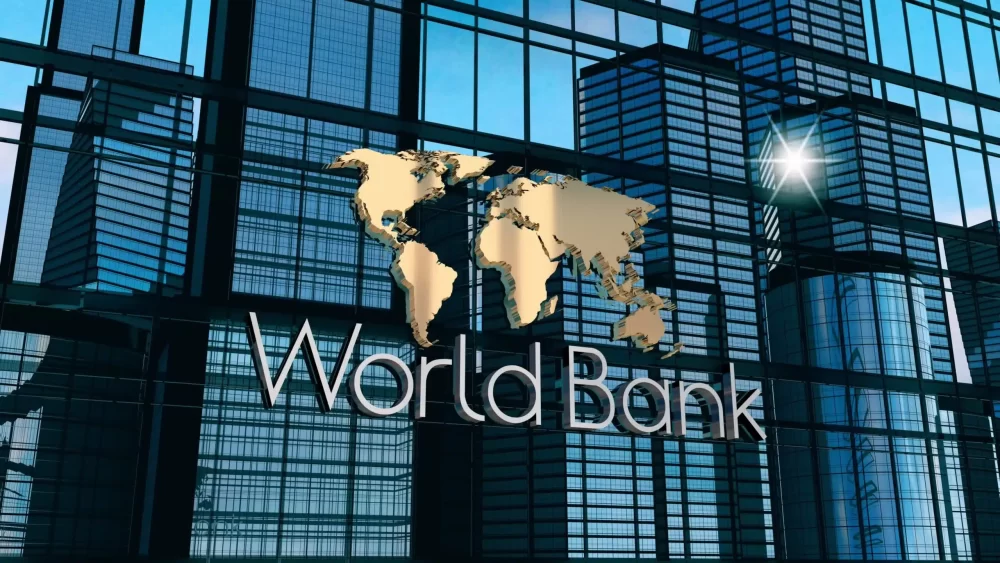
The Federal Government has cancelled $717.7m in undisbursed World Bank financing for Nigeria’s troubled electricity sector, effectively terminating the remaining portion of a $1.52bn power sector recovery programme amid mounting tariff shortfalls, worsening financial pressures, and persistent implementation challenges across the industry.
Documents from the World Bank website on Monday showed that the cancellation followed a formal request by the Federal Government and a joint decision by both parties to discontinue financing under the Power Sector Recovery Performance-Based Operation due to evolving sector realities and the inability to achieve key reform milestones.
According to the World Bank restructuring paper, the cancelled amount represents the entire undisbursed balance remaining under the programme. “The restructuring will result in the cancellation of the entire undisbursed balance in the amount of $717.7m equivalent, and no further disbursements will be made under the Program following approval of this restructuring,” the bank stated.
The bank also disclosed that the programme’s closing date had been brought forward from June 30, 2027, to May 31, 2026, effectively ending the operation more than a year ahead of schedule. The cancelled facility formed part of a broader World Bank intervention designed to revive Nigeria’s struggling power sector.
The original Power Sector Recovery Performance-Based Operation was approved on June 23, 2020, with financing of about $752.5m equivalent. The programme was structured to improve electricity supply reliability, strengthen the sector’s financial and fiscal sustainability, and enhance accountability among key institutions in the electricity value chain.
Following initial progress recorded under the programme, the World Bank approved an Additional Financing package of approximately $763.5m equivalent on June 9, 2023, to consolidate earlier gains and support a new phase of reforms. The financing became effective on June 19, 2024, and extended the project’s closing date to June 30, 2027.
Together, the original financing and the additional facility amounted to about $1.52bn.
However, while the parent programme achieved substantial results and largely disbursed its resources, the additional financing struggled to meet critical reform conditions, resulting in limited disbursements and eventual cancellation of the remaining funds.
The World Bank noted that Nigeria’s electricity sector continues to face deep-rooted structural challenges despite years of reforms and significant financial support.
The report stated that the sector still suffers from weak distribution performance, transmission bottlenecks, underutilisation of available generation capacity, and persistent financial imbalances.
According to the bank, high technical, commercial, and collection losses across the distribution segment, combined with inadequate cost recovery, have created a recurring mismatch between revenues generated by the sector and its actual operating costs.
“These constraints have created recurrent financing gaps, most notably in the form of tariff shortfalls, which generate liquidity pressures across the value chain and weaken the operational and financial performance of sector institutions,” the report said.
The Federal Government developed the Power Sector Recovery Programme as a framework to restore the sector’s financial viability and reduce its fiscal burden on public finances.
The programme included plans to progressively eliminate tariff shortfalls, improve operational performance among power sector institutions, and strengthen regulatory oversight and accountability mechanisms.
According to the World Bank, implementation of the original operation delivered notable results. The report stated that tariff shortfalls fell by 71 per cent between 2019 and 2022, declining from N581bn to N166bn.
During the same period, regulatory cost recovery improved significantly from 56 per cent to 94 per cent, while annual electricity supplied to the distribution grid increased by 13 per cent between 2018 and 2021.
The bank said all standard disbursement-linked indicators and global indicators attached to the original programme were fully achieved. “Implementation of the parent operation was satisfactory, brought substantial results, and fully disbursed the PforR component as all DLRs were achieved,” the report stated.
Encouraged by those gains, the World Bank approved the additional financing package to address remaining structural weaknesses and deepen reforms under the Power Sector Recovery Programme.
The new facility was expected to support the development of a sustainable financing framework for the sector, improve operational performance through implementation of performance improvement plans, and strengthen governance arrangements among electricity institutions, particularly the Transmission Company of Nigeria.
However, the anticipated reforms failed to materialise within the expected timeframe. The World Bank attributed much of the setback to major macroeconomic developments that dramatically altered the operating environment.
According to the report, the liberalisation of Nigeria’s foreign exchange market in June 2023 triggered a sharp depreciation of the naira, leading to a substantial increase in the cost of natural gas used for electricity generation.
The bank explained that more than 70 per cent of electricity supplied into Nigeria’s national grid is generated using natural gas, whose pricing is denominated in United States dollars.
“The liberalisation of the foreign exchange market in June 2023 led to a significant depreciation of the local currency Naira, which resulted in a big increase in prices of natural gas used to produce above 70 per cent of electricity injected in the national power system,” the report stated.
At the same time, electricity tariffs for most consumers remained largely unchanged despite rising generation costs. The World Bank noted that electricity tariffs had effectively been frozen since early 2023, except for Band A customers, whose tariffs were adjusted to cost-reflective levels in April 2024.
This widening gap between actual electricity production costs and revenues collected from consumers resulted in a sharp increase in tariff shortfalls. According to the report, annual tariff shortfalls rose from a low of N140bn in 2022 to approximately N1.9tn in both 2024 and 2025.
“Due to the mismatch between the electricity generation costs and the sector tariff revenues, the tariff shortfalls increased sharply in the last 3 years, moving from a low of N140bn in 2022 to a high of N1.9tn per year in 2024 and 2025, putting serious pressure on the limited Federal Government of Nigeria’s fiscal space,” the World Bank said.
The report explained that the sharp deterioration in sector finances prevented Nigeria from achieving key global indicators attached to the additional financing package.
The bank noted that the required indicators were not achieved in 2023, 2024 or 2025 because authorities failed to establish a credible and fiscally sustainable financing plan capable of addressing the growing tariff deficits.
According to the report, the absence of a comprehensive financing framework and a declining trajectory of tariff shortfalls made it impossible to satisfy major programme conditions.
The bank stated, “Recent financing plans have not fully identified sufficient sources of funding to cover tariff shortfalls, nor established a credible trajectory for their reduction.”
Apart from financing challenges, implementation delays also contributed to the programme’s difficulties. The World Bank cited delays in aligning performance improvement plans with eligible expenditures, particularly those involving the Transmission Company of Nigeria, as well as challenges linked to verification requirements for key sector institutions.
“These constraints have limited the ability to trigger disbursements even where elements of progress have been achieved,” the report stated.
As a result, broader disbursements under the additional financing arrangement failed to materialise as expected. The World Bank disclosed that overall implementation progress under the additional financing remained “Moderately Unsatisfactory.”
Financial data contained in the restructuring document illustrates the extent of the programme’s underperformance. Under the International Bank for Reconstruction and Development component, the World Bank had committed $449m. However, only $41.24m had been disbursed, leaving $407.76m undisbursed and a disbursement rate of just 9.18 per cent.
Under the International Development Association component, $754.82m had been disbursed out of a total commitment of $1.063bn, leaving $308.53m undisbursed. The bank further noted that while about 95 per cent of the parent operation had been successfully disbursed, only around nine per cent of the additional financing package had been released.
“Of the AF combination of a loan and a credit totalling $763.5m equivalent, only 9 per cent, corresponding to prior results of the PforR, have been disbursed,” the report stated.
The World Bank concluded that the programme’s original design had become increasingly misaligned with prevailing realities in Nigeria’s electricity sector. “Taken together, these developments point to a misalignment between the design of the operation and the evolving implementation context,” the report stated.
According to the bank, achieving the programme’s objectives required coordinated progress across fiscal, policy, and operational dimensions, conditions that proved difficult to realise within the expected timeframe.
The Accountant-General of the Federation, Dr Shamseldeen Ogunjimi, earlier warned that Nigeria may reject loan facilities from the World Bank if delays in approval and disbursement persist, saying prolonged timelines could undermine the country’s willingness to proceed with such arrangements.
The warning was contained in a press statement last week by the Director of Press and Public Relations at the Office of the Accountant-General of the Federation, Bawa Mokwa.
Ogunjimi, who spoke in Abuja during a courtesy visit by a World Bank delegation led by Mrs Treed Lane, stressed that Nigeria expects timely processing of funding requests, given that the facilities are loans and not grants.
He said, “If approvals take more than six months, the Nigerian Government may no longer honour such arrangements,” highlighting concerns over bureaucratic delays in accessing development financing.
The AGF noted that as a responsible borrower, Nigeria should not be subjected to prolonged approval processes that could affect project execution timelines and broader development objectives. He therefore urged the World Bank to “expedite the approval and disbursement of project funds to Nigeria” to support the country’s priorities.
Ogunjimi emphasised that the loans carry repayment obligations, making it imperative that disbursement processes align with project schedules and fiscal planning frameworks.
However, the Senior External Affairs Officer at the World Bank, Mansir Nasir, earlier told The PUNCH that funds for projects financed by the institution were not disbursed at once but in instalments, depending on the nature of the project and financing instruments.
It was further learnt that Nigeria retained its position as the International Development Association’s third-largest borrower in the first quarter of 2026, despite a slight decline in its exposure to the World Bank’s concessional lending arm from $18.7bn in December 2025 to $18.5bn as of March 31, 2026.
The latest IDA financial statements showed that only Bangladesh, with $22.7bn, and Pakistan, with $19.2bn, ranked ahead of Nigeria, whose exposure accounted for about eight per cent of the institution’s $230.8bn loan portfolio.
However, on a year-on-year basis, Nigeria’s exposure rose by $1.2bn, or 6.9 per cent, from $17.3bn in March 2025, underscoring the country’s continued reliance on concessional World Bank financing.