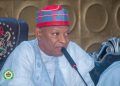
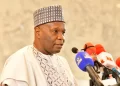
Fresh calls from former President Olusegun Obasanjo and Bayelsa State Governor Douye Diri to increase the 13 per cent derivation for oil-producing states are welcome. They made the call at the inauguration of the Crude Distillation Unit of the $1 billion Azikel Refinery at Obunagha, Yenagoa Local Government Area in Bayelsa.
It is an integral tenet of federalism to cede control of resources to the community or region producing them.
The oil-producing states bear the brunt of oil exploitation. So, they should be given prime consideration to enable their citizens to lead quality lives.
As Diri put it, the current arrangement does not give the Niger Delta adequate benefits from its natural resources. This is a sound argument.
The governor said oil-producing communities continued to bear the environmental and social costs of extraction without commensurate benefits, urging the region to become more involved in petroleum processing and industrial development.
“As people of the Ijaw ethnic nationality, we have protested and fought because we feel that God gave us something in our land, but we are not benefiting from it. Others are benefiting and see us as second-class citizens,” Diri said.
He said the agitation for resource justice had continued for decades because oil-producing communities believed they were not receiving adequate benefits from the resources extracted from their territories.
Diri criticised the existing resource-control framework, particularly the Land Use Act and the derivation formula, arguing that oil-producing states deserved a greater say in managing their natural resources and distributing the benefits.
“The Land Use Act is unfair. Surface resources belong to states, but what lies underneath belongs to the Federal Government. That law is obnoxious and not good for any just society,” he said.
He added, “We do not want to take all to ourselves. We just want to be co-players in determining how it is done. Thirteen per cent is not enough for the states.”
Undoubtedly, the Land Use Act has helped to stabilise land ownership in Nigeria. Governors hold the land in their states in trust for the people. So, doing away with the Act might solve a problem but instigate wider intractable issues.
The solution is to amend the Act to give the resources underneath the soil to the states.
Obasanjo echoed the governor’s sentiments by calling for an increase in the 13 per cent derivation allocation to oil-producing states. In his view, the current percentage ought to be regarded as a starting point for further discussions.
“You are right that the states and oil-producing communities have not got a fair deal so far. Thirteen per cent is the beginning. You can continue to talk. The most important thing is that even the little you have received, you have used it well,” he said.
Agitation for a fair deal for the Niger Delta spanned decades. It culminated in the 13 per cent achievement at the National Constitutional Conference in 1994. It was eventually inserted in the 1999 Constitution with Obasanjo leading the charge.
In the years leading up to Independence, especially from 1953 to 1958, the three regions of North, West and East retained 50 per cent of all they produced. Things started changing after the military coup of January 1966.
By 1970, the military ruler, Yakubu Gowon, had reduced it to 25 per cent as oil gradually became the mainstay of the economy and the four regions had been dissolved into 12 states.
It later fell to 5.0 per cent and then 2.0 per cent under President Shehu Shagari before it was subsequently raised to 3.0 per cent under the Ibrahim Babangida dictatorship.
However, at the 1994 confab, Wellington Okrika and an influential body known as the Traditional Rulers of Oil Minerals Producing Communities of Nigeria pushed vigorously for the adoption of 25 per cent derivation. This stirred serious debates that eventually led to the compromise 13 per cent figure.
In the Fourth Republic, there has been agitation for an increase to between 20 and 25 per cent. The Petroleum Industry Act of 2021 added a 3.0 per cent host communities fund to the equation.
The agitation has helped to strengthen calls for resource-bearing communities to be treated equitably in allocations from the Federation Account. This arises from Section 162(2) of the Constitution, which states that “not less than 13 per cent of revenue accruing to the Federation Account directly from any natural resource.”
There are currently calls for states such as Niger, which hosts four dams, to also enjoy derivation. It is currently before the Supreme Court on that matter.
Ultimately, Nigeria might just need to return to the pre-independence model under which the 36 states and the Federal Capital Territory would control revenue arising from their territories and pay royalties and taxes to the Federal Government.
The Federation Account Allocation Committee reported in September 2026 that the total 13 per cent derivation paid to the benefiting mineral-producing states amounted to N236.04 billion, out of which solid minerals states directly got a mere 0.5 per cent.
Nigerian leaders need to think beyond the monthly receipts to enable the economy to thrive.
No increase can fully assuage the demands of the citizens of oil-producing states for an equitable deal.
Agriculture used to be the mainstay of the economy. It was also the major contributor to the country’s Gross Domestic Product for 15 years, from 1960 to 1975 and again between 2001 and 2015.
Currently, agriculture contributes 22.98 per cent to the GDP, lagging behind ICT and services.
So, other sectors must be reinvigorated, and exports ramped up to shore up revenue and generate jobs.
There are projections that Nigeria can scale monthly revenue from its 44 solid minerals from N8 billion monthly to N1.8 trillion every month, overtaking oil.
That remains a mirage because of the low investment by Nigerian companies, unregulated or illegal mining, and a concentration on extraction instead of licensing based on the ownership of processing plants.
Only 10 per cent of the solid minerals are reportedly mapped to a bankable standard, but this has to change through concerted action by the public and private sectors. Lithium possesses immense potential to be a game changer if the 10 lithium states move to full local processing.
States need to transition from mere collectors of derivation funds to actual investors. They should put in serious work in conjunction with the Federal Government to scale the minerals sector to earn much more than it has in recent years.