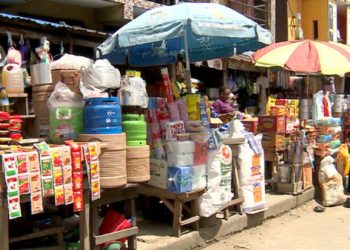
Nigeria’s food crisis is a damning indictment of governance in a country blessed with 37 million hectares of arable land, abundant water resources, a 240-million population and enormous agricultural potential. That millions of citizens struggle to afford basic meals and borrow to feed their families is a national failure. It demands urgent correction.
The admission by Taiwo Oyedele, Minister of Finance and Coordinating Minister of the Economy, that some poor households spend as much as 120 per cent of their income on food should jolt the government into action. At a Chatham House London meeting, he described households that exhaust their earnings on food and borrow to survive until the next salary comes. This is damning.
Political economist Pat Utomi’s reaction was succinct: “So sad, our people deserve better.”
Indeed, Nigerians deserve better than an economic system in which feeding has become a daily struggle. Oyedele’s disclosure highlights the gap between improvements in touted macroeconomic indicators and ordinary citizens’ lived experiences.
The minister emphasised the importance of reliable data, stating that the National Bureau of Statistics had struggled to secure funding for essential surveys. But inadequate data cannot excuse years of official inaction when households, farmers and markets have been signalling distress. This crisis should have been anticipated and confronted much earlier.
The NBS reported headline inflation of 14.63 per cent in September 2026, down from 15.39 per cent in August. Annual food inflation, however, stood at 19.59 per cent, marginally above August’s 19.57 per cent, although food prices declined by 1.55 per cent month on month.
Inflation measures the rate of price increases, not whether consumers can afford existing prices. When rice doubles in price and subsequently becomes 10 per cent cheaper, households do not regain their former purchasing power. They only experience a slower increase or partial reversal from an already elevated base.
NBS figures illustrate the damage. A kilogramme of local rice rose from an average of N546.76 in April 2023 to N1,399.34 in April 2024, an increase of 155.93 per cent. Brown beans climbed from N615.67 to N1,387.90, while white garri increased from N362.50 to N851.81 over the same period.
By August 2024, brown beans averaged N2,574.63 per kilogramme, compared with N692.95 a year earlier. A dozen medium-sized eggs rose from N1,031.55 to N2,289.19, while local rice increased from N737.11 to N1,831.05.
Some commodities have since become cheaper. In May 2026, brown beans averaged N1,344.93 per kilogramme, down from N2,385.15 a year earlier. White garri fell from N1,341.79 to N813.24, and local rice declined from N2,095.29 to N1,905.43. Yet tomatoes rose from N1,392.71 to N1,560.56, while boneless beef increased from N6,662.92 to N7,171.41.
These national averages reveal uneven price movements, not a return to pre-crisis affordability. Years of increases have eroded purchasing power, while wages and household incomes remain inadequate.
The NBS’s April 2026 Cost of a Healthy Diet report put the national average at N1,589 per adult daily. This represents the least expensive combination of locally available foods meeting established dietary guidelines, excluding transportation and meal preparation.
For a family of four, assuming four adult-equivalents, that amounts to N190,680 monthly. This is nearly 2.7 times Nigeria’s N70,000 monthly minimum wage, before cooking fuel, transport, rent, education and healthcare are considered. Actual household requirements vary with age, location and dietary needs, but the calculation demonstrates the scale of the crisis.
The government says more than 10 million households have received cash transfers worth over N600 billion. Such assistance can help, but delayed, inadequate or poorly targeted payments cannot bridge this affordability gap. Millions also depend on informal employment and irregular earnings.
Oyedele’s observation about the working poor is therefore important. Employment without sufficient purchasing power offers little protection against hunger.
The removal of petrol subsidies and foreign-exchange liberalisation were intended to correct economic distortions, improve public finances and restore market efficiency. But their immediate effects on food affordability were severe, with petrol selling for N1,500 per litre up from N185 and the naira crashing to N1,350 down from N460 per dollar.
Higher petrol prices increased the cost of transporting produce, operating irrigation pumps, processing grains and powering storage facilities. Currency depreciation raised the naira cost of imported fertiliser components, machinery, chemicals and other agricultural inputs.
These reforms are not responsible for every food-price increase. Insecurity, climate pressures, inefficient distribution, low yields, wastage and longstanding agricultural underinvestment also contribute.
Nevertheless, their consequences were foreseeable in an economy with weak infrastructure, limited household savings and inadequate social protection. The government has a responsibility to cushion vulnerable citizens while addressing these structural weaknesses.
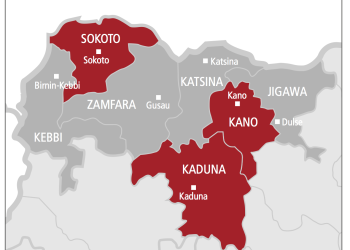
Banditry, kidnapping, insurgency and farmer-herder conflicts have disrupted cultivation in several food-producing regions. Farmers who cannot safely access their land reduce production, abandon farms or pay bandits to do so.
Climate change compounds these difficulties. Erratic rainfall, flooding, drought and soil degradation undermine rain-fed agriculture, while inadequate irrigation leaves farmers vulnerable to changing weather patterns. Limited access to improved seeds, mechanisation, extension services and affordable credit further suppresses productivity.
Fertiliser distribution exposes the gap between government pronouncements and measurable results. In 2023, the Federal Government declared a state of emergency on food security and announced a N200 billion programme to cultivate 500,000 hectares and distribute fertiliser, seedlings and other inputs. In June 2026, the National Agricultural Development Fund announced plans to distribute 515,720 bags of fertiliser to 128,930 smallholders across 25 states and the Federal Capital Territory.
Yet farmers’ organisations complain that support frequently arrives late, misses genuine smallholders or fails to match planting calendars. Daniel Okafor, president of the All Farmers Association of Nigeria, called for better rural roads, security, irrigation, timely inputs and training. Florence Ojo of the Small-Scale Women Farmers Organisation in Nigeria stressed early distribution, extension services and cooperation with farmers’ organisations.
Post-harvest losses also compound the food crisis. The Organisation for Technology Advancement of Cold Chain in West Africa estimated annual losses of 30 million to 40 million metric tonnes, costing between N3.5 trillion and N5 trillion.
Decentralised solar-powered cold-storage hubs, aggregation centres, modern warehouses, processing facilities and reliable electricity could reduce waste, smooth seasonal price fluctuations and improve farmers’ bargaining power.
The distribution chain also inflates prices. Aggregators, wholesalers, transporters and retailers perform legitimate functions, but inefficient logistics, opaque margins, poor roads and illegal levies increase costs. City Distro chief executive Olamide Olabisi has complained about payments demanded along transport routes.
Government should eliminate illegal collections, enforce transparent haulage charges, improve feeder roads and connect farmers directly with processors, retailers and institutional buyers. Digital wholesale platforms and public market-price information could strengthen competition.
When families cannot afford balanced meals, they sacrifice eggs, fish, meat, milk, fruits and vegetables for cheaper staples. Children face impaired growth, cognitive development and educational performance. Malnutrition weakens productivity, increases vulnerability to illness and burdens an already strained healthcare system.
Action Against Hunger estimates that 45.4 million Nigerians face hunger presentlTo reverse this situation, Nigeria must replace fragmented interventions with a coherent food-security strategy. y. Chronic deprivation also aggravates social instability and increases vulnerability to exploitation, trafficking and criminal recruitment.
This must begin with adequate funding for the NBS and the establishment of a transparent dashboard tracking market prices, production, household food expenditure and nutrition. Data must inform action rather than excuse delay.
The government must prioritise irrigation, improved seeds, mechanisation, research, extension services and affordable seasonal credit. The government claimed to have procured 2,000 tractors, but the impact remains to be seen.
The African Union’s Maputo Declaration established a benchmark of allocating at least 10 per cent of national budget expenditure to agriculture and rural development. Nigeria must implement this commitment.
Most importantly, federal, state and local governments must coordinate investment in rural security, roads, irrigation, storage and agricultural markets. Every intervention should be evaluated by its effect on real food prices, household diets, post-harvest losses, productivity and farmer incomes.
Oyedele’s target of single-digit inflation by the end of 2027 will mean little to families unable to afford adequate meals. What matters is whether food becomes affordable relative to earnings.
Nigeria has the land, water, labour and entrepreneurial capacity to feed its population far better than it does. With the population expected to exceed 400 million by 2050, mass food deprivation amid such abundance is unacceptable.
Oyedele’s admission must therefore mark a turning point, not another acknowledgement followed by business as usual. Nigerians cannot eat macroeconomic statistics or promises of future prosperity. They need affordable food, decent incomes and the assurance that hard work will feed their families.
A government that cannot translate abundant agricultural potential into accessible nourishment has failed one of its most basic responsibilities. That failure must be reversed, urgently and decisively.