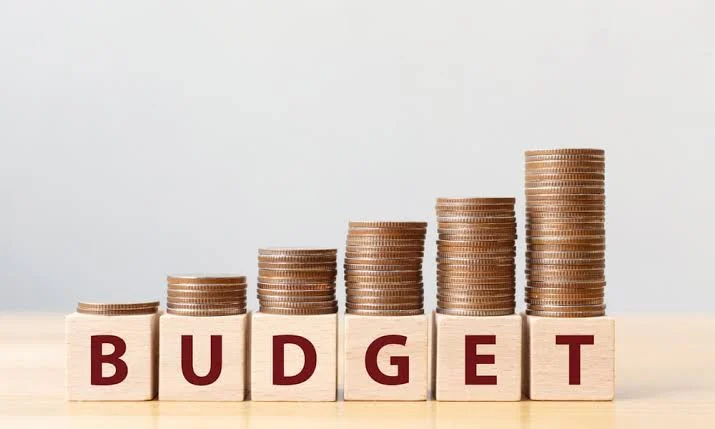
Budgeting in Nigeria too often descends into an exercise in misplaced priorities. The latest scrutiny of the 2026 Federal Government budget by civic organisation Tracka, an initiative of BudgIT, evokes a troubling sense of déjà vu.
According to Tracka, about N8.05 billion has been earmarked for faith-based organisations—N6.14 billion for 52 mosque projects and N1.91 billion for seven church projects. The revelation raises serious questions about transparency, accountability, fiscal discipline and adherence to the Constitution.
At a time of severe economic hardship, such an allocation is indefensible.
Faith is fundamentally a personal matter. The government has no business inserting expenditure for religious organisations into a national budget. This is a frivolous budget line that should be scrapped immediately. If any part of the allocation has already been released, it should be recovered.
Section 10 of the Nigerian Constitution is explicit: “The Government of the Federation or of a State shall not adopt any religion as State Religion.”
By appropriating public funds for religious organisations, the Bola Tinubu administration is straying close to breaching the spirit, if not the letter, of that constitutional provision.
Religion plays an important role in society, but government budgets exist to meet citizens’ most pressing developmental needs and improve their quality of life, not to finance religious institutions.
This recalls the controversy surrounding government sponsorship of pilgrimages. Shortly after assuming office in 2023, the Bola Tinubu administration budgeted N90 billion to support the Hajj, provoking widespread criticism because of its negligible economic value.
The same argument applies to the annual sponsorship of Christian and Muslim pilgrimages. In the recent past, the Federal Government even provided pilgrims with preferential foreign exchange rates.
Nigeria already forgoes substantial revenue because religious organisations enjoy tax exemptions as non-governmental organisations. It is therefore absurd for government to divert scarce public funds needed for critical sectors into what amounts to patronage for a privileged few.
This reflects a disregard for ordinary Nigerians at a time when vital sectors such as healthcare, social welfare, power and internal security suffered poor cash releases under the 2025 budget.
The allocation also comes on the heels of billions spent renovating the Vice-President’s residence and the International Conference Centre in Abuja, purchasing vehicles for the Office of the First Lady, acquiring a new presidential jet, and buying armoured Cadillac Escalade SUVs for the Presidency.
The Office of the Deputy Speaker of the House of Representatives, Benjamin Kalu, has defended the appropriation, insisting that it is not direct religious financing but support for youth social intervention programmes implemented through faith-based organisations.
According to the office, the actual allocation is N780 million, after deductions, and is intended for a youth reorientation campaign against crime and drug abuse through more than 130 local churches.
It also attributed references to the purchase of public address systems and evangelical instruments to a technical error in the budget description.
Even if that explanation is accepted, it does not justify embedding such expenditure under religious organisations. Public programmes should be transparently budgeted through the appropriate government agencies, not disguised under faith-based allocations that invite suspicion and erode public trust.
The need for better priorities is glaring.
Youth unemployment remains one of Nigeria’s gravest socio-economic challenges. Although the National Bureau of Statistics places youth unemployment among those aged 15 to 34 at about 6.5 per cent under its revised labour survey methodology, broader estimates suggest that as many as 80 million young Nigerians are either unemployed or underemployed.
About 1.7 million graduates leave Nigerian universities and polytechnics every year, yet the economy lacks the capacity to absorb them. Consequently, many are forced into informal employment, estimated at 93 per cent of total employment.
The NBS also reports that 40.1 per cent of Nigerians, about 82.9 million people, live in poverty. Meanwhile, The Guardian estimates that between 61 and 63 per cent of the population, roughly 139 to 140 million citizens, live below the national poverty line, while 33 per cent are classified as ultra-poor and face food insecurity based on age-weighted caloric intake.
Even more alarming is that one in four young Nigerians is neither in employment, education nor training.
Against this backdrop, the question arises: when countless communities still lack functional primary healthcare centres, quality schools, clean water and motorable roads, can religious projects genuinely rank among the nation’s most urgent priorities?
With rising public debt and shrinking fiscal space, every borrowed naira and every budgeted naira must deliver the greatest possible public value.
Public funds should never be used to construct or renovate places of worship while essential public services remain chronically underfunded.
According to the International Centre for Investigative Reporting, the N8.05 billion allocation could instead finance primary healthcare centres, solar-powered boreholes for clean water and classroom blocks for out-of-school children. It could equally fund much-needed interventions in education, healthcare, water supply and other essential public infrastructure.
The opportunity cost is enormous. The Transmission Company of Nigeria disclosed that it spent about N8.8 billion repairing 128 vandalised transmission towers across the country within 11 months in 2024. That comparison alone illustrates how much critical infrastructure could benefit from the funds now earmarked for religious projects.
Socio-economic deprivation fuels crime, insecurity and economic sabotage, all of which impose enormous costs on public finances.
The government’s overriding priority should therefore be improving citizens’ welfare, expanding economic opportunities and reducing the desperation that drives criminality.
Viewed against this background, the allocation is difficult to interpret as anything other than political patronage. It creates the impression of an attempt to curry favour with Christian and Muslim constituencies ahead of the 2027 general elections.
It also exposes the contradiction of a government that repeatedly asks Nigerians to endure hardship while approving generous spending that benefits only a select few. Worse still, such allocations risk compromising the independence and moral authority of religious institutions by drawing them into partisan politics.
The government should instead channel scarce resources into programmes that stimulate economic activity, create jobs and expand opportunities.
Religious organisations, and indeed all Nigerians, would benefit far more from an economy that works than from politically motivated budgetary favours.