Nigeria’s headline inflation dropped marginally to 15.39 percent in the month of August, a report by the National Bureau of Statistics (NBS) has shown.
The report said the figure was down from 15.43% in July 2026 and stood at 23.14% in the same month of the preceding year (August 2025).
Looking at the movement, it explained the August 2026 Headline inflation rate showed a decrease of 0.04% compared to the July 2026 Headline inflation rate.
On a month-on-month basis, the inflation rate in August 2026 was 0.71%, which was 0.86% lower than the rate recorded in July 2026 (1.57%).
“This means that in August 2026, the rate of increase in the average price level was lower than the rate of increase in the average price level in July 2026.”
It added that Food inflation rate in August 2026 was 19.57% on a year-on-year basis and stood at 25.30% in the same month of the preceding year (August 2025).
Also, on a month-on-month basis, the Food inflation rate in August 2026 was 1.02%, down by 4.55% points from July 2026 (5.56%).
“This shows that the average prices of food items are increasing at a decreasing rate in August 2026.”
It said the drop in food inflation rate was attributed mainly to changes in the average prices of Palm Oil, Carrots, Pepper, Onions, Cassava Flour, Beef, Yam Flour, Water Yam, Melon (Egusi), Fresh Ginger Fresh Fish, Irish Potatoes, Wheat Grain, Frozen Chicken, Turkey Meat, Yam Flour, among others.
“The average annual rate of Food inflation for the twelve months ending August 2026 over the previous twelve-month average was 15.70%, which was 14.15% points lower compared with the average annual rate of change recorded in August 2025 (29.86%).”
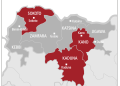
In states, it said all Items rate on a year-on-year basis was highest in Lagos (23.68%), Zamfara (22.56%), and Enugu (22.06%), while Sokoto (2.11%), Kebbi (3.72%) and Jigawa (3.81%) recorded the lowest rise in Headline inflation on a Year-on-Year basis.
On a Month-on-Month basis, the highest increases in Rivers (6.92%), Osun (5.61%) and Kano (5.59%), while Anambra (-8.83%), Bauchi (-7.13%), and Borno (-7.09%) recorded the lowest rise in the Month-on-Month inflation.
For Food Inflation, increase on year-on-year basis was highest in Adamawa (38.85%), Zamfara (37.96%), and Bayelsa (36.20%), while Borno (-4.04%), Jigawa (-0.23%) and Kebbi (3.47%) recorded the slowest rise in Food inflation on a Year-on-Year basis.
“On a Month-on-Month basis, however, August 2026 Food inflation was highest in Katsina (9.48%), Rivers (8.86%) and Osun (8.32%), while Taraba (-12.42%), Borno (-12.15%), and Bauchi (-8.88%) recorded the slowest rise.”
Inflation remained a major concern for households and businesses in August 2026, according to a recent inflation expectations survey report by the Central Bank of Nigeria (CBN).
The Inflation Perception Index stood at 39.6 points in August, down slightly from 40.0 points recorded in July.
While the decline was modest, respondents appeared increasingly hopeful that inflationary pressures would moderate in the months ahead, with expectations projected to fall to 19.9 index points next month.
Among households, the proportion of respondents who considered inflation to be high edged down marginally, from 67.3 per cent in July to 67.2 per cent in August. Businesses recorded a more noticeable improvement, with the share perceiving inflation as high falling from 65.4 per cent to 61.8 per cent during the review period.
The experience of inflation, however, varied considerably across different categories of businesses and households.
By business size, micro enterprises recorded the highest inflation perception index at 101.4, followed by medium-sized businesses at 63.3, large businesses at 63.1, and small businesses at 57.4. On the other hand, small businesses recorded the highest perception of moderate inflation at 32.3 per cent, followed closely by large businesses at 31.8 per cent, medium enterprises at 27.8 per cent, and micro businesses at 24.7 per cent.
Geography also played a role in how households experienced rising prices. Rural households were more likely to perceive inflation as high, with 65.7 per cent reporting a high perception of inflation, compared with 63.2 per cent among their urban counterparts.
Income differences were even more pronounced. Households earning below N70,000 recorded the highest perception of inflation at 68.4 per cent, while those earning above N450,000 recorded the lowest at 30.8 per cent.
The figures highlight how rising prices continue to weigh more heavily on households with lower incomes.