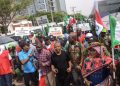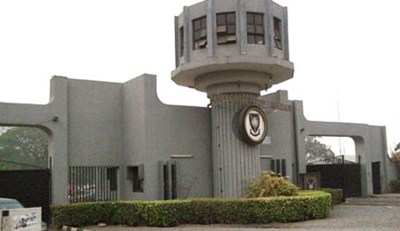
Students’ unrest culminating in the closure of tertiary institutions now appears a tradition in the nation’s higher institutions of learning. Of late, the gale of students protests swept across the University of Ibadan (UNIBADAN), Oyo State; Adekunle Ajasin University, Akungba- Akoko (AAUA), Ondo State; University of Lagos (UNILAG), Akoka; Obafemi Awolowo University, Ile-Ife, Osun State; and the University of Port Harcourt (UNIPORT), Rivers State; among others. Central to the upheavals are often the inability of the school authorities to manage differences between them and students with the appropriate temperament and poise, their contempt for the rules, administrative haste, executive recklessness and piling of bloated bills on students.
These are compounded by the dearth of basic amenities like electricity, potable water, as well as sanitary facilities and conditions. Take UNILAG that was shut indefinitely on April 8, 2016 as one example. The university’s Senate ordered that the institution be shut down indefinitely on the heels of days of students’ protests on campus. Their (students’) grouse revolved around inadequate social amenities – poor electricity, water supply and the rest. The protesting students also alleged that the management of UNILAG was not sensitive enough to their plights and, therefore, decided to embark on the protests to press home their grievances.
Reports said the Senate of the university recently directed that it be reopened as from May 2, 2016. As has now been the ritual, each returning student would complete an undertaking form and get it notarized as a condition to be readmitted into the institution. In UNIBADAN, a student was rusticated for his alleged involvement in a previous protest against the lack of power and water on campus, a development that ignited protests by other students that felt their colleague was made a scapegoat. To forestall a more violent version of the protests, the university was also shut down and the students sent home. One recent report also relayed threats by the National Association of Ogun State Students (NAOSS) to take to the streets in protest of the bestial treatment some security operatives attached to Abraham Adesanya Polytechnic, Ijebu Igbo, Ogun State, allegedly meted out to one Miss Oladokun Leshi Folashade, a National Diploma (ND) II student of the institution purportedly on the orders of the Rector of the institution, Prof. Mrs. Bilesanmi Awoderu. Folashade was allegedly battered and dragged on the ground by the security operatives for the late payment of N5,000 the school authority imposed on students for the purpose of repairing one of the institution’s buildings that got burnt, it was reported. The Ogun State students’ body wants the culprits brought to justice.
The decrepit state of infrastructure in virtually all Nigerian public schools is nauseating; and efforts to address them exceptionally slow. In spite of repeated strikes by the Academic Staff Union of Universities (ASUU) and it counterparts in other tertiary institutions to get the government to right the wrongs; as well as government’s promises in recent years to redress the situation, nothing tangible has changed in relation to deteriorating facilities in the schools. The United Nations recommended that nations should set aside 26 percent of their annual budgets for education to be able to effectively grapple with the numerous challenges dogging the sector. But available records indicate that the Nigerian government, whether at state or federal level, has not in recent decades devoted up to half of the 26 percent of annual budgets to education.
The sector is, therefore, grossly underfunded. On the contrary, the government has the routine increment of school fees as its pastime. This is another major source of bitterness and rancour between the leadership of public higher institutions in the country and their students. Frequent closure of schools disrupts the academic calendar, renders students and teachers alike unproductive and robs the nation of the invaluable gains quality education injects into national growth and development. But with them communicating closely and jointly appraising their pressing problems and challenges, school authorities and their students should be able to avert avoidable skirmishes that lead to school closures. In addition, the Federal Government should revisit the report of the Committee on Needs Assessment of Nigerian Public Universities it set up in of 2012, which catalogued in fair details the sordid condition of the nation’s schools; and find ways of addressing them.