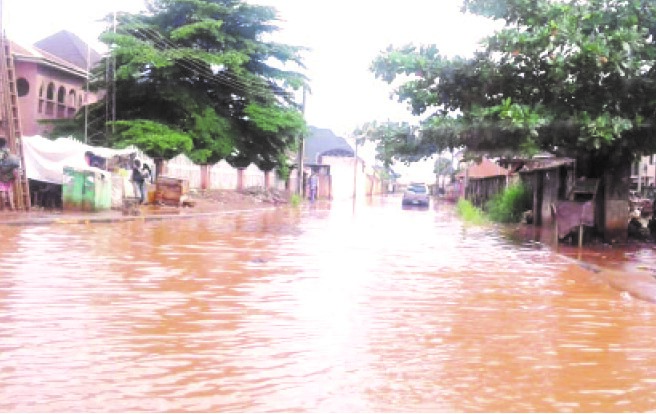
Considering the havoc that floods have been wreaking around the globe lately, the warning by the Nigeria Hydrological Services Agency of looming flooding in some states around the country could only be termed as timely; and should be taken seriously. With the full weight of climate change gradually bearing down on mankind, it is incumbent on many countries, including Nigeria, to take steps to ameliorate the impact of flooding, as it is practically impossible to completely hold back nature’s rage.
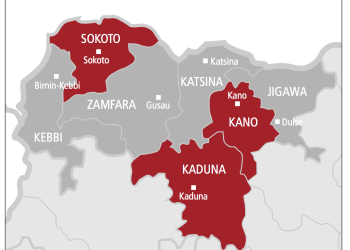
In what could be another torrid time for Nigerians, after the experience of recent years, NIHSA said no fewer than 15 states could be submerged by water as the skies get set to open up in the coming months, triggering coastal and river flooding. Among states likely to be affected, according to the agency, are Lagos, Cross River, Niger, Nasarawa, Oyo, Imo, Rivers, Edo and Enugu. Others likely to face an increased surge of water are Delta, Bauchi, Adamawa, Abia, Jigawa and Kebbi states. The Federal Capital Territory, which has already been hit recently, will not be spared.
Although flooding has become part of life in Nigeria because of her unique geographical features, which boast many rivers that criss-cross the hinterland, with the Atlantic Ocean bordering the southern part, the changing pattern of rains has further compounded the situation. In a country where natural disasters such as earthquakes and volcanic eruptions are remarkably rare, flooding is fast becoming the major source of worry here.
In a particular flooding incident recorded in 2012, 431 people were reported dead across the country, while about 1.3 million others were displaced. Said to be the worst of its kind in 40 years, 30 states were affected, with hundreds of acres of farmland submerged under water for weeks. For a country that is not used to responding to disasters of that magnitude, it was an experience that left behind an indelible memory of horror and destruction.
The country experienced another flooding disaster last year, enough to make people realise that this was going to be a more frequent occurrence going forward. States such as Niger, Anambra, Kogi and Delta were declared disaster zones as villages were washed away and, in some places, motor vehicles gave way to canoes as a means of traversing the different communities. As of August 29, 2018, the peak of the flooding, water at Lokoja, the confluence town between the two main rivers traversing the country – the rivers Niger and Benue – was already in excess of the volume recorded on August 29, 2012, NIHSA said then.
Around the world, floods have become a major source for concern. In the United States that experiences earthquakes and hurricanes, floods have emerged as the major natural disaster, while in Asia and Africa, people are struggling to cope with the frequent deluge. For instance, in June, nearly 4 million hectares of farmland was damaged in China because of flooding, leading to the evacuation of 356,000 people. The number of death was put at 61 while the economic losses amounted to $1.93 billion.
Similarly, in Sudan, no fewer than 46 people died as floods swept across the country, destroying 10,000 homes in 16 of the country’s 18 states. India also had a raw deal as nine deaths were recorded last month in the eastern state of Odisha. The extremely heavy rain last month also claimed casualties in Pakistan, where 12 people died in Khyber Pekhtunkhwa province in the northern part of the country. It is indeed a global phenomenon and the effects will, to a great extent, be dependent on how countries respond to the threat.
So, while the release of this year’s flood outlook could be seen as bad news for those who live in the affected places, it is also an opportunity for the governments and people of these areas to ensure that the right things are done and town planning rules are not violated. Those who built houses on water channels should be forced to relocate and such houses demolished so that water can have its course unhindered. Usually, people would resist warnings for them to relocate, but it is the duty of the government to ensure that such people do not deliberately expose themselves to danger. The government should not hesitate to deal ruthlessly with the violation of town planning laws.
NIHSA’s Annual Flood Outlook is also a warning to farmers who should be guided on the right time to start their planting season, instead of embarking on planting only for water to sweep away the farmland as was the case in 2012 and last year. After the success of the government-inspired rice revolution of 2017, the programme suffered a setback last year because of floods that hit the rice planting states. Not surprisingly, some of the affected states then have also been mentioned as being at risk this year.
In past experiences in Nigeria, flooding was mainly aided by the release of water in some dams when it was evident that they could break their banks and cause more havoc if the release was not timely. But even the release of water can be done reasonably and in such a manner that tragic incidents are minimised or averted outright. This was not done when water was released from a dam in neighbouring Cameroon in 2012, for instance, which was the main culprit in that year’s flooding.
There are many ways to prevent flooding, experts say. Nigeria should improve on her warning system, promote flood resilient buildings, construct buildings above flood levels and increase spending on the construction of flood defences. Others measures include planting of trees strategically, restoring rivers to their natural courses and introducing water storage areas. Apart from clearing the drainage, the government should also embark on public enlightenment about their responsibilities as citizens, which could help to reduce the impact of flooding. Not dumping refuse in canals, for instance, will go a long way in reducing the effect of flooding.