TheCitizen - It's all about you
  • Home
  • Headlines
  • Latest News
  • Governance
  • Business
  • Financial Crimes
  • Opinion
  • Editorials
No Result
View All Result
TheCitizen - It's all about you
  • Home
  • Headlines
  • Latest News
  • Governance
  • Business
  • Financial Crimes
  • Opinion
  • Editorials
No Result
View All Result
TheCitizen - It's all about you
No Result
View All Result

Nigeria’s costly blackouts – Punch

The Editor by The Editor
July 8 2026
in Public Affairs
A A
0
Nigeria’s costly blackouts – Punch

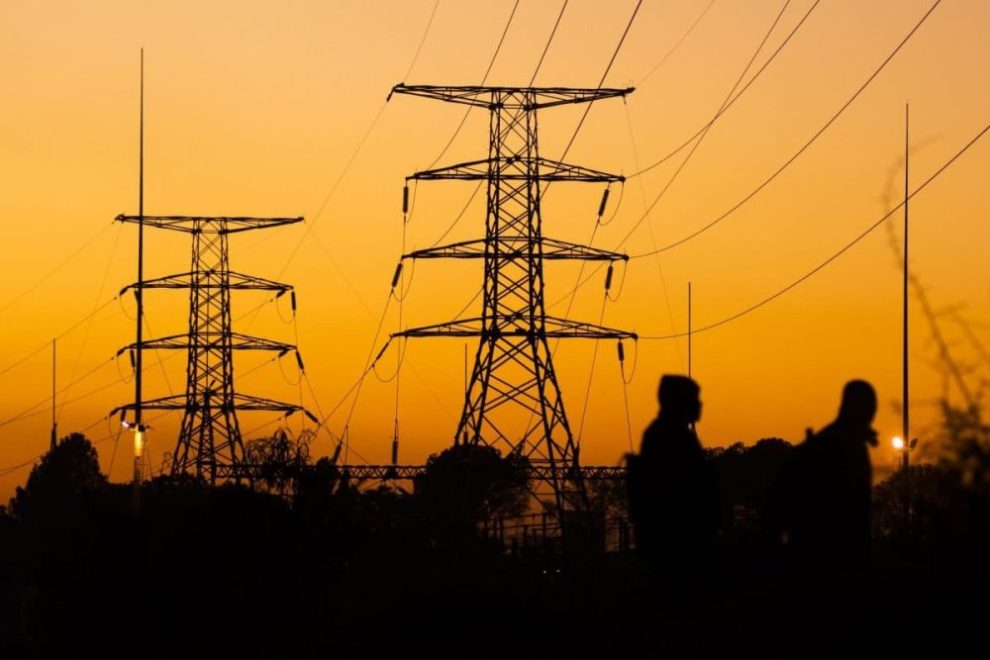
While Nigeria’s electricity crisis has become all too familiar, the latest evidence about its debilitating impact should end any lingering illusion that this situation is nothing short of a full-scale economic emergency.

In just the first quarter of 2026, 24 companies listed on the Nigerian Stock Exchange spent a staggering N400.83 billion on diesel, gas and other alternative energy sources to keep their businesses running.

That represents a 3.66 per cent increase over the same period in 2025, while companies that separately disclosed electricity expenses reported an even more shocking 81.5 per cent increase in power costs following higher tariffs and worsening supply constraints.

These figures, compiled from companies’ unaudited financial statements by The PUNCH, illustrate the enormous premium Nigerian businesses continue to pay for a public utility that ought to be available, reliable and affordable.

According to the World Bank, unreliable electricity costs Nigeria about $29 billion annually, equivalent to roughly 5-7 per cent of GDP, making poor power supply one of the country’s biggest constraints to economic growth.

The African Development Bank estimates that more than 70 per cent of Nigerian firms own or share generators, among the highest rates anywhere in the world.

Instead of depending on a functioning national grid, businesses have been forced to construct what experts now describe as a vast “shadow grid” comprising between 14 and 20 gigawatts of self-generated capacity, powered mainly by diesel and petrol generators.

According to estimates, operating this parallel electricity system reportedly consumes between $20 billion and $22 billion every year in fuel alone. This is economic absurdity.

The corporate figures suggest that Dangote Cement alone spent 184.87 billion on energy during the first quarter. BUA Cement followed with N67.34 billion, Eterna with N60.77 billion, while banks such as United Bank for Africa, Zenith Bank and First HoldCo collectively spent tens of billions of naira keeping their branches operational through self-generation.

Every naira burnt in generators is capital diverted from expanding factories, hiring workers, investing in technology or lowering prices for consumers.

As Akpan Ekpo, economist and public policy expert at the University of Uyo, rightly observed, no serious economy runs on generators. Companies inevitably transfer these mounting energy costs to consumers, fuelling inflation and making Nigerian products increasingly uncompetitive.

For manufacturers, energy now accounts for as much as 30 to 35 per cent of production costs, compared with less than half that level in countries with stable electricity systems.

Frequent outages damage expensive industrial equipment, disrupt production schedules and reduce capacity utilisation.

Small and medium-sized enterprises, lacking the financial muscle to invest in sophisticated backup systems, suffer even more devastating consequences. Many simply shut down.

It is hardly surprising that several multinational manufacturers have either downsized or exited Nigeria in recent years, citing the high cost of doing business. Reliable electricity remains one of the first indicators foreign investors examine before committing capital.

Persistent grid collapses, chronic transmission bottlenecks and widespread dependence on diesel generators send the wrong message.

The tragedy is that Nigeria’s electricity crisis is neither new nor inevitable.

For decades, successive governments have promised reforms without delivering sustained improvements.

The much-touted 2013 power sector privatisation was expected to unleash private capital, improve efficiency and expand generation.

Instead, the sector has largely remained trapped in a cycle of inadequate investment, weak governance, mounting debts, poor commercial performance and regulatory uncertainty.

Generation has stagnated far below national demand; just 5,000 MW for a population of 230 million. Transmission infrastructure remains obsolete and overloaded. Distribution companies continue to struggle with technical losses, poor metering and revenue collection.

The entire electricity value chain suffers from liquidity shortages that discourage new investment while leaving consumers to pay more for less.

The irony is both profound and painful. Nigeria possesses abundant natural gas reserves, one of Africa’s highest solar irradiation levels and enormous hydroelectric potential. Yet businesses continue to spend fortunes powering generators.

The Managing Director of the Rural Electrification Agency, Abba Aliyu, recently captured the broader implications. When manufacturers depend on diesel, he noted, profit margins shrink, competitiveness declines, emissions increase and expansion becomes more difficult.

When agro-processors lack reliable electricity, food is wasted, and rural incomes suffer. When digital infrastructure remains power-constrained, Nigeria loses opportunities in the knowledge economy.

Similarly, Lagos Chamber of Commerce and Industry President Leye Kupoluyi correctly described energy as the foundation of every modern economy and urged accelerated investment in renewable energy.

The Centre for the Promotion of Private Enterprise, led by Muda Yusuf, has also advocated comprehensive structural reforms encompassing stronger governance, improved transmission infrastructure, decentralised renewable energy, better sector financing and a credible pathway to cost-reflective tariffs supported by targeted social protection.

Regardless, there are encouraging signs. The constitutional amendment allowing states to legislate on electricity, the enactment of the Electricity Act 2023, ongoing state electricity market reforms and growing interest in embedded generation, mini-grids and renewable energy are opening new opportunities for private investment. These initiatives deserve strong support.

However, private investment alone cannot rescue the sector.

Electricity remains a strategic national infrastructure. No country has achieved rapid industrialisation by leaving critical power infrastructure entirely to market forces.

The government must provide the leadership, policy certainty, financing support and institutional discipline necessary to rebuild the transmission network, modernise the national grid, strengthen regulation and restore investor confidence.

Nigeria cannot continue financing one of the world’s largest generator economies while pretending it has an electricity sector.

The option is that Nigeria can continue subsidising failure through an expensive shadow grid, or it can finally invest in the modern electricity system that genuine industrialisation, technological advancement, and improved living standards demand.


Previous Post

Kwankwaso knocks Modu Sheriff over comments on Peter Obi’s northern support

Next Post

Gov. Nwifuru hails establishment of new Army Depot in Ebonyi

Related Posts

EFCC recoveries: The good, the bad and the ugly – Punch
Public Affairs

EFCC recoveries: The good, the bad and the ugly – Punch

September 11 2026
Football’s house of failure – Punch
Public Affairs

Football’s house of failure – Punch

September 8 2026
FAAC shares N2.09tr to FG, states, local councils as October revenue
Public Affairs

FAAC bonanza: Nigeria’s fiscal paradox – Punch

September 3 2026
Interstate highways of agony, hollow excuses – Punch
Public Affairs

Interstate highways of agony, hollow excuses – Punch

September 1 2026
Mass presence of governors in off-cycle elections – Punch
Public Affairs

Mass presence of governors in off-cycle elections – Punch

August 27 2026
Clerics must preach peace, not division – Punch
Public Affairs

Clerics must preach peace, not division – Punch

August 25 2026
Next Post
Gov. Nwifuru hails establishment of new Army Depot in Ebonyi

Gov. Nwifuru hails establishment of new Army Depot in Ebonyi

Senate rejects motion to investigate phantom agency N1.3bn budget allocation

Senate rejects motion to investigate phantom agency N1.3bn budget allocation

Leave a Reply Cancel reply

Your email address will not be published. Required fields are marked *
FROM THE GRASSROOTS

Lagos demolishes shanties after four die in community clash

Lagos demolishes shanties after four die in community clash

by The Editor
August 30 2026
0

...

Kano, Sokoto, others spend N53.2bn on scholarships abroad

INEC fixes Sept 19 for Kano Assembly by-election

by The Editor
August 27 2026
0

...

Awujale: Ruling House sues Ogun, kingmakers

Awujale: Ruling House sues Ogun, kingmakers

by The Editor
August 25 2026
0

...

Umahi’s son wins Ohaozara chairmanship as APC sweeps all Ebonyi LGAs

Umahi’s son wins Ohaozara chairmanship as APC sweeps all Ebonyi LGAs

by The Editor
August 24 2026
0

...

APPOINTMENTS

Gov. Yahaya swears in 19 new Gombe permanent secretaries

Gov. Yahaya swears in 19 new Gombe permanent secretaries

by The Editor
September 11 2026
0

...

Niger State governor appoints six commissioners-designate, four aides

Niger State governor appoints six commissioners-designate, four aides

by The Editor
September 8 2026
0

...

Tinubu swears in Enitan as new Head of Service

Tinubu swears in Enitan as new Head of Service

by The Editor
August 28 2026
0

...

Tinubu names new Head of Service

Tinubu names new Head of Service

by The Editor
August 19 2026
0

...

ODDITIES

Palliatives: Sokoto residents feared dead in stampede at Wammako’s residence

Police Inspector slumps, dies after fitness exercise

by The Editor
September 3 2026
0

How friend deceived me to sell my kidney, bought phones with payment — Victim

How friend deceived me to sell my kidney, bought phones with payment — Victim

by The Editor
August 30 2026
0

Umahi files N2.5b defamation lawsuit against bloggers

Umahi files N2.5b defamation lawsuit against bloggers

by The Editor
August 26 2026
0

GLOBAL NEWS

US, Israel, Iran agree to 2-week ceasefire as Trump pulls back on threats

US Appeal Court affirms block on Trump bid to curb mail-in ballots

by The Editor
September 11 2026
0

...

Trump promises Americans $5,000 if Republicans win Congress

Trump promises Americans $5,000 if Republicans win Congress

by The Editor
September 11 2026
0

...

UK bans trade in goods from Israeli settlements in occupied West Bank

UK bans trade in goods from Israeli settlements in occupied West Bank

by The Editor
September 8 2026
0

...

Iran President thanks Putin for Russia’s stance in war with US

Iran President thanks Putin for Russia’s stance in war with US

by The Editor
September 1 2026
0

...

Saudi Arabia halts multiple visas for Nigeria, 13 others as U.S. suspends visa dropbox

US outlines two family visa options for permanent residence

by The Editor
September 1 2026
0

...

State of the States

Fubara orders fresh LG elections in Rivers State

Fubara signs N1.84tt Rivers 2026 budget into law

by The Editor
September 3 2026
0

...

Lagos empowers 6,190 residents with free vocational, entrepreneurial skills

Lagos empowers 6,190 residents with free vocational, entrepreneurial skills

by The Editor
September 2 2026
0

...

Gov. Mutfwang convenes security council over Plateau attacks

Gov. Mutfwang convenes security council over Plateau attacks

by The Editor
September 2 2026
0

...

Enugu govt gets commendation for successful hosting of 2nd City Marathon

Enugu govt gets commendation for successful hosting of 2nd City Marathon

by The Editor
September 1 2026
0

...

Plugin Install : Widget Tab Post needs JNews - View Counter to be installed
  • Trending
  • Comments
  • Latest
EFCC recoveries: The good, the bad and the ugly – Punch

EFCC recoveries: The good, the bad and the ugly – Punch

September 11 2026
NCDC takes over Nasarawa office, plans N400m remodeling

NCDC takes over Nasarawa office, plans N400m remodeling

September 11 2026
Ondo LG shuts schools over security concerns

24 die after consuming herbal drinks in Ondo

September 11 2026
Gunmen kill Polaris Bank manager in Imo kidnapping attack

Gunmen kill Polaris Bank manager in Imo kidnapping attack

September 11 2026

EDITORIAL REVIEW

EFCC recoveries: The good, the bad and the ugly – Punch

EFCC recoveries: The good, the bad and the ugly – Punch

by The Editor
September 11 2026
0

Football’s house of failure – Punch

Football’s house of failure – Punch

by The Editor
September 8 2026
0

FAAC shares N2.09tr to FG, states, local councils as October revenue

FAAC bonanza: Nigeria’s fiscal paradox – Punch

by The Editor
September 3 2026
0

Interstate highways of agony, hollow excuses – Punch

Interstate highways of agony, hollow excuses – Punch

by The Editor
September 1 2026
0

Mass presence of governors in off-cycle elections – Punch

Mass presence of governors in off-cycle elections – Punch

by The Editor
August 27 2026
0

Opinion

 Akpakomiza and other stories

by The Editor
September 1 2026
0

...

‘Fake’ Agency: Adeyemi insists DG appointment genuine

Fake agencies: Why Nigeria still needs Oronsaye report

by The Editor
August 25 2026
0

...

How Adeleke danced back from the dead

How Adeleke danced back from the dead

by The Editor
August 19 2026
0

...

Adeleke’s win and the cost of winning at all costs

Adeleke’s win and the cost of winning at all costs

by The Editor
August 18 2026
0

...

Plugin Install : Popular Post Widget need JNews - View Counter to be installed
  • Home
  • Headlines
  • Latest News
  • Governance
  • Business
  • Financial Crimes
  • Opinion
  • Editorials

© 2026 TheCitizen Ng. All Rights Reserved.

No Result
View All Result
  • Home
  • Headlines
  • Latest News
  • Governance
  • Business
  • Financial Crimes
  • Opinion
  • Editorials

© 2026 TheCitizen Ng. All Rights Reserved.