- While political patronage might be inevitable in our kind of clime, we deplore its abuse
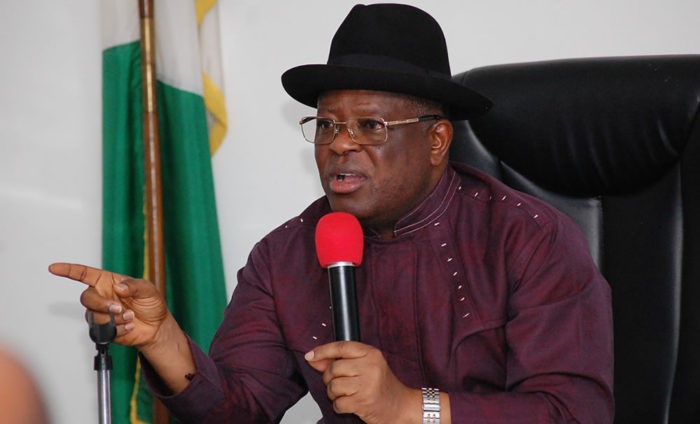
Ebonyi State Governor David Umahi early last week wielded the big stick, relieving more than 1,000 aides of their duties, effective from August 1. Categories of persons affected by the purge include Technical Assistants (TAs), Senior Technical Assistants (STAs) and Executive Assistants (EAs).
The governor, who was reported saying governance in the state was no longer “business as usual,” ascribed his heavy hand to non-performance by those sacked. Speaking in Abakaliki, the state capital, during virtual swearing-in of some Special Assistants and Caretaker Chairmen of Local Governments, among others, he said: “We have over 1,000 of you, over 350 LGA liaison officers and several development centres management committee members, yet myself and my deputy threw ourselves ‘in the ring’ on the COVID-19 issue. I don’t know where else you get a position, where you just sleep and wait for bank alert.”
But Umahi left the window open for possible return of the sacked officials to service. He said those who wished to reapply for the positions must be endorsed by a state government ministry or department. “We will hold such a ministry or department responsible for you and you must have and show us your farm if you wish to re-apply. People who were never in these categories of aides should not apply because I will not expand such offices. But if we don’t fill all the positions, we will then call for nominations,” he added.
It is apparent from what the governor said that people were being displaced, not that the jobs were being shuttered. The jobs remain available for repossession by ‘qualified’ re-applicants, or fresh applicants in the event that not all those sacked get reabsorbed. Actually, Umahi spoke at an event where a fresh retinue of aides were being sworn into office. The challenge he had obviously was not with the bloated number of aides but with expected deliverables. or was he speaking tongue in cheek? Was he at once sacking and denying? Most of those affected could not have been tied to agriculture, so their positions may be gone forever. With throngs of special assistants, technical assistants, senior technical assistants and executive assistants, among others, duty postings are endlessly convoluted.
Since the governor spoke about persons affected having farm holdings, the humongous structure could be some way of compelling commitment to agriculture by affected beneficiaries.
Beyond that, however, is something else. For a state with estimated 3.2million population this year, based on projected 2.84 percent yearly growth on its 2006 census figure of 2.1million (the Nigerian Bureau of Statistics estimated the population at 2.8million in 2016), the sheer size of government bureaucracy involving thousands of aides of the governor, besides the statutory civil service system, is an anomaly. It is legitimate to wonder what could be the job descriptions of these aides, without duty postings being duplicated or outright conflicting. This may partly explain the laidback attitude of the aides who came under the governor’s hammer.
The Ebonyi scenario underscores the high level of unemployment in the Nigerian economy, which political office holders seek to assuage with patronage of supporters through provision of sinecure jobs. This is one major cause of the huge cost of governance that has overburdened the country and hamstrung economic growth over the years; it is also a reflection of the perception of government as mainly an avenue for political reward.
it is politics of affection, governance as pork. A better way to tackle unemployment is growing the economy as would facilitate prolific creation of jobs. But this is the very option that patronage jobs inhibit, owing to the drainpipe on public treasury that oversized governments constitute.
Bogus political appointments by public office holders also signpost imperial leadership in the guise of democratic governance. The office holder sets up a structure of extra-statutory control by enlisting throngs of personal aides as props for his own political platform rather than for required service to society – unfortunately so, at the cost of overburdening the public purse. This goes to the heart of the enduring question about political accountability by public officers.
A more critical dimension is the challenge that imperial individualism poses to institutionalism. Every government is statutorily erected on the platform of a functional civil service. we are seeing in Ebonyi a metaphor of a tension between political offices and civil servants. the former is transitory and whimsical, the other experienced and entrenched. The inevitable conflicts takes its toll on the quality of governance.
Hence the governor’s decision, which in itself is also a stylised cry of desperation. But rather than available public resources being deployed to nurturing that service to make it operate better, the resources are spread thin on paying appointees in sinecure jobs, thus undermining institutional governance. But for COVID-19 and its economic consequences on revenue, we may have business as usual.
The Ebonyi experience is common to all states and levels of government in Nigeria, though truth is: it isn’t the best route to national growth. We recognise that this may not be altogether avoidable in our political culture where the expectation of payback is implicit in the offer of electoral support. But it should by no means be abused.