Nigeria’s overdependence on crude oil has defined its political economy for more than five decades. From the oil boom of the 1970s to the repeated price shocks of later years, the country’s fiscal stability has often mirrored the volatile fortunes of global energy markets.
Today, however, evidence suggests that, at last, Nigeria is beginning to loosen the grip of oil dependence on its public finances. This transition may be the most important economic recalibration since 1999, which, if sustained, could reshape the country’s economic future.
A new report by Quartus Economics suggests that tax revenue now accounts for roughly 87 per cent of federation revenues.
At the same time, oil contributes barely a quarter, down sharply from the 2010 to 2013 period when crude accounted for about three-quarters of government income.
Within just three years, tax receipts nearly tripled from N10.18 trillion in 2022 to N28.29 trillion in 2025, driven largely by non-oil sectors, according to the report. This represents a structural break from a rent-dependent fiscal model toward a more diversified, tax-driven state.
Nigeria’s overreliance on crude exports was a typical case of the “Dutch disease,” a phenomenon in which resource wealth distorts an economy by crowding out other productive sectors.
Flush with oil revenues, successive governments neglected agriculture, manufacturing and exports, while building a fiscal system overly dependent on a single commodity. One leader reportedly said Nigeria’s problem was not money but how to spend it.
Being an enclave industry, oil dependence led to weak industrialisation, high unemployment, chronic fiscal instability, and a political culture shaped by rent-seeking rather than productivity.
Then came a reality check. The 2014 oil price crash exposed these vulnerabilities. Nigeria’s revenues plummeted, triggering a fiscal crisis that saw GDP growth slow dramatically, from an average of over 6.0 per cent between 2010 and 2014 to barely above 1.0 per cent in the years that followed.
Per capita income fell sharply, and the government increasingly turned to borrowing to plug revenue gaps. The COVID-19 pandemic in 2020 delivered a second shock, with GDP growth plunging to -1.5 per cent, reinforcing the dangers of tying national prosperity to the unpredictable dynamics of global oil markets.
It is against this backdrop that the current fiscal transition must be understood. The shift toward non-oil revenue has been driven by a mix of policy reforms and necessity.
Measures such as improvements in tax administration and tighter enforcement of remittances, especially in the oil and gas sector, have all contributed to rising revenues.
Equally important has been a gradual recognition within the government that oil can no longer serve as a reliable fiscal anchor, particularly in a world moving toward cleaner energy and reduced fossil fuel dependence.
Under President Bola Tinubu, this transition has gained clearer policy direction. The administration’s emphasis on boosting the tax-to-GDP ratio to 18 per cent by 2027 signals an intention to build a more sustainable fiscal base.
Nigeria’s tax-to-GDP ratio has historically hovered in the single digits, far below the African average of around 16–18 per cent, and the OECD average of over 30 per cent. Closing this gap is essential both for revenue generation and strengthening the social contract between the state and its citizens.
Yet despite the steady rise in revenues, Nigeria’s public debt has expanded significantly. From relatively modest levels a decade ago, the debt stock has surged, rising to 40 per cent of GDP by 2025, with debt service consuming about half of revenues.
This paradox of rising revenues alongside rising debt reflects the legacy of past fiscal shocks and the demands of a growing population and underdeveloped infrastructure.
But borrowing, in itself, is not inherently problematic. Indeed, when deployed efficiently, debt can finance critical investments in infrastructure, education and healthcare, laying the foundation for long-term growth.
Nigeria’s problems lie in ensuring that borrowed funds are used productively rather than consumed by recurrent expenditure or lost to inefficiencies and corruption. Without better discipline, rising debt could undermine the fiscal gains achieved through diversification.
Therefore, sustaining the transition away from oil will require deepening reforms across multiple fronts. There’s a pressing need to broaden the tax base, particularly by capturing the informal sector.
A 2024 report by Moniepoint suggests that the informal sector accounts for half of Nigeria’s GDP, with millions of small businesses and self-employed individuals operating outside the formal tax net.
Bringing these actors into the system through simplified tax regimes, digital platforms, and incentives for formalisation could significantly boost revenues.
However, tax evasion and aggressive avoidance remain pervasive, depriving the government of substantial revenues.
For instance, in 2025, the Nigeria Customs and the NCAA confronted private jet owners and their expensive lawyers with threats of asset seizure over N30 billion in unpaid import duty.
Addressing tax evasion requires stronger enforcement, better data integration and a willingness to confront entrenched interests that have long benefited from weak oversight.
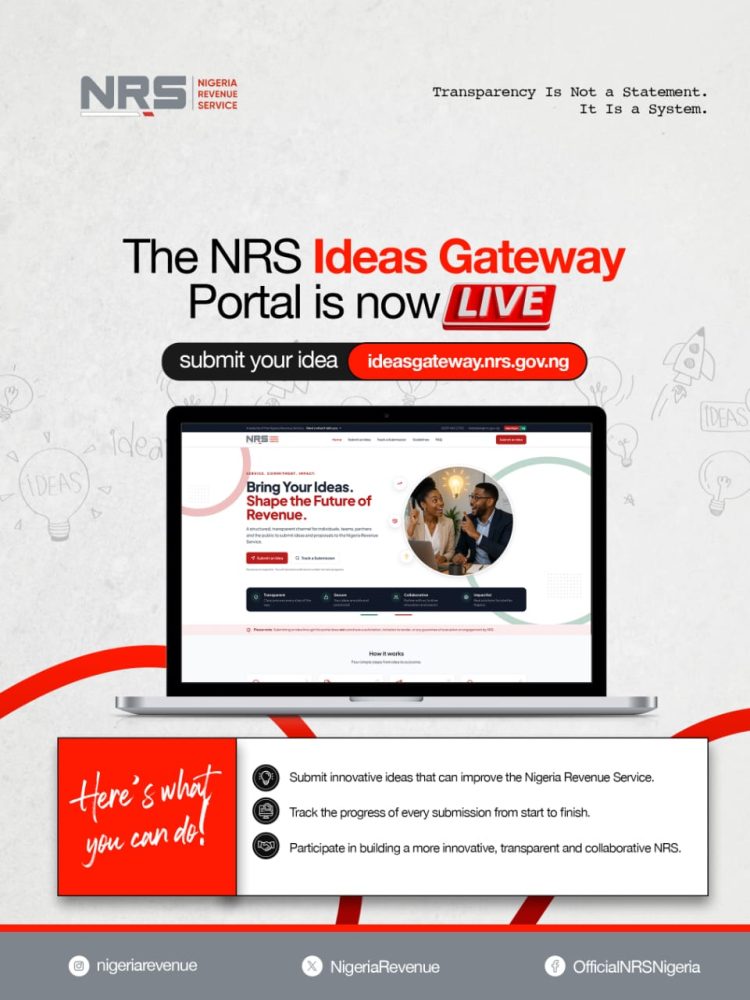
Equally critical is the efficiency of tax administration. Complaints about the performance of NRS’s tax portals and collection systems highlight the need for modernisation. Investing in technology, streamlining processes and enhancing transparency will be essential to building a tax culture that encourages voluntary compliance.
Beyond taxation, Nigeria must fast-track the development of alternative revenue sources. Strategic asset sales, if conducted transparently and competitively, can unlock value from underperforming public enterprises.
The agricultural sector offers opportunities for export earnings, job creation and food security.
Similarly, the solid minerals sector is dominated by artisanal miners, often operating illegally. It remains largely untapped, even as global demand for critical minerals rises in the transition to green energy.
So, the broader objective should be to build a diversified economy in which multiple sectors all contribute to growth and revenue.
This requires sustained investment in infrastructure, especially power, transport, and logistics, as well as policies that support industrialisation, innovation and trade.
Yet fiscal transformation transcends revenue generation. The way resources are allocated and managed matters more.
Nigerians are more likely to comply with taxes when they see tangible benefits in the form of improved public services, infrastructure and social protection.
Conversely, valid perceptions of waste, corruption and mismanagement erode trust and weaken the social contract.
As the composition of government revenue shifts from oil rents to taxpayer contributions, citizens have both the right and the responsibility to demand greater transparency and efficiency in public spending.
A tax-driven state is, by definition, more accountable to its citizens than a rent-driven one. This transition, therefore, carries not only economic implications but also democratic ones.
For taxpayers, this means taking ownership of governance by monitoring budgets, scrutinising projects and holding public officials to account.
Civil society, the media and oversight institutions must play a more active role in ensuring that increased revenues translate into meaningful improvements in living standards. Without such vigilance, the promise of fiscal reform could be squandered as usual.
In many respects, Nigeria stands at a pivotal moment. The decline of oil as the dominant source of revenue is both a necessity and an opportunity. It reflects global trends that are unlikely to reverse, but it also opens the door to a more resilient and inclusive economic model.
But sustaining and consolidating these gains will require discipline, innovation and political will. It will demand expanding revenues without overburdening citizens, borrowing prudently while investing productively, and fostering growth while ensuring equity.
Indeed, raising revenues without improving spending efficiency will only deepen public cynicism.
Every additional naira collected must translate into visible, measurable improvements in citizens’ lives.