A 14-year-old boy leaves home to play with friends. His mother and siblings expect him back before sunset. His father expects to hear his laughter again before nightfall.
Instead, the boy vanishes.
The family searches desperately, knocking on doors, praying and hoping.
Days turn into weeks. Weeks become months. Months become years.
The family’s savings are wiped out. The father sells his farmland in a desperate effort to find his son. Then he dies, tortured by questions no parent should ever carry to the grave: Where is my child? Is he alive or dead? Is he lying in an unmarked grave? Has he been kidnapped? Is he injured somewhere, crying for help?
His mother dies too, her heart broken by the same uncertainty.
Eventually, the family accepts what appears unavoidable. The boy must be dead.
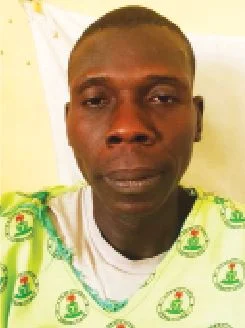
ButGospel Kinanee is not dead. He is languishing in a cold, dark cell in a Port Harcourt prison, and for 18 long years!
A team of courageous lawyers and rights advocates secured his release. Gospel emerged from custody at age 32.
The boy who left home in 2007 to play had become a man. But freedom did not bring joy. Rather, another tragedy unfolded.
His horrific ordeal had shattered his mind. Reports indicate that Gospel could not even recognise his elder brother. The family that had mourned him for nearly two decades was reunited with a man robbed not merely of his youth but of his memories, identity and future.
This is not merely a personal tragedy. It is an indictment of a country whose broken criminal justice system is crying for a fix.
The most disturbing aspect of this horror is that nobody appears to know why Gospel was imprisoned in the first place.
The custodial centre reportedly has no record of his offence. There is no clear explanation of the charge. There appears to be no documentation showing why he was detained for 18 years.
The police, who apparently arrested him, left no meaningful record.
Which police officer arrested a 14-year-old boy? For what? Which magistrate or judge authorised his detention? Where are the court records? Who reviewed his case during those 18 years? Who signed the remand orders? Who ensured compliance with the law? Who was responsible for protecting the rights of a minor?
The answers appear to be lost in a cloud of negligence, incompetence and institutional indifference.
That should terrify every Nigerian.
The Constitution is unequivocal. A citizen cannot be detained indefinitely without due process. The law requires that an arrested person be brought before a court within a reasonable period not exceeding 48 hours. Children are supposed to receive even greater protection under the law. Juvenile justice principles emphasise rehabilitation, care and special safeguards.
Yet somehow, a child disappeared into a supposedly correctional institution of the state for 18 years.
If this can happen to Gospel Kinanee, it can happen to anyone.
Sadly, his case is not an isolated aberration. It is merely one of the most shocking examples of a long-standing crisis.
For decades, Nigeria’s criminal justice system has been characterised by arbitrary arrests, prolonged detention, torture, missing case files, endless adjournments, extrajudicial killings and overcrowded custodial facilities filled with people who have never been convicted of any crime.
As of October 2012, more than 38,000 inmates—about 71 per cent of the prison population at the time—were reportedly awaiting trial. Many spent years in detention without their cases being concluded. Some died before ever appearing before a competent court.
In Nigeria’s crooked criminal justice system, case files disappear. Investigations are neglected. Police complain of a lack of vehicles to transport detainees to court. Human beings become statistics. Lives are destroyed while institutions offer excuses.
The notorious case of Sikiru Alade, an artisan, illustrates this systemic rot. Arrested in Lagos in 2003 by a plainclothes officer who reportedly failed to identify himself or explain the reason for the arrest, Alade was later charged through the deeply controversial holding-charge procedure and remanded in prison.
He spent more than nine years in pre-trial detention before obtaining justice through the ECOWAS Court of Justice, which ruled that his detention violated protections against arbitrary imprisonment.
Alade lost nine years. Gospel Kinanee lost 18.
The abuses do not end with unlawful detention.
Human Rights Watch documented horrifying allegations of torture by Nigerian police officers. Victims described severe beatings with iron bars, planks and cables. Some suspects were suspended in painful stress positions. Others reportedly suffered electric shocks, sexual violence, tear gas attacks, shootings and starvation.
According to the organisation, torture became so commonplace that some officers reportedly acquired the nickname “Officer in Charge, Torture.” This is cruelty dressed in the official garb of policing.
Five of the eight suspects in the 1995 assassination of Alfred Rewane died in detention, allegedly under torture.
What did Gospel endure?He cannot remember who arrested him and may never fully recall what happened. But a man does not emerge from 18 years of unexplained incarceration mentally shattered without profound trauma.
Even more troubling is the fate of children caught in the criminal justice system. In 2024, dozens of minors arrested during the #EndBadGovernance protests were detained under conditions that reportedly left some collapsing in court from hunger and exhaustion.
A society is judged by how it treats the weakest among its members.On that measure, Nigeria’s record is deeply troubling.
The contrast with countries that have built stronger safeguards is striking. In countries such as Norway, Finland, Germany and Canada, suspects retain their fundamental dignity regardless of the allegations against them.
Custodial oversight is rigorous. Records are meticulously maintained. Access to lawyers is protected. Independent courts actively scrutinise detention. Wrongful imprisonment remains possible anywhere, but systems are deliberately designed to minimise abuse and maximise accountability.
Nigeria must learn from such examples.
The release of Gospel Kinanee should trigger more than sympathy. It should trigger a national reckoning.
The Federal Government should immediately compensate him. No amount of money can restore his lost childhood, reunite him with his dead parents or recover the 18 years stolen from him. But compensation would at least acknowledge the state’s responsibility for a catastrophic injustice.
The Minister of Interior,Olubunmi Tunji-Ojo, should order an urgent nationwide audit of all custodial centres. Every inmate’s file should be reviewed. Every detention should be justified. Every missing record should trigger an investigation.
There may be other Gospels hidden behind prison walls.
There may be other forgotten human beings whom the system has abandoned.
The leadership of the Nigeria Police Force must confront the culture of arbitrary arrest and unlawful detention. Facilities notorious for abuse and extortion,like the Imo Tiger Base, must be dismantled.
Recruitment standards must be strengthened. Corrupt officers must be identified and removed. The badge must never be treated as a licence to terrorise citizens.
The judiciary must intensify oversight of detention facilities. Judges and magistrates should regularly inspect custodial centres and police detention cells. Court authorities must know who is being held, under what charge and for how long. Missing records should never be tolerated.
Accountability is essential. Every official connected to Gospel Kinanee’s disappearance into the justice system should be identified and investigated. Institutions cannot learn from failures that remain hidden. Those responsible for this monumental abuse must face consequences.
The lawyers and civil society organisations that fought for Gospel’s freedom deserve national commendation. Their persistence rescued a man whom the state had forgotten.
But rescue is not enough. Justice demands reform. A child left home to play and vanished into a prison for 18 years.
His parents searched until death claimed them. His youth was stolen, his mind broken, his future shattered.
No civilised country can hear that story and move on.
Nigeria must ensure that no citizen, and certainly no child, ever again suffers the fate of Gospel Kinanee.