If anyone still doubted that Nigeria’s budgeting process has descended into institutional absurdity, the 2026 budget of the National Commission for Almajiri and Out-of-School Children Education should end the debate.
It is difficult to imagine a more glaring illustration of how far the country’s appropriation process has drifted from reason, planning and accountability than assigning an education commission billions of naira to build roads.
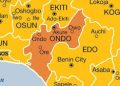
The commission, established by law in 2023 to coordinate interventions aimed at reducing the scourge of almajiri and out-of-school children, was allocated N8.4 billion in the 2026 budget to construct roads in Ogun, Katsina and Ekiti states!
As if that bizarre assignment was not enough, it was also saddled with procuring ambulances, dental X-ray machines, dental chairs, solar street lights and empowerment tools.
Nothing could better signify the decay of Nigeria’s budget process.
Road construction is the statutory responsibility of the Federal Ministry of Works and the Federal Roads Maintenance Agency. Ambulances and dental equipment belong to the health sector. Solar street lighting falls within the mandates of relevant energy and public infrastructure agencies.
The Almajiri Commission has no business executing any of these projects.
At a time when Nigeria still has the highest number of out-of-school children in the world, estimated by UNICEF and other stakeholders at between 15 million and 20 million, every available resource should be devoted to expanding access to education, improving learning facilities, training teachers, supporting vulnerable children, and reforming the Almajiri education system.
Instead, billions meant for one of the country’s most pressing educational emergencies have been diverted into projects bearing no relationship whatsoever to the commission’s statutory responsibilities. It is budgeting without logic.
The commission has since explained that the projects were inserted into its budget by members of the National Assembly as constituency projects, in line with what has become an entrenched but indefensible practice.
That explanation confirms that federal agencies are increasingly being converted into convenient vehicles for executing constituency projects, irrespective of whether such projects align with their legal mandates, technical competence or institutional priorities.
The commission is expected to rehabilitate township roads in Ogun State; construct internal roads in Katsina communities; build roads within Government Science College, Iyin-Ekiti; purchase ambulances and dental equipment; install solar street lights; and distribute empowerment tools.
How any of these assignments will reduce the number of children roaming Nigerian streets without education remains unanswered.
It also raises a fundamental question. If an education commission can be turned into a road construction agency today, what prevents tomorrow’s budget from assigning hospital construction to the National Library or flood control to the National Orientation Agency?
Alarmingly, this is precisely what is happening. Daily Trust reported on Saturday that 16 federal Ministries, Departments and Agencies received N205.96 billion in the 2026 Appropriation Act to implement constituency projects outside their statutory mandates. This is bad budgeting.
Once statutory mandates become irrelevant, the entire architecture of public administration collapses.
As expected, fiscal accountability advocates have condemned the development.
The Executive Director of the Civil Society Legislative Advocacy Centre and Head of Transparency International Nigeria, Auwal Rafsanjani, rightly described the allocations as a troubling case of mandate distortion that weakens institutional specialisation, encourages duplication of responsibilities and undermines accountability.
Umar Yakubu of the Centre for Fiscal Transparency and Public Integrity warned that the commission risks becoming another conduit for political patronage instead of addressing Nigeria’s worsening education crisis.
Unfortunately, the Almajiri Commission is only the latest casualty of a budgeting culture that has steadily deteriorated over the past two decades.
Former President Olusegun Obasanjo rejected the 2000 Appropriation Bill after accusing lawmakers of inflating it by about N2 billion.
In 2011, President Goodluck Jonathan initially refused to sign the budget because legislators reportedly increased the NASS’s allocation from N120 billion to N232.74 billion before a compromise was reached.
In 2016, the country witnessed one of its biggest appropriation scandals when the then Chairman of the House Committee on Appropriations, Abdulmumin Jibrin, alleged that principal officers inserted about N284 billion worth of questionable projects into the budget.
The Muhammadu Buhari administration repeatedly complained about arbitrary legislative insertions.
In 2019, Buhari objected to an increase of about N90 billion in the budget. In 2020, his government protested the insertion of about N264 billion worth of irrelevant projects.
In 2021, it warned of over N500 billion in duplicated and vague projects. In 2022, Buhari criticised lawmakers for creating over 6,500 new projects after reducing allocations to more than 10,000 executive projects, while also inserting N36.59 billion for NASS projects. In 2023, another N770.72 billion in questionable insertions was flagged.
The controversy deepened in 2024 when a senator, Abdul Ningi, alleged that about N3.7 trillion had been padded into the budget. He was suspended as a result.
BudgIT’s analysis of the 2025 Appropriation Act revealed that the NASS inserted 11,122 projects worth N6.93 trillion.
The report identified 238 projects valued above N5 billion each, thousands of constituency projects, 1,477 streetlight projects costing N393.29 billion, 538 boreholes worth N114.53 billion, over 2,100 ICT projects valued at N505.79 billion, and N6.7 billion allocated for the “empowerment” of traditional rulers.
It exposed numerous projects assigned to agencies whose mandates had absolutely nothing to do with them.
Now the 2026 budget features a so-called ghost agency allocated over N1.3 billion and an education commission transformed into a construction company.
Budget integrity, planning, monitoring, accountability and implementation become meaningless when agencies implement projects outside their legal responsibilities.
It explains why abandoned projects litter every part of the federation.
According to the Chartered Institute of Project Managers of Nigeria, more than 56,000 public projects worth about N17 trillion remain abandoned.
Nigeria cannot continue budgeting this way.
The country is grappling with shrinking revenues, rising debt service obligations and widening fiscal deficits.
It borrows to finance critical infrastructure while simultaneously wasting scarce resources through irrational project allocations that satisfy political interests rather than national priorities. This is fiscally irresponsible.
The persistence of these insertions also suggests an unhealthy accommodation between the executive and legislative arms of government.
Rather than insisting on discipline and protecting the integrity of the budget, the Executive appears willing to tolerate legislative insertions in exchange for smooth appropriation processes. At the same time, lawmakers increasingly substitute rigorous oversight with the pursuit of constituency projects.
That is a betrayal of constitutional responsibility.
The legislature exists to make laws, approve expenditure, scrutinise government proposals and hold the Executive accountable. Legislators are entitled to advocate projects that reflect the needs of their constituents and influence where federal projects are located. But they are not project executors. They should not convert MDAs into procurement vehicles for politically negotiated constituency projects.
Constituency projects themselves require urgent reform. Where they are considered necessary, they should be transparently identified, fully disclosed, independently costed, aligned strictly with the mandates of implementing agencies and subjected to rigorous procurement rules and public monitoring.
Above all, the NASS must stop treating the Appropriation Act as a political compensation document.
The budget is Nigeria’s most important economic policy instrument. It should reflect national priorities, not legislative patronage.
Civil society organisations, the media, professional bodies and citizens must, therefore, remain vigilant. Investigative reporting, budget tracking and public scrutiny have become indispensable tools for defending the integrity of public finance.
The Auditor-General, anti-corruption agencies and parliamentary ethics mechanisms should also intensify oversight of mandate violations and questionable insertions.
Nigeria’s economic challenges are too severe for this level of fiscal recklessness.
A country struggling with 141 million multidimensionally poor citizens, huge infrastructure deficits, insecurity, millions of out-of-school children and rising debt cannot afford a budgeting process driven by political bargaining instead of development planning.