Manufacturers and business owners in Aba, Abia State, have reported increased production, lower operating costs and longer business hours following improvements in electricity supply from Aba Power Limited, a subsidiary of Geometric Power.
Geometric Power Group, founded by former Minister of Power, Prof Bart Nnaji, operates the 188-megawatt power plant in Aba through its subsidiary, Geometric Power Aba Limited, and its electricity distribution subsidiary, Aba Power Limited, with financing support from the African Export-Import Bank.
Several business operators said the relatively stable electricity supply had reduced their dependence on diesel generators, improved productivity and encouraged investment across manufacturing, retail and other sectors.
However, some manufacturers expressed concerns over high electricity tariffs and occasional disruptions linked to gas supply shortages, warning that these challenges could undermine the gains.
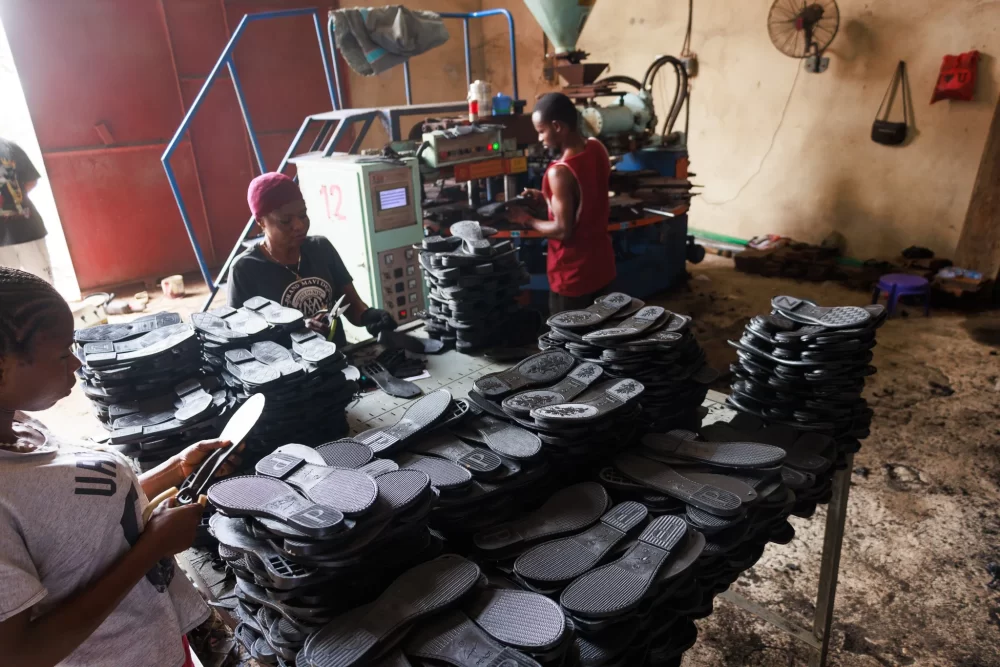
The Chairman of Damson Industries Limited, David Madueke, said improved electricity supply had enabled his company, which manufactures shoe accessories, to increase production and operate additional shifts when demand rose.
“Because of the steady supply, we are producing more goods than before,” Madueke said.
He explained that the company, which employs 35 workers and operates seven machines, relied on electricity supplied by Aba Power rather than diesel generators.
“When there is power, there is more production, and we need more hands to do the job,” he added. However, Madueke complained that electricity costs remained high, with the company’s monthly bills sometimes reaching N5m to N6m.
Similarly, the Chief Executive Officer of Blueworld Pharmaceutical, Food and Cosmetics Limited, Ume-udeh Aghaegbunamu, said improved electricity supply had reduced his company’s energy costs by 80 per cent.
“Before the arrival of Geometric Power and its subsidiary, Aba Power, those of us in manufacturing used to run our diesel-fuelled generators for months without public power supply,” he said.
“But now we have constant power for months. As a result, we have cut energy costs by 80 per cent. The experience has been revolutionary.”
Aghaegbunamu, however, identified intermittent gas shortages as a major threat to sustained electricity supply and called for government intervention.
At Fine Potter Nigeria Limited, a manufacturer of Plaster of Paris products in Osisioma Ngwa Local Government Area, the factory manager, Vivian Aneke, said reliable electricity had supported increased production.
“We have increased from 40 per cent to 75 per cent,” she said, referring to the company’s production capacity utilisation.
Vivian explained that the factory had depended on Aba Power since commencing operations but expressed concern over electricity costs, which she estimated at N29m monthly. She said electricity remained a major operating expense despite improvements in supply.
The Chairman of Aba North Industrial Market Shoe Plaza, Obioma Onyebuchi, similarly acknowledged improvements in electricity availability but complained about the financial burden on shoemakers.
He said the market’s electricity consumption could cost as much as N18m monthly without measures to restrict usage. Onyebuchi also recalled disruptions in July and August caused by reported gas shortages, although he said supply had improved since September.
Beyond manufacturing, the owner of Enyimba City Plaza, Eke Janson, said stable electricity had supported round-the-clock commercial activities. The plaza accommodates more than eight businesses, including a supermarket, bakery, pharmacy, lounge and other retail outlets.
He added that the electricity supply had enabled businesses within the complex to operate for 24 hours, although generators remained available for emergencies.
The President-General of the Abia State Markets Amalgamated Traders Association, Chief Alphonsus Udeigbo, said small businesses had benefited from improved supply and prepaid metering.
He said the metering system had reduced complaints about estimated billing but urged Aba Power to review tariffs for larger businesses.
Meanwhile, the Rector of Ogbonnaya Onu Polytechnic, Dr Christopher Okoro, said connecting the institution to Aba Power had reduced its energy expenditure by more than 80 per cent.
He explained that improved electricity supply had also extended working hours and supported academic research.
The administrator of Rhema University Teaching Hospital, Charles Mazi, similarly reported energy cost savings of at least 30 per cent. Mazi urged the Federal Government to support improvements in gas infrastructure to ensure that the gains from more reliable electricity supply could be sustained. – Punch.