Nigeria’s post-subsidy fiscal paradox is becoming too painfully obvious to overlook. Governments have never had so much money to spend, yet for millions of Nigerians, government has never seemed so absent from what matters most.
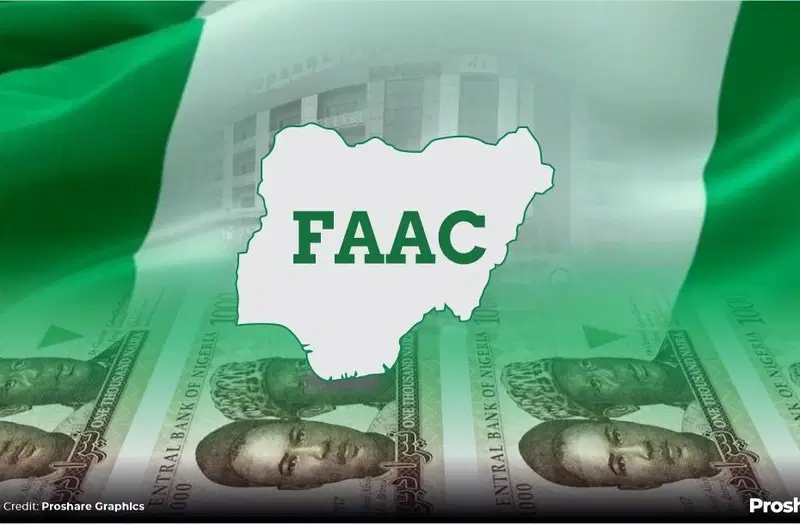
The Federation Account Allocation Committee disbursements in recent years point to this anomaly.
Net Federation Account distributions rose from N9.18 trillion in 2022 to N10.09 trillion in 2023, N15.26 trillion in 2024 and N21.90 trillion in 2025. Thus, N47.25 trillion was shared in just three years between 2023 and 2025, after petrol subsidy removal, compared with N45.88 trillion in the preceding six years, according to figures tallied by The PUNCH.
Official figures show that states’ own FAAC receipts more than doubled, from N4.18 trillion in 2023 to N8.93 trillion in 2025. The 36 states received N4.54 trillion in the first six months of 2026, 25.77 per cent more than in the corresponding period of 2025. In July alone, all three tiers shared a record N3.007 trillion.
The Federal Ministry of Finance says states received an estimated N9.17 trillion in additional allocations between June 2023 and December 2025 compared with the pre-subsidy-removal monthly run-rate. Local governments received another N6.66 trillion.
So how has this impacted development and quality of life?
Before the answers come, an important qualification is needed. The FAAC bonanza is not entirely an extraordinary windfall in real terms. The naira has been devalued by about 65 to 70 per cent since 2023, while inflation has compounded the erosion.
World Bank data put annual inflation at 24.7 per cent in 2023, 33.2 per cent in 2024 and 23.0 per cent in 2025. A naira allocation that has doubled therefore does not remotely mean that a state can build twice as many roads, hospitals or schools.
Indeed, this is the crucial test of the reforms. If inflation remains elevated and the currency remains substantially weaker than its pre-2023 level, much of the apparent revenue expansion will continue to be consumed by higher construction costs, wages, imported equipment, debt service and other expenses.
Based on official rates, N100 billion before May 2023 could convert to $217 million, but only about $74 million today. But that explanation cannot be an excuse for poor prioritisation, waste and absence of innovative thinking in government houses.
BudgIT’s analysis shows that total subnational expenditure jumped from N9.49 trillion in 2023 to N15.63 trillion in 2024. Personnel expenditure rose 23.24 per cent, from N1.85 trillion to N2.28 trillion, while overheads exploded by 62.66 per cent, from N1.50 trillion to N2.44 trillion.
Capital expenditure did rise substantially, from N4.06 trillion to N7.63 trillion, but the question is what those expenditures actually delivered.
More revealing is execution. States 2026 second-quarter budget implementationĺ data review shows that eight states executed less than 20 per cent of their capital budgets, with Cross River implementing just 5.0 per cent; Imo, 8.2 per cent; Enugu, 9.1 per cent; Nasarawa, 10.9 per cent; Borno, 12.7 per cent; Jigawa, 15.1 per cent; Kaduna, 17.6 per cent; and Niger, 19.3 per cent. This creates massive gaps between state cash inflows and project delivery.
Even the highest performers, such as Lagos (33 per cent) and Akwa Ibom (23.6 per cent), failed to utilise the vast majority of their budgeted developmental funds by mid-year.
The recurring pattern is that governments find it easier to pay salaries and overheads than to turn budgets into functioning infrastructure and social services.
This is the FAAC paradox. Money enters government accounts much faster than development enters citizens’ lives.
The opportunity cost is enormous. Nigeria’s last comprehensive NBS multidimensional poverty survey found that 63 per cent of Nigerians, about 133 million people, were multidimensionally poor, with a rural poverty rate of 72 per cent. Deprivations included inadequate access to healthcare, water, sanitation, education, housing and food security.
Against this backdrop, governments should not just be explaining how many kilometres of road contracts they have awarded but how many communities now have passable roads.
They should explain how hospital renovations have improved maternal and infant health outcomes, how spending has impacted school enrolment, and how many farmers have received extension services, irrigation, improved seeds, storage and market access from the agriculture budget.
Instead, too many state administrations remain fascinated by monuments.
Delta has justified the N39.9 billion Otovwodo flyover as a response to chronic congestion, and the project is being executed by Julius Berger, while Anambra is contemplating a second N10 billion airport when the existing N6 billion facility cannot find sufficient traffic.
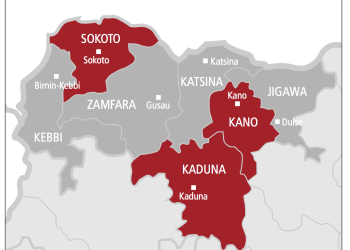
Sokoto, on the other hand, has commissioned a N14.1 billion water scheme designed to improve potable-water supply, the sort of basic infrastructure whose social return can be broader than an impressive urban structure.
There are also other examples that demonstrate what is possible. Kaduna says it has raised agricultural funding from N1.4 billion in 2023 to more than N100 billion in 2026 and cleared N18 billion of inherited pension and gratuity arrears. Those claims deserve verification, but they illustrate the kind of spending priorities that can affect productivity and household welfare more directly than prestige projects.
The issue, therefore, is not that governors should spend nothing on roads, flyovers, bridges or airports. Infrastructure matters. The issue is priority, sequencing, value for money and opportunity cost.
Part of the problem is the politics of the moment and a growing tendency for governors to be more loyal to Abuja than their own constituents.
As governors increasingly gravitate towards the ruling APC, political inclusion can easily become a substitute for accountability.
Governors who expect favourable Federal Government relations, party support and perhaps an implicit political pathway to a second term may become less fearful of their electorates. This is dangerous. Political alignment must not become a shield against scrutiny.
President Bola Tinubu has rightly urged Nigerians to demand more from their governors. That is an admission of where the next accountability battle must be fought.
The Federal Government cannot constitutionally micromanage state expenditure, as Centre for the Promotion of Private Enterprise CEO, Muda Yusuf, has correctly observed. Citizens must therefore become the auditors of state governments.
Civil society has already begun that work. SERAP’s legal challenge over alleged failure by governors to account for subsidy-related funds demonstrates the growing demand for subnational accountability.
The World Bank’s experience with the SFTAS programme also shows that transparency, procurement reform, biometric payroll controls and citizen engagement can improve fiscal governance.
Yet the Bank’s latest assessment suggests that Nigeria has moved from greater transparency towards the more difficult challenge of accountability and results.
The painful lesson of the past three years is that reforms must be sequenced, stress-tested and accompanied by credible social protection before implementation.
Removing the petrol subsidy and reforming the foreign-exchange market may have been economically necessary, but the cushioning mechanisms, public transport alternatives, food-production response and institutional safeguards needed to absorb the shock were not sufficiently developed beforehand.
Future reforms must therefore distinguish between nominal revenue and real purchasing power, model their distributional consequences over at least a five-year horizon, and establish measurable benchmarks before implementation.
For states, every FAAC allocation should have a traceable destination. Monthly receipts and expenditure should be published in machine-readable form.
Major contracts should disclose their cost, contractor, completion deadline and payments made. Capital projects should be independently verified before final payment. Procurement portals must actually work.
Budgets should identify projects geographically so citizens can see whether their communities are receiving anything. BudgIT’s work shows that much of the infrastructure for transparency already exists; the missing ingredient is enforcement.
Governors should be required to publish quarterly citizen-impact reports detailing kilometres of rural roads made motorable, additional classrooms delivered, functional primary-health centres, households gaining potable water, farmers reached by extension services, megawatts added, jobs created and measurable reductions in service deficits.
Political leaders should understand that Nigerians, in the post-subsidy era, cannot be asked indefinitely to endure pain today for the promise of prosperity tomorrow while those administering the reforms remain insulated from their consequences.
The FAAC figures have demolished the old excuse that there is simply no money. The new question is: What exactly are Nigerians getting for the additional revenues, even if adjusted for devaluation and inflation?
Governors must answer that question convincingly by ensuring that record FAAC allocations will convert public revenue into public value. Citizens, in their own self-interest, must hold them accountable instead of heaping the entire burden on Abuja.