The Independent National Electoral Commission (INEC) is considering a mock presidential election ahead of the 2027 polls to test voter accreditation, result transmission and result viewing under conditions similar to actual election day.
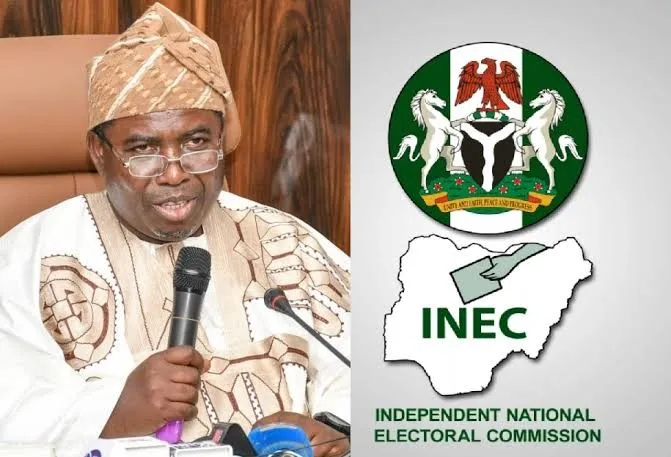
INEC Chairman, Prof. Joash Amupitan, SAN, made the call Wednesday in Abuja while speaking at the 13th Annual International Conference of the Association of Communication Scholars and Professionals of Nigeria (ACSPN).
Amupitan, whose keynote address was delivered by National Commissioner, Sani Adam, SAN, said the credibility of the electoral process does not depend on Bimodal Voter Accreditation System (BVAS) and result sheets, but also on how information about electoral processes was understood and trusted by Nigerians.
He called for the integration of electoral technology and communication as a single discipline ahead of the 2027 general elections, warning that artificial intelligence-driven disinformation poses a major threat to the credibility of the polls.
On the growing use of artificial intelligence to manipulate information, the INEC chairman said generative AI had made the production of fake videos, audio recordings and images cheaper and increasingly difficult to detect.
He cited cases of manipulated political content circulated during recent elections in West and East Africa, including doctored materials linked to Nigeria’s 2023 presidential election.
Amupitan warned that such materials could reach millions of social media users before fact-checkers were able to verify them.
He said the threat went beyond outright fabrication, noting that algorithmic micro-targeting could allow different and sometimes contradictory messages to be delivered to specific segments of the electorate without a common factual basis.
“The challenge before us is therefore not merely technological. It is communicative,” he said, stressing the need for closer coordination between electoral technology and public communication.
On preparations for the 2027 elections, Amupitan said INEC had proposed a substantial budget with significant allocations for election technology and operations.
He said the proposal included funds for new accreditation devices to replace those lost or damaged during the last electoral cycle.
The chairman, however, said the full release of the funds was still being awaited, although the commission’s ICT team had commenced engagements with manufacturers on the procurement process.
He added that preparations for the technology audit and proposed mock election were continuing alongside the budget process.
The conference, held at the National Open University Conference Centre, Abuja, had as its theme: “Media, Technology and Elections in Africa: Navigating Digital Disruption and the New Dynamics of Electoral Communication.”
The INEC chairman said the deployment of BVAS and the INEC Result Viewing Portal (IReV) was intended to address a longstanding credibility gap by allowing citizens to view polling unit results before they were taken to collation centres.
He, however, acknowledged that the 2023 general elections demonstrated how electoral technology could become a source of public suspicion when systems failed or did not perform as expected.
According to him, electoral legitimacy could only be sustained when technological systems were reliable, properly understood by citizens and when their shortcomings were openly explained disclosing that the commission is conducting a comprehensive audit of its electoral technology infrastructure, including system redundancy, penetration testing and disaster recovery arrangements.
Amupitan outlined a five-point strategy for strengthening the commission’s response to the emerging information challenges.
He called for the integration of technology and communication planning; establishment of a rapid-response mechanism capable of countering false information within the same news cycle; proactive communication about known vulnerabilities and safeguards; stronger partnerships with media scholars, fact-checkers and technology platforms; and sustained investment in public media literacy.
The INEC chairman invited ACSPN and other communication scholars to establish structured partnerships with INEC on media literacy research, detection of synthetic content and training for journalists and civic educators.
Amupitan said the electorate for the 2027 elections would be younger and more reliant on mobile technology than previous generations, with smartphones likely to become the primary channel through which many voters would receive election-related information.
He, however, cautioned against simply copying technological solutions adopted in other countries, saying such measures must be adapted to Nigeria’s realities, including uneven internet access, language diversity and the level of public trust in institutions.