The Federal Government has unveiled plans to extend the existing Lagos rail network to the domestic and international terminals of the Murtala Muhammed Airport (MMA), Lagos.
The government also said that despite the arrays of airports in the country, 67 per cent of the total passenger traffic arrive or depart from Lagos airport.
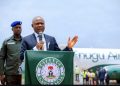
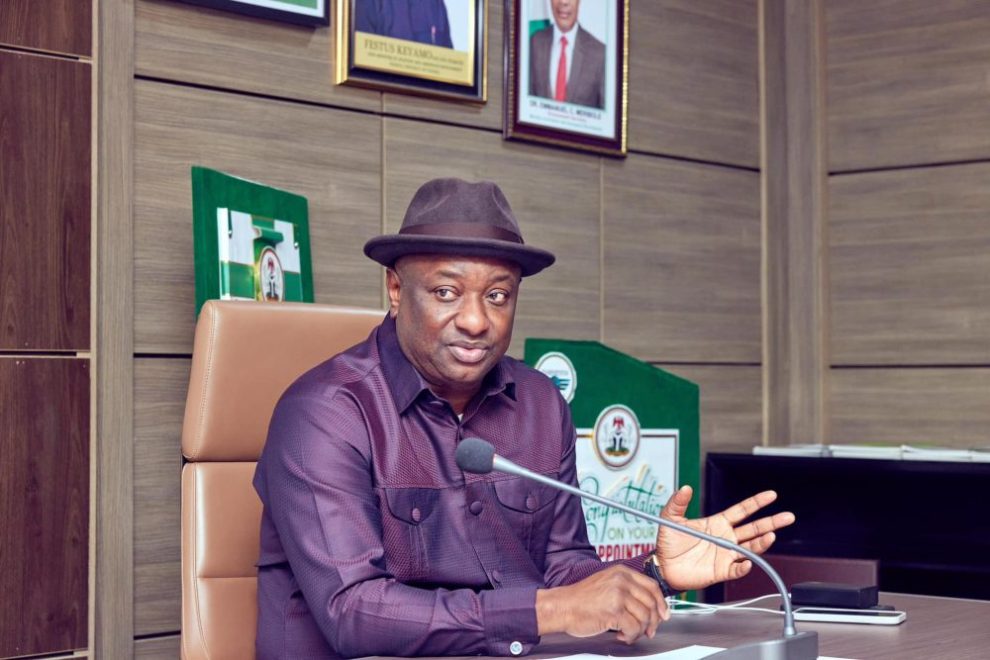
The Minister of Aviation and Aerospace Development, Festus Keyamo, stated these on Monday in his remark at the opening ceremony of Invest Lagos 3.0, powered by the Lagos State Government, which was monitored by The Guardian.
According to Keyamo, discussions were already underway between the ministry and the Lagos State Government to commence the rail project into the airport.
Keyamo expressed that this move was aimed at strengthening Lagos’ position as Africa’s leading aviation hub.
Keyamo posited that the proposed rail extension would connect the existing rail line that currently terminates at Ikeja Bus Stop to the General Aviation Terminal (GAT) and move further through the Murtala Muhammed Airport Two (MMA2), a facility that is operated by the Bi-Courtney Aviation Services Limited (BASL) before reaching the international wing of the airport.
He declared that the project when completed, would significantly improve accessibility to Nigeria’s busiest airport and support the government’s vision of transforming Lagos into a major aviation and logistics hub for Africa.
He said: “We are also planning to extend the rail line that ends at Ikeja Bus Stop. We are working with the Lagos State government to extend that rail line all the way to the local, through the Bi-Courtney Aviation Services Limited (BASL) and all the way to the international airport.
“That rail line is about to start. It’s the extension of the rail line. So, Lagos is just ready for the next big step in terms of its aviation activities.”
Besides, Keyamo revealed that Lagos accounts for about 67 per cent of all passenger traffic passing through Nigeria’s airports, which further shows the state’s strategic importance to the country’s aviation sector.
He explained that the state possesses unique geographical advantages that positioned it to compete with established African aviation hubs such as Addis Ababa and Lome in Ethiopia and Togo, respectively.
He added: “Just six hours across the Atlantic, you will get to South America from the Lagos airport. Six hours down, you’ll get to Southern Africa. Six hours to the Middle East, you’ll get to Dubai or Qatar.
“Six hours up, you will get to Europe, either France or London. That is the equidistant advantage that Lagos also provides as a hub, the whole of Africa. So, we will soon catch up with hubs like Addis Ababa, with hubs like Togo.
The minister also mentioned the ongoing investments in airport infrastructure under the administration of President Bola Tinubu.
He emphasised that the government had committed about $500 million towards the reconstruction and modernisation of the demolished international terminal at the Lagos airport.
He expressed that the investment intended to transform the about 50-year-old airport into a world-class facility capable of supporting increased passenger and cargo traffic.
The minister further noted that the government had expanded Nigeria’s international airport network with the addition of Victor Attah International Airport and Maiduguri International Airport, bringing the number of international airports in the country to seven.
He also mentioned the resolution of the legal tussle between BASL and the Federal Government as one of the achievements of the government since coming onboard about three years ago.
He argued that this indicated the government’s commitment to creating a conducive environment for private sector participation.
He appealed to local and foreign investors to take advantage of emerging opportunities in the aviation sector, including the proposed airport project in the Lekki-Epe corridor that is being promoted by the Lagos State Government.