The Federal Government on Wednesday, February 1, set up a Presidential Task Force made up of six ministers and other government officials to urgently consider measures that would ensure a steady flow of farm produce to the market and ultimately reverse the spiralling prices of food items.
The government acknowledged that even with reports of bumper harvests in parts of the country, the prices of foodstuffs are still on the high side.
“One of the focus areas of the Task Force, would be to review the transportation and preservation processes, and see how government can intervene in those aspects to bring down food prices,” Laolu Akande, Senior Special Assistant on Media and Publicity to Acting President Yemi Osinbajo said.
The Task Force has seven days to report back to the Federal Executive Council (FEC). We commend the Federal Government for this initiative. It shows that the government is truly concerned about the welfare of its citizens.
That really is the essence of government. However, the prices of food items will continue to go up as long as government fails to provide the enabling environment vis-à-vis security and incentives to farmers.
Today, the investments of farmers are not secured as a result of the business environment. More worrisome is the insecurity with rising cases of abduction of farmers and or farm workers.
This trend has been rampant in Lagos. Consequently, some of those in the value chain are divesting their investment in agriculture. We are of the firm believe that if the government is serious about halting the rising prices of food items, it must encourage farmers; find out their challenges and help out where necessary.
So long there is enabling environment for investors in agriculture, more people will join the value chain. With this, employment opportunities will be created and most importantly, there will be tremendous increase in production of farm produce.
The most potent factor that can force down the prices of food items is an increase in production. If there is no significant effort to increase production, all efforts will be like leaving the cause and addressing the effect(s).
Take for instance, two years ago, three eggs were sold for N50, but today an egg goes for N70. Why? We are not producing enough eggs to meet the demand. And when the demand is more than the supply, ultimately the price will go up.
It is a simple economics theory. That is the reality confronting us as a nation. Hence, government must do all within its powers to encourage investment in agriculture.
Another major area, which we believe the government should focus on, is that of storage and processing facility. The lack of this has given rise to the season of plenty and season of scarcity in the country.
When there is plenty, as usual, the prices are normal. But when there is scarcity, the expected price rise sets in. We believe that the government should set up storage and processing facilities in most farm settlements.
This will, no doubt, curb waste of farm produce and normalises prices. With processing facilities, we will have Tomato pepper, Tomato puree and can melon. The successes recorded in the rice sector has been due partly to the availability of processing facilities.
There are other factors working against affordable food prices. One of it is poor infrastructure. Most of the farm settlements are in the rural areas where infrastructure, especially roads, are in bad state. So, getting farm produce to urban areas is difficult and costly. Also there are several revenue collecting points on the roads.
Hence, the high transportation cost and multiple revenue charges both on the highways and in market places contribute to the high prices of food items. We expect the government to remove these bottlenecks by improving and providing, where none exist, good infrastructure, especially roads connecting the farm settlements. Government must also reduce these multiple revenue collecting points.
We call on the government to revive the Commodity Boards. With the boards, government will be able to buy excess farm produce from farmers and prevent losses occasioned by lack of storage facilities to store harvest farm produce. We commend the Anchor Borrowers’ Programme (ABP) of the Central Bank of Nigeria (CBN).
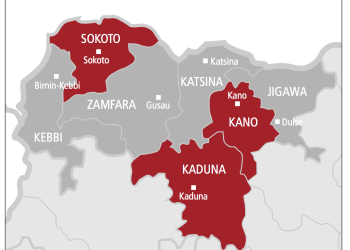
The programme, to a large extent, has seen massive plantation of rice in Kebbi, Ebonyi, Sokoto and other states. We advise the CBN and government – both federal and state – to aggressively collaborate and pursue the programme.
Its coverage and funding must be expanded. All the states must urgently participate in the programme so that more farmers will be empowered through the provision of low interest loans. This will increase production.