A United Nations Development Programme (UNDP) report on Imagine Nigeria, has declared that Nigeria’s economy is in very bad shape amidst declining revenue and foreign exchange earnings.
According to the report, which is expected to be launched tomorrow, (Wednesday, August 10, 2022), the COVID-19 pandemic has been detrimental to Nigeria’s economy, now made worse by a decline in revenue and foreign exchange earnings due largely to the fall in oil prices and reduced demand.
The report also noted that the decline in revenue meant an overdependence on borrowing and an increased debt service payments with more than half of the annual Federal Government revenues being used to service debts.
The report said “Beyond the short-term challenges for the oil sector, principal forex earner for Nigeria are the longer-term concerns as the world makes determined moves to reduce the consumption of fossil fuels.
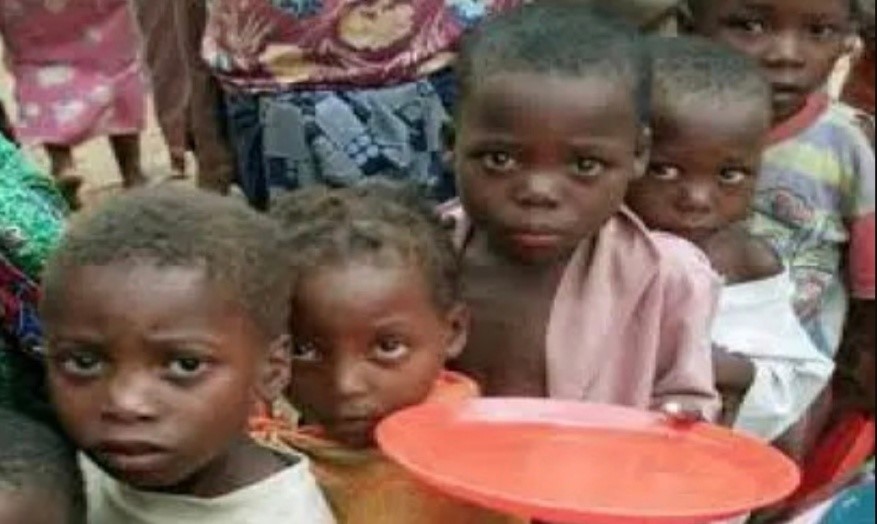
“Unemployment, underemployment and their effects on poverty have remained a bane for Nigeria. If no urgent measures are deployed soon, Nigeria with its teeming population is certain to fall in desperate times. Already, the World Bank projects that about 5 million Nigerians will fall below the poverty line,” UNDP said.
The report regretted that the manufacturing sector which could have provided succour is also battling challenges such as poor power supply, multiple taxation and inadequate infrastructure.
“This does not mean progress has not been made in the sector as measures such as faster business registration time, improved imports and exports systems have been introduced. If more appropriate interventions are deployed, the manufacturing sector is sure to experience growth and be able to contribute more than the 12.82 per cent it contributed to the economy in 2020” the report noted, adding that if agriculture sector can be more productive it can surpass the oil sector if the challenges of poor adoption of improved farming methods, inadequate infrastructure and insufficient credits are addressed.
“Like other factors, Nigeria is faced with a serious infrastructure deficit. This cuts across housing, water, power, telecommunications and transportation network.
Reacting to the UNDP verdict, Dr Muda Yusuf, Founder/Ceo, Centre for the Promotion of Private Enterprise (CPPE) noted that Nigeria’s economy is characterised by diverse economic vulnerabilities, which have had devastating effects on businesses.
He listed such headwinds with terrible effects on the economy; to include unprecedented surge in energy prices with huge adverse effects on economic players across all sectors; as well as high levels of currency depreciation and currency volatility; as well as increasingly weak fiscal space; acute foreign exchange scarcity with very profound effects on investors across all sectors.
Yusuf said that above all, Nigeria’s rising public debt and debt service burden; worsening security situation as well as elevated political risk as a result of political transition processes and activitiesare anot helping the nation’s recovery strategies. These adverse development are further compounded by growing fuel subsidy burden; weak infrastructure; falling investors’ confidence and depressed purchasing power.
Also speaking, Mr. Frank Onyebu, Chairman, Apapa branch of Manufacturers Association of Nigeria, said, “To say that Nigeria’s economy is wobbling is to put it mildly. Sometimes it feels like an understatement. The economy can be said to be in a state of comatose.
Factors responsible for this are numerous and include a hostile investment environment, complete dilapidation of infrastructure, insecurity and corruption to mention but a few.
The economy can best be retooled by the creation of an enabling environment for businesses to thrive. The government should start by investing massively in infrastructure. The government may choose to concession some of the infrastructure since it doesn’t have currently enough resources.
The worsening insecurity in Nigeria is a major problem for investors in the economy. Many Industrialists especially those who are in the agro-allied sector are grappling with challenges getting raw materials from the crop producing areas of our country. This has continued to negatively impact capacity utilization, turnover, cost of production and the value delivery to shareholders. Some now source raw materials from neighbouring West African countries.
Insecurity has also created a very serious country risk and reputational problem for our country.
The figures released by the Finance Minister, Mrs. Zainab Ahmed, during the presentation of the 2023-2025 Medium Term Expenditure Framework, painted a gloomy and disturbing picture of the state of government finances, suggesting that the government is on the brink of bankruptcy.
Debt service to revenue ratio for the first four months of the current year is over 100% (one hundred percent). The implication of this is that the actual revenue of government over the period is not sufficient to service debt. Therefore, financing of the operations of government – personnel cost, overhead cost, capital expenditure and even part of the servicing of the debt will have to come from additional borrowing. These portends severe vulnerabilities for the Nigerian economy.
The fiscal outlook is clouded by elevated downside risks in the near term, driven largely by the huge burden of financing petrol subsidy, fiscal leakages and unsustainable public debt trajectory. The outlook poses significant risks to macroeconomic stability amid heightened inflationary pressures, depreciating currency and increasing exchange rate volatility.
Many businesses have suffered serious dislocations as a consequence of foreign exchange liquidity challenges, volatility and the depreciation of the currency. These have severely affected businesses across all sectors of the economy. Costs of operation and production have gone up from between 30-100% as a result of the exchange rate crisis.
Output have declined significantly in many industries because of the challenges of accessing raw materials due to the scarcity of foreign exchange. Many players in the economy now resort to the patronage of the parallel market at very prohibitive cost, at very little access exist on the official window.
The sharp depreciation of the exchange rate and the parallel market which is over 300% has worsened the profitability of investments. The capacity to retain employment and the capacity to create new jobs have been greatly endangered because of the foreign exchange crisis.
The dysfunctional foreign exchange policy has negatively impacted Foreign Direct Investment, Foreign Portfolio Investment as well as other capital inflows into the country. The multiple exchange rates, and the huge parallel market premium in the forex market remain major downside risks to investment growth and attraction of foreign capital into the economy. This has continued to weaken the supply side of the foreign exchange market.
The inability of foreign investors to repatriate their profits and dividends as well as incomes have created considerable perception, reputational and country risk issues for the Nigerian economy.
All of these have been responsible for the sharp decline in the capital importation in recent years.
President, Lagos Chamber of Commerce and Industry (LCCI), Dr. Michael Olawale-Cole
The rising debt stock incurred by the government is becoming increasingly problematic in the face of dwindling government revenue and the unsustainable burden of subsidy payments. The fact that the most recent statistics on government revenues show a poor performance and mounting government costs makes it evident that Nigeria is going through a debt crisis.
While the aggregate expenditure for 2022 was estimated at N17.32 trillion (total federal budget), at the end of April, a pro-rata revenue of N5.77 trillion was expected. Unfortunately, only N1.63 trillion was realized as FGN’s retained revenue as of April 2022. Within the same period, government’s actual spending stood at N4.72 trillion, accounted for by a whooping sum of N1.94 trillion expended on debt servicing, N1.26 trillion spent on personnel costs, and leaving only N773.63 billion for capital expenditure. It is disturbing to know that debt servicing alone is higher than actual retained revenue in the first four months of this year. On the path of caution, we urge the Federal Government to discontinue this unsustainable pattern.
The total public debt stock of the Federal Government, states, and the Federal Capital Territory (FCT) rose from N39.56 trillion in December 2021 to N41.60 trillion (about $100.07 billion) by the end of the second quarter of 2022, as revealed by the Debt Management Office (DMO). Nigeria’s Debt-to-GDP ratio now stands at 23.27 percent, as against 22.43 percent on December 31, 2021. There are already concerns that most, if not all, of the assumptions in the Medium-Term Expenditure Framework (MTEF) 2023-2025 will be missed as we continue to experience unprecedented levels of disruptions to supply chains and agricultural production. The 2022 budget assumptions have already fallen short in terms of inflation, exchange rate, and GDP growth rate. All of these assumptions have become inadequate.
The borrowings are significantly increasing and Nigeria is struggling to service these debts due to revenue mobilization challenges and an increased fuel subsidy burden. The International Monetary Fund (IMF) has warned that debt servicing may gulp 100 percent of the Federal Government’s revenue by 2026 if the government fails to implement adequate measures to improve revenue generation.
The World Bank has also said that Nigeria will continue to experience fiscal pressures due to the ballooning cost of fuel subsidy at a time when production continues to decline. Nigeria is the only major oil exporter that hasn’t benefited from the windfall of higher global oil prices. In the face of rising debt servicing costs accompanied by a dwindling revenue, the provision of critical infrastructure and amenities like healthcare services, education, power, roads, and security will be hard hit as funding shrinks. We see the unfortunate closure of our universities since February, and till now, no respite in sight.
The Chamber acknowledges that the level of insecurity in the country has prompted increased spending on defence and security. The deteriorating security situation in the country has also battered investors’ confidence and affected FOREX inflows into Nigeria. With the high component of Eurobonds as part of our external debt, the weakening of the naira signifies a significant exchange rate risk that is likely to put pressure on inflation and its attendant consequences, which we already see today. A weaker Naira means a more expensive foreign debt for the country.
Recently, the Debt Management Office (DMO) listed N250billion Sukuk on the Nigerian Exchange Limited (NGX) as an alternative financing source to bridge the infrastructure gap in the country. The issuance and subsequent listing of the Sovereign Sukuk on the NGX platform aligns with the Chamber’s persistent call for cheaper government financing away from debts by leveraging innovative and cost-effective revenue sources.
The Chamber has consistently advised the government to borrow from cheaper sources and consider deficit financing from equity instead of the expensive debts borrowed and used for recurrent expenditures. The commercialization model proposed for NNPC Limited is the right direction to go. Once this plan succeeds next year, it should be replicated with other national corporate assets scattered across the country. Nigeria must manage its debt burden to avoid further pressure on revenue. It is also imperative that more spending is needed in supporting productive infrastructure instead of spending borrowed money on subsidizing consumption. Government must rethink its sourcing of debts and spending of borrowed funds. – The Sun.