By Olusegun Adeniyi
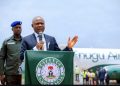
(Text of the review of the book, ‘Made in Aba: A Life of Coincidences’ written by Senator Enyinnaya Abaribe at the public presentation in Abuja on 1st March, 2021)
Distinguished ladies and gentlemen, allow me to dispense with protocols on a day such as this.
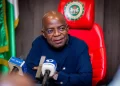
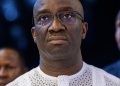
We have only known each other from a distance and mostly by reputation. But when Senator Enyinnaya Harcourt Abaribe asked me to review his biography, I did not hesitate. I have followed Senator Abaribe’s political career for two decades. From his days as an embattled deputy governor in Abia State to his current sojourn in the senate where he has become one of the most respected voices. I have always admired his courage of conviction, as well as his ability to put his finger on the flaws and follies of the nation.
Representing Abia South Senatorial District in the National Assembly, Abaribe is without doubt a household name across Nigeria; a Distinguished Senator in the truest sense of that most abused turn of phrase in our country today. The quality of his contributions to plenary debates is exceptional. Even when you do not agree with him, and on some issues I don’t, you cannot question the clarity of his thought and his abiding faith in a country that works for everyone. That perhaps explains why this book is so significant. ‘Made in Aba – A Life of Coincidences’ reflects not only the personal struggles of Abaribe. It captures, even if only in brief, critical aspects of Nigerian history. In the main, it is a catalogue of ‘coincidences’ that have helped to shape the life and career of a brilliant and enigmatic politician.
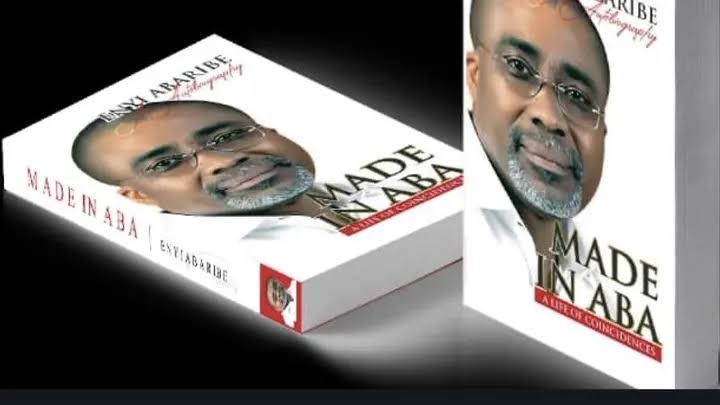
Divided into ten chapters, ‘Made in Aba’ begins with the account of Abaribe’s birth into an average family and his formative years in the rustic town that holds a special place in the hearts of many Igbo people. Instructively, at age five when his peers dreamt of being doctors, lawyers, engineers and pilots, Abaribe was asked what he would like to be in future. He replied simply that he wanted to be a ‘big man’. Even as a child, Abaribe knew that doctors, lawyers and all those professionals work for ‘Big Men’! With the crowd of eminent personalities here today, it is evident that his dream has been realized. But he actually attained that status a long time ago as a manager in SCOA.
After earning ‘Distinction’, the highest class in the West African Examination Certificate (WAEC) results in 1974, Abaribe was offered admission into one of the nation’s foremost universities right in his backyard – the University of Nigeria, Nsukka. Shortly before resumption, he saw an advertisement by the University of Benin calling for fresh students in a new department of Economics, the same discipline to which he had been admitted by UNN. Out of a sense of adventure or perhaps just to rebel, Abaribe went to Benin, submitted his application and was immediately offered both admission and a scholarship. That speaks to a Nigeria where what you know is more important than who you know. But while that promise has been circumscribed, it is not the issue for today.
After earning a Master’s degree in Economics, Abaribe was recruited by the neighbouring Bendel State University, Ekpoma that had just been established by the Second Republic Governor Ambrose Ali. He had been enticed to the university with the promise of scholarship to study abroad that would fully prepare him for life in academia. But things did not turn out that way. Abaribe did not get the scholarship which the institution chose to award only to sons of the soil – also a typical Nigerian story we will overlook today. With that disappointment, Abaribe’s excitement with academia began to wane. He responded to an advertisement for a job in Lagos and after a process that included a test and interview, he was employed.
When Abaribe left Ekpoma for Lagos, he also abandoned the doctorate degree programme he had almost concluded at the University of Benin. He joined the corporate world as a manager at SCOA where his exploits were also remarkable. It was from there that fate, what he termed coincidence, propelled him into politics. Abaribe had contested for a House of Representatives seat under the transition programme of the late General Sani Abacha and failed. When Abacha died and there was a reset in political transition by General Abdulsalami Abaubakar, Abaribe wanted to contest again for the same seat. But he ended up being smooth-talked into accepting the position of Abia State gubernatorial running mate in the 1999 election that ushered in the Peoples Democratic Party (PDP).
The man who did the smooth-talking, based on the cold calculation of Abia’s geo-ethnic configuration, is none other than Chief Orji Uzor Kalu who took advantage of Abaribe’s apparent political naivety. I laughed out loud when I read Abaribe’s account of how he was hoodwinked into believing he was going to run the Abia administration as a technocrat while the governor would merely provide the political gravitas.
Meanwhile, as an insider who was a high-ranking public official at the state level before becoming a high-ranking federal lawmaker, Abaribe is in a position to see the nakedness of Nigeria. And in many areas of the book being presented today, he gives readers interesting glimpses. He recounts and confirms the remarkably reckless manner in which government operates in the country – the idleness, the unnecessary oath of loyalty demanded not to serve the people but to massage fragile egos, the arrogance of power and perhaps even worse, the rumour mongering tradition that has been elevated almost to the level of a constitutional order.
Incidentally, the inspiration for ‘Made in Aba’ arose from an experience in year 2000 while preparing for the burial of his father. Abaribe discovered mementoes and documents that told compelling stories that he and his siblings had no inkling of. While their father might have shared fragments from his life at different times, as Abaribe recalled, he never mentioned receiving medals in Burma as a soldier during the Second World War. Or that he earned an intermediate certificate in accounting by correspondence from a London school in 1944. The more Abaribe discovered things he never knew about his father, the more he wondered why the man never documented “the drudgery and pains that must have confronted him for posterity.” With that, Abaribe resolved that he was going to document his own story.
Abaribe’s account of his days as deputy governor is quite revealing. Deputy governors, Nigerians have been conditioned to believe, are mere ‘spare tyres’. His own situation was worse. He served in a state where the ‘oga at the top’ demanded almost as an article of faith that subordinates “crawl on the ground and lose their dignity” in order to receive their entitlements. Ironically, as it most happens in such instances, things that ought to be done for the progress of the people are left undone. In the 1960’s for instance, as the author noted, Aba, the commercial capital of the state, like similar cities across the country, had pipe-borne water and a fairly good supply of electricity. But now he asked, “Why was modern living possible back then and near impossible now?”
With rich Igbo idioms and interesting anecdotes, Abaribe makes his story compelling by weaving in commentaries. And there are many lessons to take from the narrative. During the Second Republic for instance, his father supported the Dr Nnamdi Azikiwe-led Nigerian Peoples Party (NPP) while his mother was a sympathizer of the National Party of Nigeria (NPN) which produced Alhaji Shehu Shagari as President. That speaks to tolerance and accommodation, virtues to which Abaribe subscribes. Abaribe deplores the notion of going into politics as a profession without any other day time job and he explains why.
As is to be expected of an Igbo man of his generation, there are also accounts of the civil war from the eyes of the young boy he then was. But perhaps the most interesting aspects of the book are chapters six and seven which deal with his foray into politics, how he ended up as the Abia State Deputy Governor and what followed thereafter. In the two chapters, Abaribe offers rare glimpses into public service in Nigeria: How politics is, for most of the practitioners, not about public service but rather about the pursuit of personal interest. From his Lagos to Umuahia Chisco Bus night ride in 1998 with Chief Orji Kalu, where they had an interesting conversation about contesting on a Kalu-Abaribe ticket to the 1999 gubernatorial election and the drama of the swearing-in day, discerning readers can see how hollow our politics is and how easily clever politicians can overpower the system.
In flowing prose, Abaribe painted a pathetic picture of Abia under Orji Kalu. A period when many young people from the state were made to worship not only at the altar erected by the governor but also the more powerful one in which ‘Mother Excellency’ was the deity. As Abaribe succinctly put it ‘Kalu and his mother became two gods”. As a student of power who followed events in the state at that period, I always marvelled at how Abia State coped with a strong man like Kalu in charge, yet sharing the limelight with an overbearing mother whose word was also law. Abaribe sheds light on how both the governor and ‘Mother Excellency’ were clever in ensuring that neither encroached on the other’s sphere of influence as “they tossed people back and forth between them like ping-pong balls.”
Within a period of less than four years that he spent as deputy governor, Abaribe faced three impeachment proceedings that were authored by the governor and for which the charges were mostly ridiculous. On the first occasion in November 1999, the House of Assembly failed to convict Abaribe because Kalu could not secure the required number. On the second occasion a year later, the proceedings, according to Abaribe’s account, were directly supervised by ‘Mother Excellency’ who had reportedly boasted that the first attempt failed because she was out of town. At the end, she also failed because the decisive vote in the House of Assembly was both for and against Abaribe: In one of those it-can-only-happen-in-Nigeria moments, a member whose vote turned out to be decisive wrote both Yes and No! And with that, Abaribe survived but only just.
Ostracised from all state functions, Abaribe remained deputy governor only in name. However, when all interventions by political leaders, including President Olusegun Obasanjo, Governor Adamu Muazu of Bauchi State and the late Chief Anthony Anenih failed, Abaribe on 7th March 2003 decided to resign from office. But neither the governor nor ‘Mother Excellency’ would allow Abaribe to leave office on his terms. There was a public announcement on Abia State Radio that Abaribe had been impeached.
In the two chapters titled, ‘Swimming Deep-end Among the Sharks’ and ‘One Term, Three Impeachments’, Abaribe laid bare some of the bizarre happenings in Abia State between 1999 and 2003 when he left office as deputy governor. Kalu, in Abaribe’s book, would promise one position to no fewer than six persons and would play all of them against one another with no guarantee that any would be offered the job at the end of the day. But Abaribe does not sound bitter. In fact, he somehow exonerates both Kalu and his mother from most of the shenanigans to which people subjected themselves at that period in Abai State. After all, as a former American First Lady, Eleanor Roosevelt, surmised, nobody can make you inferior without your consent.
In ‘Made in Aba’, Abaribe also reveals some of the dark aspects of politics in Nigeria. He narrates how he was made to swear before a Prophet who after reading verses from the Bible insisted on ‘Igbandu’—a pact or ritual oath of loyalty. Not to the public whose interests were to be served but to the godfather, in his own case Orji Kalu. It is indeed interesting that both Kalu and the man he used to bully are now in the upper legislative chambers as principal officers. I will surely love to be a fly on the wall at such meetings involving the duo. I also hope that Kalu will soon tell his own side of the story so that we can have a full picture of what transpired at that period.
Before I take my seat, let me state that ‘Made in Aba’ is more than an account of the failures of government in Umuahia and Abuja. It is also a tribute to the enterprising character of Ndigbo. Even their most implacable foes would concede that Igbo people are hard workers, an attribute that is perhaps traceable to their republican nature. In modern times, as the author noted, many Igbo sons and daughters have continuously featured at the top, be it in commerce, education, and other spheres, home and abroad. Indeed, by all measures of success in Nigeria and Black Africa, Ndigbo have done remarkably well for themselves. But then, Abaribe asks, and these are his exact words, “Given all the advantages that we, as Ndigbo, have in Nigeria, why the clamour by our youths and others for a separate state of Biafra?”
While he speaks to the mismanagement of post-civil war issues, Abaribe locates the current problem in the Freudian Slip by President Muhammadu Buhari shortly after assuming office in 2015 – that those who gave him five percent of the votes in the election that brought him to power should not expect the same attention and patronage as those who gave him 97 percent of the votes. That the distribution of opportunities in the past six years has followed that formula to the disadvantage of Igbo people is what the Indigenous Peoples of Biafra (IPOB) and its sympathisers use as excuse for their campaign, according to Abaribe. But this, Abaribe also argues, is a temporary problem since President Buhari will not be in power forever, using another Igbo adage to explain his reasoning: A hundred years is not the same as forever.
In the last chapter where the author indulged himself in self-praise, he reminds us that Igbos continue to carry scars and a deep memory from Nigeria’s struggles to create an equitable country. They have traversed our diverse country and are to be found settled all over Nigeria. In the face of prevailing circumstances, where there is a constant cry of marginalization, the author, like the former Ohanaeze President, Chief Nnia Nwodo, wisely counsel that Ndigbo should negotiate their place in a restructured Nigeria where power is devolved to the federating units. He pokes holes in the clamour for secession by IPOB and the manner their operatives demonise respected Igbo citizens who disagree with their separatist agenda.
In all, this is one of the few books written by a Nigerian politician that I have enjoyed. I have many in my study that I could not read beyond the first two pages. Abaribe is a good record keeper. The documents splashed in the book help to enrich his narrative. Despite a few typographical errors, it’s been a pleasure reading through the 241 pages and accompanying appendixes of about 80 pages. But this is an incomplete book. There is nothing about Abaribe’s experience in the Senate where he has spent the past 14 years. Abaribe is one of the few lawmakers in Abuja today who must know where all the legislative dead bodies are buried. Given his candour, I don’t want to impute that Abaribe left out those details because he is observing the Nigerian ‘table manners’ of ‘don’t talk while eating!’
Distinguished ladies and gentlemen, let me conclude by stating that this is a fascinating book. I wholeheartedly recommend it for all those who seek a better understanding of our country and its politics. As Dr Chidi Amuta stated in one of the two forewords, Abaribe has managed to rise above the narrow personal undertaking of just his life story to reflect on what he considers the Nigerian ideal. And that is precisely why this book is so important.
In the end, ‘Made in Aba’ reminds us of the consequences of choices not made, roads not taken and the injustices that define the character of the Nigerian state, for which we are all paying a price. The sad reality is that this a heavy price we did not have to pay at all.
Distinguished ladies and gentlemen, thank you very much for listening and good afternoon.”