The apparent easing of Nigeria’s headline inflation to 15.91 per cent in June masks an unsettling reality.
Inflation remains punishingly high across much of the country, exposing the limits of statistical rebasing and successive governments’ failure to address the structural drivers of the cost‑of‑living crisis.
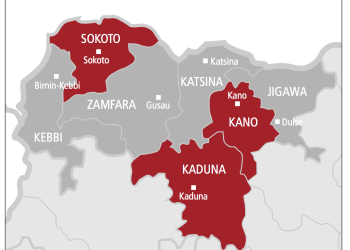
The National Bureau of Statistics’ latest Consumer Price Index report paints two different pictures of the same economy. While the national rate edged down from 15.93 per cent in May, 19 states and the Federal Capital Territory recorded annual inflation above 30 per cent.
Niger topped the list at 42.23 per cent, Kogi followed at 41.59 per cent, and the FCT posted 39.91 per cent. Even Imo, with the lowest rate, still registered 19.47 per cent. In short, more than half the federation is suffering inflation nearly double the official national figure.
The NBS warns against direct interstate price comparisons because states’ consumption patterns and expenditure weights differ.
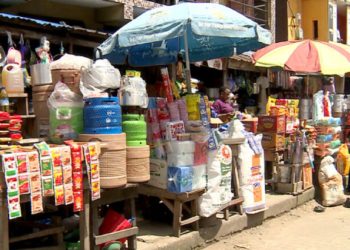
That caveat matters statistically, but it cannot soften the lived experience of millions paying much higher prices for food, transport, rent, electricity, healthcare and education.
A rebased CPI may be more accurate, but it does not lower market prices or restore eroded incomes.
Nigerians do not buy tomatoes, garri, cooking gas, medication or school uniforms with rebased statistics but with incomes battered by relentless price rises.
Food and non‑alcoholic beverages remain the dominant driver of inflation, accounting for roughly 52 per cent of the CPI basket. Housing and utilities add another 17 per cent; transport, clothing and household equipment make up much of the rest.
These essentials consume most household incomes, especially for the poor, and food inflation continues to climb. Prices of tomatoes, fresh pepper, beef, garri, cassava flour, yam flour, crayfish and cowpea accelerated further in June, per NBS. The cost‑of‑living crisis is therefore far from over.
Muda Yusuf, CEO of the Centre for the Promotion of Private Enterprise, posits that Nigeria’s inflation is fundamentally structural rather than monetary, driven by insecurity, crippling logistics, soaring energy costs, rising fertiliser prices, supply‑chain disruptions and imported inflation from currency depreciation.
The IMF, World Bank and independent economists make similar assessments. The implication is that monetary tightening alone cannot cure inflation arising from inadequate production and broken supply systems.
Over two years, the Central Bank of Nigeria raised interest rates six times from 18.75 per cent to a peak of 27.50 per cent by late 2024 before easing to 26.50 in February 2026 to tame inflation and stabilise the naira.
Those measures helped anchor expectations and support exchange‑rate stability, but they did little to address underlying supply constraints.
No hike in the Monetary Policy Rate can persuade displaced farmers to return to abandoned farmlands in Benue, Plateau, Niger or Zamfara. High rates cannot repair collapsed highways, generate electricity, lower diesel prices or end extortionate checkpoints that inflate transport costs.
Nigeria’s inflation is overwhelmingly cost‑push. Businesses raise prices not because consumers have excess purchasing power but because production has become unbearably expensive.
The removal of petrol subsidy, even if arguably necessary, sharply increased transport costs. Naira liberalisation raised the price of imported machinery, fertiliser, pharmaceuticals and industrial inputs.
Manufacturers face unreliable electricity, expensive diesel, multiple taxation, high borrowing costs and weak demand. Those expenses are passed to consumers, further weakening demand and prompting business closures and job losses. Inflation thus becomes both symptom and cause of economic stagnation.
Still, regional disparities highlight a dysfunctional internal market. In a well‑integrated economy, surplus produce in one region moderates prices elsewhere through efficient transport and distribution.
In Nigeria, poor roads, inadequate rail infrastructure, insecurity, and fragmented supply chains prevent the cheap movement of food.
Post‑harvest losses remain among the highest in Africa because storage, cold chains and logistics are grossly inadequate.
States with huge agricultural potential such as Niger, Kogi, Benue, and Kebbi are unable to stabilise prices because insecurity and logistics keep food from markets. Banditry, kidnapping and farmer‑herder conflict have driven farmers off the land, reducing output and raising prices.
Abuja’s high inflation reflects rapid urbanisation, soaring rents, expensive utilities, and rising service costs, all of which are intensifying inflation despite relatively higher incomes. Housing shortages, speculative land markets and energy costs have become powerful and persistent inflationary forces in cities.
At its root, Nigeria’s inflation crisis is a governance failure. Successive administrations have allowed structural obstacles to persist.
Chronic underinvestment in agriculture modernisation, roads, railways, power and social services is a policy, planning and execution failure, not a monetary issue.
The Federal Government’s response has emphasised macroeconomic reform but lacked complementary interventions to cushion the effects and accelerate productive activity.
The removal of the petrol subsidy and exchange‑rate liberalisation corrected distortions but should have been accompanied by aggressive measures to expand food production, strengthen logistics, improve public transport, boost electricity supply and protect the most vulnerable. That urgency has been missing.
States have performed even worse. Since the subsidy removal, FAAC allocations to many states more than doubled. That fiscal windfall should have underwritten an agricultural renaissance and infrastructure investments to lower the cost of living.
Instead, much of the additional revenue has funded recurrent spending, white‑elephant projects and political patronage, not productive investments. This is inexcusable.
Every state has natural endowments that, if properly developed, could reduce living costs. Governors should be competing to become food and industrial hubs instead of waiting monthly for Abuja’s transfers, but many are apparently clueless.
Incomplete local government autonomy compounds the problem. Although the Supreme Court affirmed the councils’ financial independence, many states still control LG funds, starving rural agrarian communities of investment in feeder roads, irrigation, storage, primary markets, extension services and rural electrification. Inflation is fought on farms and in villages, not in conference rooms.
Agriculture needs a far higher emphasis and targeted investment in mechanised farming, irrigation, improved seeds, fertiliser access, livestock development, dairy expansion and inland fisheries to expand food supply, create jobs and reduce import dependence.
Efficient rail links between producing belts and urban markets, inland waterways, modern storage facilities and integrated logistics hubs would slash costs associated with road transportation and shrink regional price disparities.
Expanded electricity generation, stronger transmission and better distribution lower manufacturing and business costs and are sustainable anti‑inflation measures.
The CBN, having used aggressive tightening to stabilise markets after exchange‑rate liberalisation, must now prepare the next phase.
Keeping interest rates excessively high for too long risks strangling productive investment. Once exchange‑rate stability is secure, and inflation expectations moderate, the CBN should gradually ease policy, channel affordable credit to agriculture, manufacturing and housing, and support a disciplined fiscal stance.
Lower financing costs combined with structural reforms would stimulate investment and output more sustainably than monetary tightening alone.
Nigeria can learn from neighbours that have maintained lower inflation through currency stability, prudent fiscal management, stronger agricultural productivity and regional market integration. Benin (-0.4 per cent), Togo (0.1 per cent) and Côte d’Ivoire (1.8 per cent) are examples.
Morocco (0.3 per cent) and South Africa (5.0 per cent) show that sustained investment in productive sectors, infrastructure and macroeconomic discipline keeps inflation manageable.
Nigeria faces greater complexity with a larger population, deeper insecurity and oil dependence, but those cannot be permanent excuses for poor outcomes.
Inflation remains a relentless tax on poverty. It erodes wages, destroys savings, discourages investment, widens inequality and deepens social discontent. It punishes workers on stagnant salaries, pensioners on fixed incomes, businesses battling rising costs and families forced to spend up to 60 per cent of earnings to eat.
Nigeria should set an ambitious, but achievable goal to restore inflation to sustainable single‑digit levels over the medium term.
Doing so requires coordinated fiscal, monetary and structural reforms sustained over several years, especially investments in agriculture, logistics, electricity, local governance and targeted credit.
The alternative is to celebrate statistical improvements while households sink deeper into hardship. That will not be a hallmark of responsible governance.