By Reuben Abati
One of the major news items in circulation has been the scarcity of tomato. Incidentally, Nigeria is (was) the 14th largest producer of tomato in the world and the second largest producer in Africa, after Egypt, but our country hardly produces enough to meet the local demand of about 2.3 million tonnes, and lacks the capacity to ensure an effective storage or value chain processing of what is produced. Out of the 1.8 million tonnes that the country produces annually, 900, 000 tonnes are left to rot and waste. Meanwhile, tomato-processing companies in the country operate below capacity and many of them have had to shut down.
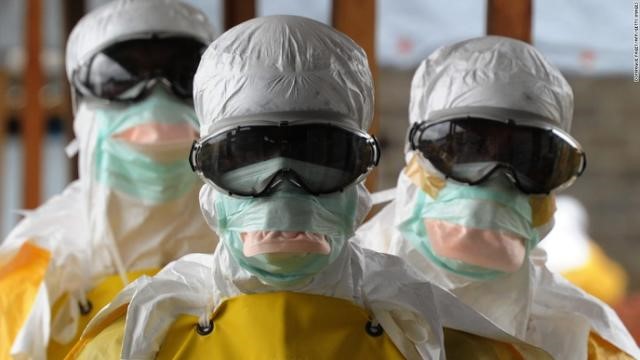
The CEO of Erisco Foods, Lagos, Eric Umeofia laments that tomato processing companies lack access to foreign exchange to enable them buy heat-resistant seedlings and other tools that would help ensure the country’s sufficiency in local production of tomato paste. Similarly, Dangote Tomato Factory recently suspended operations due to the scarcity of tomatoes and the assault on its tomato farms by a tomato leaves destroying moth, known as “tuta absoluta” – a South American native, also known as the Tomato Ebola, because of its Ebola-like characteristics.
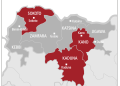
Other reasons have been advanced for the scarcity of tomatoes in our markets: the fuel crisis which has driven up costs making it difficult and expensive for Northern tomato farmers to bring tomatoes to the South, insurgency in the North East which has resulted in the closure of many tomato farms in that region, thus cutting off national output, the recent ethnic crisis in Mile 2, during which Hausa Fulani traders and other marketers engaged in a murderous brawl, climate-change induced drought and heat wave in the Northern-tomato producing states of Kaduna, Katsina, Kano, Jigawa, Plateau, Kano and Gombe. In the best of seasons, Nigeria spends $1.5 billion annually on the importation of tomato products. The cost in this regard, seems certain to rise.
Already, the effect of this tomato blight is being felt in households. Whereas a few months ago, a basket of tomato was about N5, 000, it is now about N40, 000 per basket. Housewives are protesting bitterly about how a piece of tomato vegetable has jumped up by about 650%, such that three pieces now go for as much as N500. Tomato in Nigeria today is thus more expensive than a litre of petrol! I have it on good authority, that in those face-me-I-face you quarters where the poor live, it has in fact become risky to leave a tin of tomato paste carelessly or fresh tomatoes lying around: they would most certainly be stolen, and there have been reports of soup pots suddenly vanishing should the owner take a minute from the communal kitchen to use the loo. Many are resorting to desperate measures to sort out a growing epidemic of empty stomachs and empty pockets. Unless this matter is addressed seriously and urgently, the social crisis may be far too costly in both the short and the long run: hungry people could become sick and angry, hungry citizens could become thieves and a nuisance, they could also become angry voters and a rebellious populace.
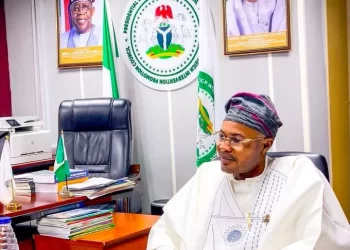
However, the most brilliant explanation that we have received so far from the Federal Ministry of Agriculture and Rural Development is that there is tomato scarcity because of “tuta absoluta”. According to the Minister of Agriculture, Audu Ogbeh, a group of experts will be immediately commissioned to advise the government of Nigeria on the way forward. The mandate of these experts is to “appraise the situation”, and then give us “a figure on cost of treatment…so we will source funds to tackle it.” Is that what this is all about? I am not in the mood at this moment, to spoil anyone’s day, with straight-to-the-nose-the-mouth-and-the-groin punches but I think that the response from the Federal Ministry of Agriculture is far from adequate, if not stupid. Please, where is that bow-tie wearing Akinwumi Adesina, the former Minister of Agriculture, now on loan to the African Development Bank?
What we are dealing with is a national food security crisis. Before the commissioned outsiders begin to “appraise and cost”, the resident experts in the Ministry, should know that it is not only tomato that has become a scarce and expensive item in Nigerian kitchens, virtually every food item has become unaffordable and there are many homes that can no longer feed properly. The scarcity of tomato is only a metaphor for the spread of staggering inflation and the hunger that ravages the land. A bag of rice that was once N7, 000 is now N19, 000 per bag, a congo of garri has jumped from N170 to N300, bread from N200 per loaf to N300, and same is the case with virtually every food item. More than this, tomato scarcity is a metaphor for the lack of continuity in governance processes (What happened to all that revolution in the agriculture sector under Akinwumi Adesina as Minister?) and of course, for the failure since independence, to take agriculture seriously as a major vehicle of national security and development. If the response to this query is that nothing concrete actually took place under previous administrations, then what is the present Minister’s blueprint? What is his comprehensive agenda for ensuring food sufficiency?
It is indeed absurd that in 2016, we cannot produce enough tomatoes to feed ourselves – the short of it is that that single narrative about “tomato ebola” calls for more rigorous thinking. It is not enough to deal episodically with tomato scarcity, or the scarcity of any other food item; this must be done within the context of a plan of action. The job of government officials is to give the people hope and not to deepen their agony. A committee of experts looking into the scarcity of tomato, and how to throw money at the problem (!) is a round-about excuse for doing nothing. The knowledge that is required is within easy reach and much of the issues at stake, those within the province of the Ministry and those located in the larger context, are out there in the public domain, and perhaps, also in those accumulated files and old reports that most officials hardly ever read. The Ministry also spoke up rather too tardily.
For weeks, there have been all kinds of ethnic and political insinuations about how tomato became scarce, some of which, allowed to fester for too long, could have resulted in other crises. And we can only hope that the connection between food and health will not be lost on the experts. The health benefits of tomato alone are so many; to have a population no longer eating tomatoes, because of its cost could have long-term health implications. And while we expect the Federal Government to take the lead in terms of visioning, we should remember to ask: what are the state governments also doing? What are the states doing to promote agriculture and ensure food security? Apart from Kaduna state, other state governments have been criminally silent about the food crisis or they really don’t know since they probably get supplies of fresh tomatoes from neighboring countries for their own kitchens. All the big men eating imported fresh tomatoes when we, the people, can’t get tomatoes to eat, just “continuu eh” but don’t forget that a hungry and angry voter is an enemy of politicians.
There is another side to this whole tomato thing that is noteworthy. Special notice must be taken of the reference to the insurgency in the North East as a threat to agriculture. It is also interesting that most of the tomatoes produced in the country are from the North, and the Middle Belt. Check the list of major tomato producing states in Nigeria: Kaduna, Katsina, Kano, Jigawa, Gombe, Plateau. Also check the list of the states where people are complaining most about the cost of tomato: they are all in the South! We should ask: so Southern Nigerians are grumbling about tomato being expensive and scarce, why are they so dependent on Northern farmers? They want tomatoes from the North, but are these not the same people who don’t want to see Northern cattle herdsmen in the South? Are these not the same people campaigning on social media that Southerners should stop buying beef in order to spoil market for Northern herdsmen? They are now begging for tomatoes from Northern farms?
In Ekiti, the state Governor has already given local hunters an executive order to shoot any AK-47 wielding herdsmen sighted anywhere in the state. It may not have occurred to the Governor that an AK-47 is far more versatile than a “shakabula” that is made by local blacksmiths and that he may actually be sending his local hunters on a suicide mission, but I doubt if the same Governor will stop lorry loads of fresh and healthy tomato baskets coming from Gombe to Ekiti markets! Thus, whereas cattle-grazing is causing ethnic division, tomato is generating so much hypocritical love for the Northern farmer: “Please, send us tomato, stop selling tomato to the tomato paste producers!”. This country is truly far more integrated and its various units so interdependent, in more ways than the politics of hate and division would ever allow the people to see. It is tomato today, should onions, millet and kolanuts also become very scarce, Southerners may start begging Northern farmers to please bring their produce to the South. This is the truth of our interdependence but we need to get our politics right and those who exploit ethnic divisions must allow the country to grow.
One final point: The scarcity of tomato and the threat of a national food crisis should remind policy makers at all levels, of the importance of agriculture. A nation that can feed itself is a safe and secure nation. A hungry nation can only have sad people. Tomato is incidentally, a versatile vegetable, very easy to grow, usually ready for harvest between 60 – 85 days. Those who are screaming “give us tomatoes”, and playing politics with it, may also do well to embark on subsistence farming: create a small garden in the backyard, turn that uncultivated plot of land into a small farm, plant a variety of food plants, remove that your white collar, stop waiting on the Northern tomato farmer, get on with the food revolution we need…while hoping that some day, Nigerian leaders will stop waiting for oil money and rediscover agriculture as Nigeria’s true gold.