A top White House official appeared to reverse a key part of President Trump’s immigration order on Sunday, saying that people from the affected countries who hold green cards will not be prevented from returning to the United States.
But the official, Reince Priebus, the White House chief of staff, also said that border agents had “discretionary authority” to detain and question suspicious travellers from certain countries. That statement seemed to add to the uncertainty over how the executive order will be interpreted and enforced in the days ahead.
Mr. Priebus defended Mr. Trump’s order on NBC’s “Meet the Press” program, saying it had been carried out smoothly and was protecting Americans from terrorist threats. On Saturday, a day after the order was issued, airports were marked by scenes of confusion and protest as officials tried to interpret the order, including how to handle green card holders.
On Sunday, Mr. Priebus appeared to announce a dramatic change in those policies, saying that “as far as green card holders, moving forward, it doesn’t affect them.”
Around the globe on Saturday, legal residents of the United States who hold valid green cards and approved visas were blocked from boarding planes overseas or detained for hours in American airports.
Mr. Priebus said several times during the NBC interview that green card holders would not be subject to the order “going forward.” But he repeatedly suggested that anyone, including American citizens, would be subjected to additional scrutiny if they travelled from any of the seven predominantly Muslim countries identified in the order.
“If you’re an American citizen traveling back and forth to Libya, you are likely to be subjected to further questioning when you come into an airport,” Mr. Priebus said. He added later, “There is discretionary authority that a customs and border patrol agent has when they suspect that someone is up to no good when they travel back and forth to Libya or Yemen.”
Mr. Priebus said that travellers from the seven countries — Iran, Iraq, Libya, Somalia, Sudan, Syria and Yemen — would be “subjected, temporarily, with more questioning, until a better system is put in place.”
Meanwhile, a US judge has issued a temporary halt to the deportation of visa holders or refugees stranded at airports after President Donald Trump issued an order barring entry to them for 90 days.
The American Civil Liberties Union (ACLU) filed a case in response to the order issued on Friday.
The White House said 109 people were detained, and around two dozen travellers are still being held.
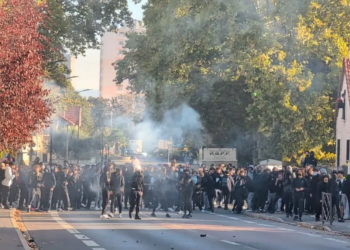
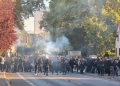
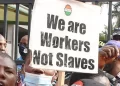
Thousands of people gathered at US airports to protest against the move.
Mr Trump’s executive order halted the entire US refugee programme and also instituted a 90-day travel ban for nationals from Iran, Iraq, Libya, Somalia, Sudan, Syria and Yemen.
Those who were already mid-flight were detained on arrival – even if they held valid US visas or other immigration permits.
Defending his move, Mr Trump early on Sunday tweeted: “Our country needs strong borders and extreme vetting, NOW.” He told reporters on Saturday that the executive order was “working out very nicely. You see it at the airports, you see it all over”.
His Chief of Staff Reince Priebus denied that the introduction of the ban had been chaotic. He said that, of the 325,000 people entering the US on Saturday, 109 were detained.
“Most of those people were moved out,” he told NBC’s Meet the Press programme. “We’ve got a couple of dozen more than remain and I would suspect that as long as they’re not awful people that they will move through before another half a day today.”
The ruling from federal Judge Ann Donnelly, in New York, prevented the removal from the US of people with approved refugee applications, valid visas, and “other individuals… legally authorised to enter the United States”.
The emergency ruling also said there was a risk of “substantial and irreparable injury” to those affected.
Her ruling is not on the constitutionality of Mr Trump’s executive order.
The department of homeland security said it would continue to enforce the measures.
The court case was brought early on Saturday on behalf of two Iraqi men detained at JFK Airport in New York. One worked for the US military in Iraq, while the other is married to a former US military contract employee.
Both have now been released. Another court hearing is set for February.
Lee Gelernt, deputy legal director of the Immigrants Rights Project, who argued the case in court said that some people had been threatened with being “put back on a plane” later on Saturday.
Mr Gelernt also said the judge had ordered the government to provide a list of names of those detained under the order.
Judges elsewhere in the US have also ruled on the issue:
In Boston, a judge decided two Iranian nationals, professors at the University of Massachusetts, should be released from detention at Logan International Airport
An order issued in Virginia banned, for seven days, the deportation of green card holders held at Dulles Airport and ordered the authorities to allow access to lawyers
A Seattle judge issued an emergency stay of removal from the US for two people
Criticism of Mr Trump’s decision has been growing louder outside the US.
Iran and Iraq are threatening a reciprocal ban on US citizens entering the country.
Chancellor Angela Merkel of Germany said “even the necessary, determined fight against terrorism does not justify placing people of a certain origin or belief under general suspicion”.
Canadian Prime Minister Justin Trudeau tweeted that his government remained committed to welcoming “those fleeing persecution, terror and war”.
A spokesperson for UK PM Theresa May said she “did not agree” with the restrictions, and French independent presidential candidate Emmanuel Macron tweeted: “I stand with the people fleeing war and persecution”. – New York Times, BBC.