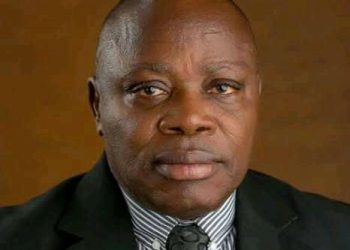
The year was 1998 and Comrade Osita Osemene, a fresh graduate from the University of Benin, Edo State, was full of dreams, but repeated attempts to secure a job failed, and it was becoming a severe burden keeping body and soul together. Four years after pounding the streets of Lagos for elusive jobs, Comrade Osemene dabbled into the used car (Tokunbo) business. But it was short-lived because fraudsters duped him!
Consequently, Osemene chose to take the path many Nigerian youths had taken previously. He decided to immigrate to Europe, the land of milk and honey.
However, his first attempt was a failure as he fell victim to conmen and barely escaped arrest at the Murtala Mohammed International Airport, Lagos!
“The walls were closing in on me and there was nowhere to run,” Comrade Osemene says in an exclusive chat with Sunday Sun, recalling the situation that eventually put him on the road to a near-death experience in his quest to exit the shores of Nigeria to Europe.
“My car business had crashed and a bleak future was staring me in the face. My creditors were chasing me. I decided to do what most of my peers were doing at the time, which was to leave the country. That was why I liquidated my business and invested all I had in my plans, but I was swindled. My world fell apart! Even the little money I could salvage from my business had been taken away. I felt hopeless. I believed the end had come.”
It was while he was in this state that he received a call from his elder sister in Asaba, Delta State. It was the call that would change his life forever!
“After my attempted trip to London failed, my elder sister called me saying it was urgent that I abandon all further plans and come straight to the village for an opportunity to travel to Europe. That was how I met a guy who told me he was a student of a university in the east. He said we would travel to Morocco and fly to Italy.
“I raised N250, 000 for my trip. Before we departed Asaba, my guide reassured me that it would be a safe journey. He said that we would be traveling like tourists, staying in five star hotels and having fun. Though I had my misgivings about the entire project, I was under pressure; I was ready to try out anything.”
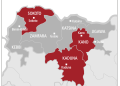
The train, made up of about five people, departed Asaba for the first leg of the journey one cloudy Friday morning in 2008 en-route Kano. However, they had scarcely hit Kano when it dawned on him that all was not well, and he became distressed.
“I heard people muttering that the journey would not be easy and I was like ‘why?’ After all, my guide said it would be a smooth ride; so what was happening?” Osemene wondered.
According to Osemene, the first stop on the journey to Europe across the Sahara Desert is a town called Zindane, which is located in Niger Republic, a day’s journey from Kano, Osemene explains, picking up the tale: “From Kano we moved to Zindane. That was when I finally realized it would be a tough journey. Zindane is a state in Niger Republic. It took us a whole day to get to Zindane.”
When they hit Zindane, he got his first shock. Rather than spend the night in a five-star hotel and a warm bed, he spent it in what he described as a goat pen!
“Like prisoners, we were all rounded up and headed into a connection house owned by one Alhaji. It was more like a goat pen. I saw a lot of Nigerians. There were over 100 Nigerians there. I was shocked! This was not what my guide told me back in Asaba.
“When I asked my guide for the five-star hotel, people started laughing. They said I was Jedit. When you’re new on the road they call you Jedit. I began to understand what I had let myself into. The connection house is a place where anything could happen. Prostitution, cheap drugs and fake passports were openly peddled. They came to me and offered to sell me a Mauritanian passport. According to them, it was the safest way to travel across the Sahara Desert. They said that my Nigerian passport would put me in trouble because Nigerians were hated with a passion. I quickly bought it only to learn a little while later that I’d been swindled! Even at this point, I had no idea what lay ahead of me.”
History students are familiar with the town called Agadez in Niger. It was a strategic trading outpost on the West African trade routes in pre-colonial times. Today, Agadez is an important stop on the human trafficking business.
Hear more from Osemene: “After Zindane, we moved to Agadez. It took a whole day. We were sweating and tired when we arrived. We were crammed like cattle in a truck; over 100 of us and taken to a very terrible connection house, worse than Zindane, and locked up in a goat pen, again like prisoners.
“We spent seven days in Agadez; it was seven days in hell. We paid between 1000 and 2000 CFA per night. In Agadez, we received information that rebels were killing and raping Nigerians on the Morocco route. People who escaped told us to go to Libya because it was safer. We were stranded in the middle of the desert with nowhere to go. So Libya was very inviting and we all agreed to go. At this point we were over 400 Nigerians.
“That night, I wept and prayed to God to save me. I had lost weight drastically, and I had no idea how long this would last. We were supposed to be headed for Morocco, but because of rebels in the desert, we were now headed for Libya.”
The next stop on the route was Duruku. It’s the place where dog eats dog, Osemene says, and gives further insight: “Duruku is a transit camp for desert travelers. Everybody traveling through the desert must pass through Duruku. The journey from Agadez to Duruku took us five hot and dusty days. We were crammed into an overloaded truck like cattle.
“At Duruku, I saw a lot of stranded Nigerians. There was a boy from Delta State who was selling a liquid which we drank during the hot weather to quench thirst. He earned as little as 100 CFA a day which is less than N30.
“He said he’d been stranded in Duruku for over three and half years. His plan was to sell the drink for six months and save up N2000, to either continue the journey or return home. I met a Yoruba guy who had already gone mad and sleeping in dustbins. At night, if Nigerians noticed you had money, they’d lure you into the desert and if you were unlucky, after dispossessing you of all you have, they’d kill you. I witnessed the killing of a boy because of 700 Euro. It was there I learnt how to keep my money safe in transit. The best way was to insert it into your anus. I was doing it with the help of Vaseline. The girls hid their monies in their private parts while the men hid theirs in the anus.”
“At night, soldiers brought out all the Nigerians and flogged us with whips, after which they marched us into the toilet and gave us what they called banku, a powder like substance to drink. Once you ingest it, you must purge to the point where your intestines protrude. The idea was to catch all those using Vaseline to hide their money. I was lucky I did not have to drink banku. I bribed one of the soldiers with 1000 CFA. The trauma was too much. I began to ask myself, ‘Is it worth it?”
From Duruku, the next stop was Gatron, a border state in Libya. However, on the way, they had to pass through Tijeri, which Comrade Osemene describes as the place of death: “A few years before I embarked on this journey, I had heard how more than 250 stranded Nigerians perished a few kilometers from Gatron. Their truck had broken down, and so they had attempted to trek to Gatron, but eventually fell and died one by one in the desert, overcome by thirst and hunger. Back then, when I heard the tale, a cold chill ran down me!”
Little did he know he was about to experience something similar as their truck broke down before Tijeri, and so they had to trek: “On the road, besides the heat and the dust, there were frequent fights and people were murdered in coldblood! We lost so many Nigerians and their bodies were abandoned to rot away in the desert; I had to watch as a boy died in my presence. At this point, I had to jettison all my load and provision and carry only a small water bottle. After about 100 kilometers, people were getting exhausted and beginning to drop behind. I was lucky that I had a group of friends, so we stuck together.
“A boy from Edo State ran mad, stripped and brought out his money shouting that it was too heavy that he wanted to die. As we were trying to calm him, he slumped and died! At a point, we were all thirsty and there was no water so we started drinking our urine. Imagine, we were begging to drink urine!”
“Finally, we made it to Tijeri tired and exhausted and were welcomed by kids who beat us up with canes. That was where I got to know that there is a tree in the desert called Debino. Desert dwellers normally eat it because it gives strength. We started plucking them and eating. The kids rounded us up and locked us up in a goat pen. At Tijeri, drugs and prostitution are common place.
“Tijeri is guarded by Libyan and Nigerien police because there’s so much violence. A Nigerien policeman came to assist us. We paid about $100 per head, and he offered to smuggle us from there to Gatron, the first state in Libya. It was difficult to enter Gatron without police assistance. We were hidden in a police SUV. We were over 150 people, and we were transported in batches.
“When it came to my turn, the tyre of the Police SUV ferrying us burst! Rather than return our money, the policeman beat us up and chased us away!”
Osemene says that was his breaking point: “After running away from the policeman, I became so exhausted that I said, ‘enough is enough.’ It’s either the Libyan police pick me up, or I die here! I felt that the journey was not really worth it. After all this pain and suffering, what kind of money would I make in Europe that would compensate me? That was my worst moment. Death had become a normal thing because I saw so many people die; human life had lost its sanctity.
“Tired and exhausted, I gave up. I said it would be better for me if the Libyan police arrested me and even kill me. I slept off under a tree and waited for death. Everybody that had been traveling with me left me to my fate. I was so exhausted I blacked out!”
Comrade Osemene says that he does not recall how long he blacked out, but remembers that in that state, he heard the voice of a guy he had met on the trip from Uromi shouting and calling out to him.
“He was shouting my name and I heard him in my near death state, and somehow I woke up. He gave me water to drink. It was the sweetest thing I ever tasted; without him I probably would have died.”
After a week, Osemene and the group travelling with him finally made it to Gatron where the girls with them on the journey were sold into slavery: “We came upon a connection house owned and run by Nigerians in Gatron. It was there I knew that the girls that came with us from Kano were going to be sold. Each girl was sold for $3000. They would have to pay $9000 to buy their freedom, and the only way they could raise that kind of money was through prostitution. It’s only on completion of the payment that the girls would be free to either continue to work as prostitutes in Libya with all the problems illegal immigrants face, or go to an uncertain future in Europe. That is the Europe that they used to deceive young girls in Benin, Uromi and Asaba.
“I paid about five dinar at the connection house and from there they moved us to the next state, Cyber. We stayed there for about three days. Our guides were watching the roads, to know when it would be safe to move.
“Libya is very strict when it comes to illegal immigration, but the irony is that the same Libyan police provide the network through which people are smuggled. They hid us in the boot of their patrol cars to beat check points. At Cyber, I got to a connection house but people were fighting there, and it was not comfortable.
“I later met a friend whose brother owned a car wash place, so we stayed together at the car wash which was very close to the desert. The idea was that in case there was any trouble, we’d run straight into the desert and escape. And it actually happened! They came to hunt us down with police dogs and we fled into the desert!
“From there, we were moved to Tripoli. The place I was supposed to stay was called Terimatat, a place for black Africans. It’s a ghetto. Anything can happen there. We were advised that it was safer to be there. The week I got there, the place was busted after a fight broke out and the Libyan government destroyed everything, and arrested all the Nigerians there.”
Despite the challenges, Osemene remained resolute. But the end of the road came for him after he was smuggled to a lonely beach along the Mediterranean Sea from where he was to make the journey across the sea to Europe.
“I was looking forward to that moment when I would leave Africa and land in Europe. However, what happened next changed everything. They said I would pay $1,200 and I said no problem. They showed me a motor boat with a Yamaha engine called lampa lampa. The question was: how would I cross? Our guide explained that the boat would carry about 200 of us and we would have to pilot the boat ourselves!”
“I noticed that there was no way I could make it to Europe piloting that boat with 200 people aboard. I was disappointed because I had been told that we would fly to Europe. As I stood by the beach, I just reminded myself that I had never swum all my life. I asked myself, what were my chances?
“I knew nothing about navigating a boat. I watched the endless Mediterranean Sea stretching to the horizon and with it, my hopes for a greener pasture in Europe evaporated.”
“I still don’t know where I got the strength from, but I convinced four Nigerians and a Ghanaian that we had to go back home. They accepted because they were all stranded. For them, it was a big opportunity and besides, they were getting free assistance to go back home. I offered to take care of transportation.
“Besides, the Libyan Police was on the lookout for black Africans and anybody arrested would be thrown into jail because the camp where migrants transiting through Libya normally stayed in Tripoli had been demolished, so there was no place to hide. On the way back we lost the Ghanaian citizen; he died of exhaustion.”
Comrade Osita Osemene successfully made it back to Nigeria and founded a Non-Governmental Organization called Citizens Patriotic Initiatives, which is dedicated to assisting victims of human trafficking. He has also published a book, Chasing a Mirage, which is based on his experience. The Sun