Money-sharing within political parties and at polling units remains one of the greatest threats to credible elections, democracy, and good governance in Nigeria.
The practice is as old as the country’s politics itself. Worse, it has become normalised and widely accepted by many politicians and voters alike, turning electoral corruption into a routine feature of the democratic process.
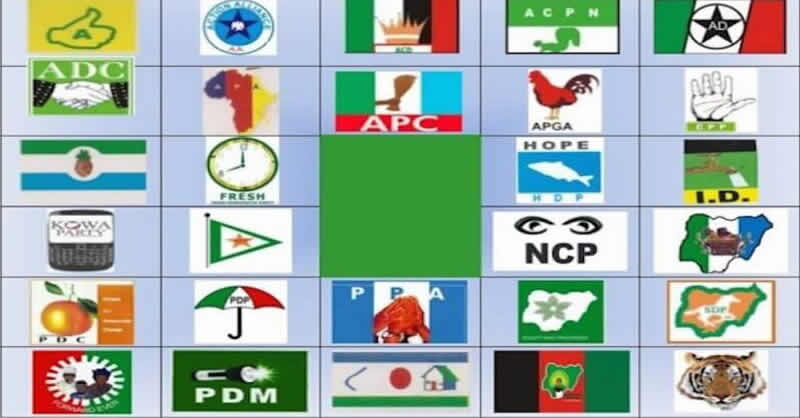
The menace was on full display during the just-concluded candidate selection process by political parties that adopted direct primaries for the 2027 general elections.
Those who opted for consensus arrangements likely operated the same scheme on a smaller scale and away from public scrutiny.
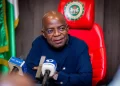
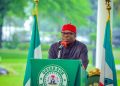
A member of the House of Representatives, Abubakar Rahis, reportedly shared N26 million among 442 executives of the All Progressives Congress in his constituency in Borno State during the primaries.
His counterpart in the Senate from the same constituency, Kaka Lawan, reportedly distributed N135.65 million to party executives for the same purpose. The transaction was reportedly captured in a viral video.
Unsurprisingly, both legislators emerged victorious.
Yet, this political aberration is not confined to these two lawmakers. It is a national epidemic that has infected virtually every level of the political system.
During elections, voters are routinely induced with cash payments ranging from N1,500 to N20,000, often while standing in queues waiting to cast their ballots.
More disturbing is that these brazen acts frequently occur in the presence of security personnel and officials of the Independent National Electoral Commission, who appear either unwilling or unable to stop them.
Money-sharing and vote-buying thrive because the agencies charged with enforcing the law have largely failed to hold offenders accountable.
This conspiracy against democracy and the Nigerian people explains why political parties and other critical institutions show little interest in building strong organisations, promoting ideology, or encouraging meaningful political participation capable of producing credible electoral outcomes.
Instead, stakeholders have become comfortable with a status quo that rewards political and electoral mercantilism, using cash inducements to manipulate vulnerable voters and capture power.
The tragedy is that the system effectively shuts out competent and visionary aspirants who lack deep pockets, making it almost impossible for them to secure nominations, let alone win elections.
INEC statistics vividly illustrate the growing public disillusionment with the electoral process.
Voter turnout has steadily declined from 57.54 per cent in 2007 to 53.68 per cent in 2011, 43.65 per cent in 2015, 34.75 per cent in 2019, and a dismal 26.72 per cent in 2023.
The cash-and-carry culture institutionalises political mediocrity. It deprives Nigeria of capable leadership and reinforces the grim reality that “the worst of us rule the best of us.”
The consequences are evident everywhere.
Money politics fuels poor healthcare, crumbling infrastructure, weak educational outcomes, and worsening insecurity because those who buy power rarely feel obligated to serve the people after securing office.
Consider the health sector. With maternal mortality estimates ranging from 814 to 1,047 deaths per 100,000 live births, Nigeria accounts for between 20 and 29 per cent of global maternal deaths—one of the worst records in the world.
Infrastructure tells a similarly depressing story. Roads across the country have become death traps and hunting grounds for kidnappers. Of Nigeria’s 195,000-kilometre road network, only about 30 to 35 per cent is paved.
The political elite hardly suffers these conditions. Rather than travel on dangerous highways, they fly between destinations, insulated from the risks confronting ordinary citizens daily.
They build airports in state capitals and promote air connectivity that primarily serves elite interests, often regardless of economic viability, while critical road infrastructure remains neglected.
The education sector is no better. According to UNICEF, 18.3 million Nigerian children are out of school. Even many of those fortunate enough to attend school do so in environments lacking the most basic facilities required for quality learning.
Money politics allows politicians to take the electorate for granted. Having secured office through cash inducements rather than performance, they feel little pressure to improve governance, fix the economy, or create opportunities. Instead, they perpetuate poverty because poverty itself has become a political asset.
The system also entrenches a grotesquely unjust reward structure. Voters exchange their future for meagre handouts during elections, only to endure years of hardship and deprivation afterwards.
Meanwhile, ranking senators reportedly enjoy constituency allocations of about N2 billion and earn approximately N21 million monthly. Members of the House of Representatives reportedly take home about N19 million every month.
Rather than serving as a platform for delivering the dividends of democracy, politics has increasingly become an investment scheme through which officeholders gain access to public resources and entrench themselves in power.
The trend is now extending to the next generation, with many politicians grooming their children to inherit political structures, thereby deepening dynastic politics and perpetuating a vicious cycle of elite capture.
Compounding the problem is the near absence of meaningful punishment for electoral bribery. The Electoral Act 2026 prescribes a N5 million fine, a two-year prison sentence, and a 10-year ban from political participation for vote-buying offences.
Those provisions should not remain mere words on paper.
For a start, security agencies must arrest and prosecute everyone involved in money-sharing and vote-buying during primaries and general elections, regardless of status or political affiliation.
Nigerians, too, must stop selling their votes. No amount of cash can compensate for years of poor governance, corruption, economic hardship, and squandered opportunities.
Citizens and institutions alike must speak out. The EFCC, the ICPC, civil society organisations, religious bodies, and community groups should collaborate to rid the country of electoral brigandage.
Government at all levels must also actively discourage money-sharing during election seasons. These practices inflict lasting damage on both the nation and its people.
Nigeria must urgently review the extravagant reward system that attracts opportunists into politics and rigorously enforce the financial regulations prescribed by the Electoral Act 2026.
Nigerians have an opportunity to reverse this dangerous trajectory and make the 2027 elections a turning point for credible democracy and good governance.
That opportunity begins by rejecting the politicians who come bearing cash instead of competence, handouts instead of ideas, and inducements instead of integrity.