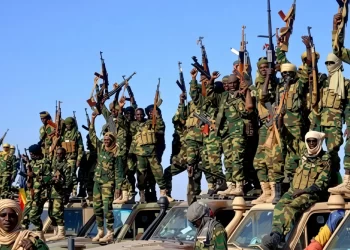
Penultimate week, Nigerians were stunned when the Chief of Army Staff (COAS), Lt.-Gen. Tukur Buratai, warned soldiers against any plot to meddle with politics. Coming from the top Army chief himself, the statement has continued to evoke reactions from within and outside Nigeria. Coups are not new to Nigerians born before 1999.
Since 1960 when the country gained independence from Britain, the colonial masters, the country has been held down by coups, counter-coups, failed plots and similar thoughts that did not come to the open at the end. But one thing is clear; several lives have been lost on the plotters’ side and those they wanted to remove.
One of such cases was the assassination of the Head of State, Gen. Murtala Muhammed, on February 13, 1976. Although the coup failed, Col. Bukar S. Dimka and his cohorts, who plotted that coup, paid the price, becoming the first set of people to be executed for a failed coup in Nigeria. Similarly, the coups and countercoups of 1966 led Nigeria to its three-year civil war that threatened to dismember the country for the very first time.
There was also the late Gen. Sani Abacha coup in 1993, which followed the annulment of the June 12, 1993 election won by the late Chief MKO Abiola. We note that in all these, the unity of Nigeria and the arguments of proponents of a united Nigerian state were severely put to test, with the country threatened seriously.
That is why the timeliness and the wordings of the alarm raised by Buratai, call for concern. Coming at a time tension is high in the country already over the health of President Muhammadu Buhari, any discerning mind needs to be worried about the Buratai statement. For one, we believe that the Army chief must have had some very serious information before coming out with such a statement. We also believe that he has other channels of reaching out to the rank and file of the military outside the media.
There are multiple questions that arise from the statement, which incidentally were not answered in it other than the general comment of soldiers being contacted by some politicians. We therefore ask: What did Buratai hear or see that made him issue that statement? Has he informed Acting President Yemi Osinbajo, Defence Minister, National Security Adviser, Chief of Defence Staff and others higher than him in rank?
What have they done about the rumour? We recall that in the past few years, particularly, under former President Goodluck Jonathan, similar alarms were raised concerning the sponsorship of the terror group, Boko Haram.
On not only one occasion, Jonathan had al-leged that Boko Haram was being sponsored by some disgruntled politicians against his government. Nigerians waited patiently for him as the president to deal with one of the sponsors.
Till date, Jonathan did not name the sponsors of the sect and paid dearly for it. That is why it is important for Buratai to act fast. More than the mere issuing of statement, he has a duty to reveal and possibly apprehend such soldiers and politicians, who have been in discussion for a possible coup.
We declare that raising the red flag is not enough in this case. For the avoidance of doubt, Buratai said in a statement by the Director, Army Public Relations, Brig.-Gen. Sani Usman, that the warning was consequent upon reports that some politicians were approaching soldiers for reasons he did not state.
He stated that the Army remained apolitical and loyal to constituted authority. “The Chief of Army Staff (COAS), Nigerian Army, Lt.-Gen. T.Y. Buratai, has received information that some individuals have been approaching some officers and soldiers for undisclosed political reasons.
On the basis of that, he has warned such persons to desist from these acts. “…Therefore, he seriously warned and advised all officers and soldiers interested in politics, to resign their commission or apply for voluntary discharge forthwith.”
The depth of concerns that followed Buratai’s alarm could be measured by the reactions that followed it. The British government reacted to the story and warned against any coup in Nigeria. It warned of dire consequences should there be any ‘non-democratic’ change of government in the country.
“The British government believes that democracy is actually critical in Nigeria,” the United Kingdom High Commissioner to Nigeria, Paul Arkwright, said. Similar reactions have also come from different quarters in Nigeria and outside. While we insist that Nigeria, having enjoyed an unbroken 18 years of civilian rule, can ill afford another coup, we state also that the alarm by the Army chief should be taken seriously.
By that, Buratai himself and relevant agencies of government concerned should go beyond alarm and act on the intelligence report, which we believe they have. We make bold to state that the quick action on the matter would save the country of any setback relating to the misconceived actions by some overzealous soldiers and their likely political collaborators.
At least in Nigeria, it is a known fact that most military coups have had an active collaboration of civilians. We must not allow that to happen again.