TheCitizen - It's all about you
  • Home
  • Headlines
  • Latest News
  • Governance
  • Business
  • Financial Crimes
  • Opinion
  • Editorials
No Result
View All Result
TheCitizen - It's all about you
  • Home
  • Headlines
  • Latest News
  • Governance
  • Business
  • Financial Crimes
  • Opinion
  • Editorials
No Result
View All Result
TheCitizen - It's all about you
No Result
View All Result

Beyond Fulani militants’ menace – Punch

The Editor by The Editor
June 5 2026
in Public Affairs
A A
0
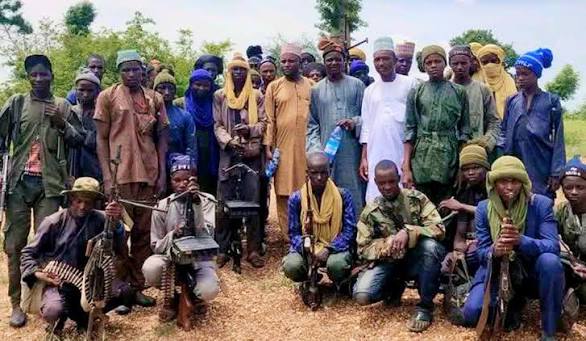
Bandits attack mosque, kill 1, abduct 9 in Kaduna

A new international report has cast a harsh spotlight on Nigeria’s worsening internal security crisis. Authored by the United States Commission on International Religious Freedom, the report estimates that about 30,000 armed Fulani militants are operating across the country. That is a frightening figure, equivalent to more than 30 fully equipped army battalions.

More disturbing is the fact that after years of massacres, mass displacement, and the destruction of entire communities, Nigeria still appears unable or unwilling to stop them.

According to the report, these outlaws operate in groups of up to 1,000 fighters and rank among the deadliest non-state actors responsible for religious freedom violations in the country.

Yet beyond the statistics lies a troubling question Nigeria has consistently refused to confront honestly: Why has this violence persisted for so long?

For years, the attacks have been framed as “farmer-herder clashes,” a phrase that suggests mutual aggression between two competing groups.

But the scale, organisation, sophistication, and recurring pattern of many of these assaults point to something far more sinister than disputes over grazing routes or retaliation for stolen cattle.

One of the deadliest atrocities in Plateau State’s history illustrates the point. In the early hours of March 7, 2010, between 2 a.m. and 3 a.m., residents of Dogon Nahawa and neighbouring villages south of Jos were asleep when armed Fulani militants descended on them.

By dawn, an estimated 500 people—mostly women, children, and the elderly—had been slaughtered in their homes or hacked down in surrounding bushes where they sought refuge.

Since then, similar massacres have occurred repeatedly across Nigeria’s Middle Belt, particularly in Plateau and Benue states.

Thousands have been killed. Entire communities have been uprooted. Vast stretches of once-thriving agricultural land have been emptied of their indigenous inhabitants, many of whom now endure the misery and indignity of overcrowded and under-resourced IDP camps.

The evidence increasingly suggests that these attacks are not merely about cattle.

Reports indicate that many communities attacked and abandoned by fleeing residents are subsequently occupied by others.

On New Year’s Day in 2018, Fulani herders massacred 72 people across three local government areas of Benue State.

An AI search assessment estimates that more than 50 villages across Plateau State—particularly in Bokkos, Barkin Ladi, Riyom, Bassa, and Mangu LGAs—have reportedly been renamed and settled by Fulani herders after their original inhabitants were driven away.

Whether every such claim can be independently verified is beside the point. What remains indisputable is that large numbers of communities have been emptied, while many displaced residents have never returned to their ancestral lands.

Equally striking is the absence of reports of Fulani settlements being similarly seized and occupied by others.

Benue State provides another grim illustration.

Between late February and early March 2016, more than 500 people were reportedly killed in Agatu. Former Senate President David Mark said about 7,000 people were displaced during the attacks.

On April 24, 2018, suspected Fulani militia attacked St. Ignatius Catholic Church in Ayar-Mbalom, Gwer East LGA of Benue State, killing at least 19 worshippers and two priests.

The massacre reinforced fears that some of these assaults target communities not only for where they live, but also for who they are.

Footage even showed the attackers wearing the robes of their victims.

Just weeks earlier, on March 4, 2018, suspected Fulani militias reportedly killed 26 people in Omusu, Okpokwu LGA of the state.

The consequence of repeatedly failing to halt these cycles of violence—and of the near-total absence of arrests and successful prosecutions—has been impunity.

When perpetrators face no consequences, violence becomes self-perpetuating.

Amnesty International reported in 2025 that more than 200 villages in Benue State had been attacked and sacked by gunmen, displacing at least 450,000 people. The worst-hit LGAs include Ukum, Logo, Katsina-Ala, Gwer West, Gwer East, Apa, Agatu, Kwande, and Guma.

The economic consequences are equally staggering. Estimates suggest that Nigeria loses between $13 billion and $14 billion annually to violence linked to attacks on farming communities. The losses stem from destroyed crops, abandoned farmlands, damaged property, disrupted livelihoods, and massive internal displacement.

Yet successive governments have failed to address the root causes of the crisis. Security agencies often appear reactive rather than preventive. Arrests are rare. Convictions are rarer still.

Open grazing must be confronted honestly. Modern livestock production across the world is based on ranching, not endless migration across farmlands and communities.

Benue State enacted an anti-open grazing law in 2017. Several southern states followed suit. Sadly, enforcement has been inconsistent, weak, and frequently politicised. As a result, the laws have largely failed to achieve their intended objectives.

Nigeria must move decisively toward ranching. Cattle ownership is a profitable business, and those who profit from it should invest in modern methods of animal husbandry rather than perpetuating a primitive, unsustainable, and effectively zero-cost model.

No private business enterprise should be allowed to impose such a devastating human and economic burden on the rest of society.

More fundamentally, Nigeria must demonstrate that no group is above the law. Communities cannot continue to be attacked, emptied, and occupied without consequences. Citizens cannot be expected to surrender ancestral lands through violence, fear, and intimidation while the state looks the other way.

The USCIRF report should serve as a wake-up call. Nigeria is bleeding, not from a natural disaster, but from a prolonged failure of governance, security, and justice.

Security forces must protect vulnerable communities. Perpetrators must be arrested and prosecuted. Anti-open grazing laws must be enforced. Ranching must become the norm.

The country cannot continue to normalise mass killings, displacement, and land seizures as unfortunate headlines in the news cycle.

The bleeding must be stanched before more communities disappear from the map, and more Nigerians lose faith in the state’s ability to protect them.
Previous Post

Tottenham sign Liverpool’s Robertson on free transfer

Next Post

Supreme Court upholds death by hanging for kidnapper

Related Posts

Tele-robotic surgery: Nigeria needs more medical feats – Punch
Public Affairs

Tele-robotic surgery: Nigeria needs more medical feats – Punch

September 25 2026
2027: Voter registration figures must mirror turnout – Punch
Public Affairs

2027: Voter registration figures must mirror turnout – Punch

September 17 2026
EFCC recoveries: The good, the bad and the ugly – Punch
Public Affairs

EFCC recoveries: The good, the bad and the ugly – Punch

September 11 2026
Football’s house of failure – Punch
Public Affairs

Football’s house of failure – Punch

September 8 2026
FAAC shares N2.09tr to FG, states, local councils as October revenue
Public Affairs

FAAC bonanza: Nigeria’s fiscal paradox – Punch

September 3 2026
Interstate highways of agony, hollow excuses – Punch
Public Affairs

Interstate highways of agony, hollow excuses – Punch

September 1 2026
Next Post
Tinubu mandates Gbajabiamila, Masari to supervise APC NASS primaries

Supreme Court upholds death by hanging for kidnapper

UN raises concern over renewed xenophobic attacks in South Africa

FG to repatriate over 1,000 Nigerians from South Africa

Leave a Reply Cancel reply

Your email address will not be published. Required fields are marked *

FROM THE GRASSROOTS

Minister defends King’s College concession, cites infrastructure decay

Minister defends King’s College concession, cites infrastructure decay

by The Editor
September 16 2026
0

...

Lagos demolishes shanties after four die in community clash

Lagos demolishes shanties after four die in community clash

by The Editor
August 30 2026
0

...

Kano, Sokoto, others spend N53.2bn on scholarships abroad

INEC fixes Sept 19 for Kano Assembly by-election

by The Editor
August 27 2026
0

...

Awujale: Ruling House sues Ogun, kingmakers

Awujale: Ruling House sues Ogun, kingmakers

by The Editor
August 25 2026
0

...

APPOINTMENTS

Enugu governor names Nollywood’s Eucharia Anunobi, Rachael Okonkwo aides

Enugu governor names Nollywood’s Eucharia Anunobi, Rachael Okonkwo aides

by The Editor
September 23 2026
0

...

Gov. Yahaya swears in 19 new Gombe permanent secretaries

Gov. Yahaya swears in 19 new Gombe permanent secretaries

by The Editor
September 11 2026
0

...

Niger State governor appoints six commissioners-designate, four aides

Niger State governor appoints six commissioners-designate, four aides

by The Editor
September 8 2026
0

...

Tinubu swears in Enitan as new Head of Service

Tinubu swears in Enitan as new Head of Service

by The Editor
August 28 2026
0

...

ODDITIES

Residents find lifeless body in Akwa Ibom gutter, police begin probe

New co-tenant absconds with neighbour’s children in Akwa Ibom

by The Editor
September 17 2026
0

Palliatives: Sokoto residents feared dead in stampede at Wammako’s residence

Police Inspector slumps, dies after fitness exercise

by The Editor
September 3 2026
0

How friend deceived me to sell my kidney, bought phones with payment — Victim

How friend deceived me to sell my kidney, bought phones with payment — Victim

by The Editor
August 30 2026
0

GLOBAL NEWS

Gambia orders banks to replace foreign workers with locals

Gambia orders banks to replace foreign workers with locals

by The Editor
September 25 2026
0

...

Trump signs security deal with Greenland, Denmark at UN

Trump signs security deal with Greenland, Denmark at UN

by The Editor
September 23 2026
0

...

Trump bars CNN, MS NOW, Politico from White House

Trump bars CNN, MS NOW, Politico from White House

by The Editor
September 18 2026
0

...

2027 Hajj: Saudi Arabia rejects Nigeria’s request for additional slots

2027 Hajj: Saudi Arabia rejects Nigeria’s request for additional slots

by The Editor
September 17 2026
0

...

Canada flags Nigeria, 16 African countries as high-risk in new travel advisory

Canada raises study permit, visitor visa processing times for Nigerians

by The Editor
September 17 2026
0

...

State of the States

Auto Draft

Enugu Air opens international route to Cameroon, begins Enugu-Douala service

by The Editor
September 25 2026
0

...

I won’t be a godfather; Abia voters will pick my successor, says Gov. Otti

I won’t be a godfather; Abia voters will pick my successor, says Gov. Otti

by The Editor
September 17 2026
0

...

Fubara orders fresh LG elections in Rivers State

Fubara signs N1.84tt Rivers 2026 budget into law

by The Editor
September 3 2026
0

...

Lagos empowers 6,190 residents with free vocational, entrepreneurial skills

Lagos empowers 6,190 residents with free vocational, entrepreneurial skills

by The Editor
September 2 2026
0

...

Plugin Install : Widget Tab Post needs JNews - View Counter to be installed
  • Trending
  • Comments
  • Latest

Nigeria advances research sovereignty as Health Ministry, NHIA, partners convene inaugural Health Financing Forum

September 28 2026
Candidate Sowore: Revolution, Marijuana and other stories

Candidate Sowore: Revolution, Marijuana and other stories

September 25 2026
Nigeria, U.S. sign framework for $700 billion mineral investment

Nigeria, U.S. sign framework for $700 billion mineral investment

September 25 2026
Court nullifies Pantami as Gombe PDP guber candidate

Court nullifies Pantami as Gombe PDP guber candidate

September 25 2026

EDITORIAL REVIEW

Tele-robotic surgery: Nigeria needs more medical feats – Punch

Tele-robotic surgery: Nigeria needs more medical feats – Punch

by The Editor
September 25 2026
0

2027: Voter registration figures must mirror turnout – Punch

2027: Voter registration figures must mirror turnout – Punch

by The Editor
September 17 2026
0

EFCC recoveries: The good, the bad and the ugly – Punch

EFCC recoveries: The good, the bad and the ugly – Punch

by The Editor
September 11 2026
0

Football’s house of failure – Punch

Football’s house of failure – Punch

by The Editor
September 8 2026
0

FAAC shares N2.09tr to FG, states, local councils as October revenue

FAAC bonanza: Nigeria’s fiscal paradox – Punch

by The Editor
September 3 2026
0

Opinion

Candidate Sowore: Revolution, Marijuana and other stories

Candidate Sowore: Revolution, Marijuana and other stories

by The Editor
September 25 2026
0

...

 Akpakomiza and other stories

by The Editor
September 1 2026
0

...

‘Fake’ Agency: Adeyemi insists DG appointment genuine

Fake agencies: Why Nigeria still needs Oronsaye report

by The Editor
August 25 2026
0

...

How Adeleke danced back from the dead

How Adeleke danced back from the dead

by The Editor
August 19 2026
0

...

Plugin Install : Popular Post Widget need JNews - View Counter to be installed
  • Home
  • Headlines
  • Latest News
  • Governance
  • Business
  • Financial Crimes
  • Opinion
  • Editorials

© 2026 TheCitizen Ng. All Rights Reserved.

No Result
View All Result
  • Home
  • Headlines
  • Latest News
  • Governance
  • Business
  • Financial Crimes
  • Opinion
  • Editorials

© 2026 TheCitizen Ng. All Rights Reserved.